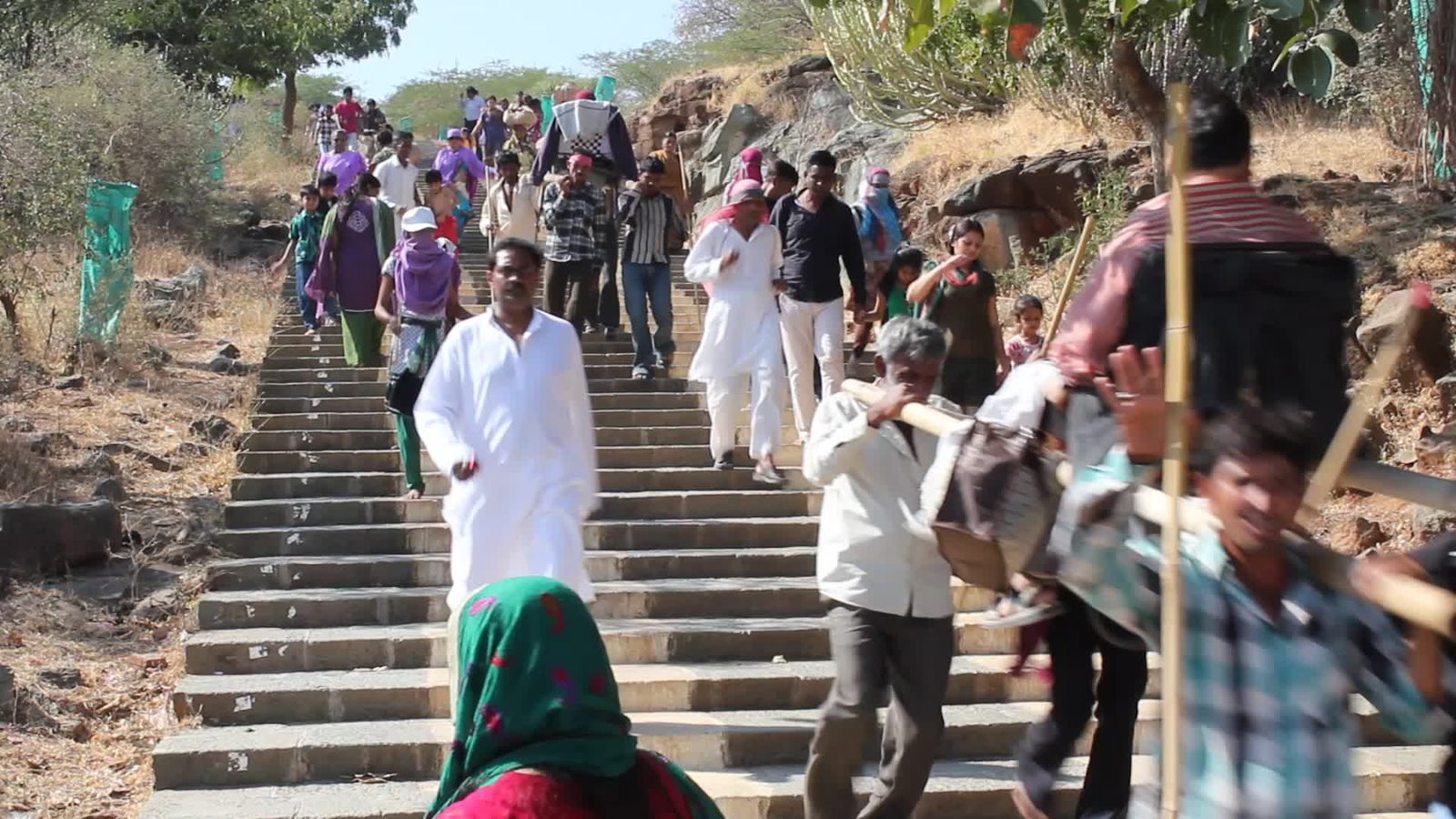
Palitana Jain Temples (Shatrunjaya Hill), Palitana, Gujarat
Photo: Arian Zwegers from Brussels, Belgium, CC BY 2.0, Wikimedia Commons

Palitana Jain Temples (Shatrunjaya Hill) Timings

Palitana Jain Temples (Shatrunjaya Hill) is open 5:30 AM to 6:00 PM, daily.

Rishabhanatha (Adinatha), the first Tirthankara; the hill complex also has temples to other Tirthankaras · Palitana, Gujarat

Entry fee appliesMedium confidence
Darshan hours (as published)
5:30 AM - 6:00 PM (reported by most sources as one continuous window; some sources give 6:00 AM as the opening time), no darshan/aarti-style morning-evening split as in typical temples
Open/closed status loads once the page finishes rendering.

Palitana Jain Temples (Shatrunjaya Hill), in Palitana in Gujarat, honours Rishabhanatha (Adinatha), the first Tirthankara; the hill complex also has temples to other Tirthankaras. It is also known as Shatrunjaya Tirth, Palitana Tirth, Satrunjaya.

Palitana is considered, along with Shikharji in Jharkhand, one of the holiest pilgrimage sites in Jainism. The hill holds an estimated 800 to over 1,000 temples and shrines, making it one of the largest temple complexes in the world. Devout Jains undertake the climb barefoot as an act of devotion, and some perform the 'Navanu Yatra', climbing the hill 99 times. Jain tradition holds that Rishabhanatha delivered his first sermon on Shatrunjaya Hill, and that 23 of the 24 Tirthankaras are believed to have visited the site at some point.

Gujarat carries a distinct temple identity of its own: Gujarat's sacred coast and hills hold the first Jyotirlinga at Somnath, Krishna's kingdom at Dwarka, a Shakti Peeth at Ambaji and the temple-crowned heights of Girnar.

Darshan hours and daily worship

SessionTiming (as published)
Morning5:30 AM - 6:00 PM (reported by most sources as one continuous window; some sources give 6:00 AM as the opening time), no darshan/aarti-style morning-evening split as in typical temples

All pilgrims must descend before sunset; no one, including priests, is permitted to stay overnight on the hill. The complex is generally open October/November through June and closed during the monsoon months (roughly June/July to September). Timings may be adjusted during major events such as Paryushan, Mahavir Jayanti, and Kartik Purnima. Reported opening times vary slightly by source (5:30 AM vs 6:00 AM), so confirm locally before planning an early climb.

Signature annual eventsKartik Purnima post-monsoon reopening pilgrimage; Chha Gau (six-village) circumambulation yatra; some Jain pilgrims undertake the 'Navanu Yatra', climbing the hill 99 times over a period as a special act of devotion.

Festivals and special-day timings

Regular darshan hours are usually extended, or set aside entirely, on these dates.

FestivalPeriodWhat happens
Kartik PurnimaOctober/November (full moon of Kartik month)A major pilgrimage day marking the reopening of the hill after the monsoon closure, drawing very large numbers of pilgrims.
Chha Gau Teerth Yatra (Fagun Sud 13)February/MarchA circumambulation pilgrimage around the base of the hill, attracting significantly higher pilgrim numbers than usual.
Mahavir JayantiMarch/AprilCelebrates the birth of Mahavira, the 24th Tirthankara, with processions and special observance at the temples.

History and architecture

Built or establishedEarliest surviving temples date to around the 11th century CE; most of the present marble structures were rebuilt from the 16th century onward after earlier temples were damaged, notably during Alauddin Khilji's invasion in the early 14th century

Architecture

Maru-Gurjara style, built largely in white marble, with elaborate carvings, open pillared halls, decorative arches, and Nagara-style shikharas. The complex is organized into walled clusters called 'tuks', each containing multiple shrines.

History

Jain tradition holds that Rishabhanatha delivered his first sermon on Shatrunjaya Hill, and that 23 of the 24 Tirthankaras are believed to have visited the site at some point. Earlier temples on the hill were repeatedly damaged, including during Alauddin Khilji's invasion around 1312 CE, and rebuilt over subsequent centuries. In 1656, Mughal governor Murad Baksh granted rights over the site to the Jain community leader Shantidas Jhaveri. Since 1730, the temple complex has been managed by the Anandji Kalyanji Trust, a major Jain religious trust headquartered in Ahmedabad.

Planning your visit

Entry feeNo ticketed entry fee to climb the hill or enter the temple complex; the Anandji Kalyanji Trust accepts voluntary donations for upkeep. Some sources mention a nominal camera/photography charge, which could not be independently confirmed.
Dress codeTraditional, modest dress is expected; many pilgrims climb barefoot as a mark of respect, though non-leather footwear is permitted. Leather items (belts, wallets, bags) are generally discouraged/not allowed on the hill for religious reasons.
Best time to visitNovember to February, during the cooler winter months, is recommended for the climb; pilgrims are advised to start the ascent very early in the morning to avoid heat and to reach the summit in time for the morning darshan/aarti period. The hill is closed to visitors during the monsoon season.
NearbyPalitana town itself has several Jain dharamshalas (pilgrim guesthouses); nearby sites mentioned in travel sources include Hastagiri Jain Tirth and Gopnath Beach, both within the wider Bhavnagar district.

How to reach

By road: Palitana town is about 55 km from Bhavnagar city; the temple complex base (Taleti) is a few km from Palitana town. By rail: Palitana has its own railway station with connections toward Bhavnagar and beyond; Bhavnagar is the nearest major railhead. By air: the nearest airport is Bhavnagar Airport, roughly 55-58 km away, with limited direct connections (including to Mumbai).

Where this information comes from

Confidence: Medium. Core history, religious significance, step count (~3,500-3,863 steps, sources vary slightly), management by the Anandji Kalyanji Trust, no-overnight-stay rule, and free entry are well corroborated across Wikipedia and multiple travel sources. Exact opening time (5:30 AM vs 6:00 AM) varies between sources and no single official Anandji Kalyanji Trust timings page could be located, so timings should be treated as approximate and reconfirmed locally. No official trust website URL was found to cite directly.

Frequently asked questions about Palitana Jain Temples (Shatrunjaya Hill)

What is the timing of Palitana Jain Temples (Shatrunjaya Hill)?

Palitana Jain Temples (Shatrunjaya Hill) is open 5:30 AM to 6:00 PM, daily. All pilgrims must descend before sunset; no one, including priests, is permitted to stay overnight on the hill. The complex is generally open October/November through June and closed during the monsoon months (roughly June/July to September). Timings may be adjusted during major events such as Paryushan, Mahavir Jayanti, and Kartik Purnima. Reported opening times vary slightly by source (5:30 AM vs 6:00 AM), so confirm locally before planning an early climb.

What are the darshan (visiting) hours at Palitana Jain Temples (Shatrunjaya Hill)?

As published, morning darshan runs 5:30 AM - 6:00 PM (reported by most sources as one continuous window; some sources give 6:00 AM as the opening time), no darshan/aarti-style morning-evening split as in typical temples. All pilgrims must descend before sunset; no one, including priests, is permitted to stay overnight on the hill. The complex is generally open October/November through June and closed during the monsoon months (roughly June/July to September). Timings may be adjusted during major events such as Paryushan, Mahavir Jayanti, and Kartik Purnima. Reported opening times vary slightly by source (5:30 AM vs 6:00 AM), so confirm locally before planning an early climb.

Is there an entry fee at Palitana Jain Temples (Shatrunjaya Hill)?

No ticketed entry fee to climb the hill or enter the temple complex; the Anandji Kalyanji Trust accepts voluntary donations for upkeep. Some sources mention a nominal camera/photography charge, which could not be independently confirmed.

What is the dress code at Palitana Jain Temples (Shatrunjaya Hill)?

Traditional, modest dress is expected; many pilgrims climb barefoot as a mark of respect, though non-leather footwear is permitted. Leather items (belts, wallets, bags) are generally discouraged/not allowed on the hill for religious reasons.

Which festivals are celebrated at Palitana Jain Temples (Shatrunjaya Hill)?

The main ones documented for this temple are Kartik Purnima, Chha Gau Teerth Yatra (Fagun Sud 13), Mahavir Jayanti. See the festival table above for dates and what each involves.

What is the best time to visit Palitana Jain Temples (Shatrunjaya Hill)?

November to February, during the cooler winter months, is recommended for the climb; pilgrims are advised to start the ascent very early in the morning to avoid heat and to reach the summit in time for the morning darshan/aarti period. The hill is closed to visitors during the monsoon season.

How do I reach Palitana Jain Temples (Shatrunjaya Hill)?

By road: Palitana town is about 55 km from Bhavnagar city; the temple complex base (Taleti) is a few km from Palitana town. By rail: Palitana has its own railway station with connections toward Bhavnagar and beyond; Bhavnagar is the nearest major railhead. By air: the nearest airport is Bhavnagar Airport, roughly 55-58 km away, with limited direct connections (including to Mumbai).

Who is the presiding deity at Palitana Jain Temples (Shatrunjaya Hill)?

Rishabhanatha (Adinatha), the first Tirthankara; the hill complex also has temples to other Tirthankaras

What is the history of Palitana Jain Temples (Shatrunjaya Hill)?

Jain tradition holds that Rishabhanatha delivered his first sermon on Shatrunjaya Hill, and that 23 of the 24 Tirthankaras are believed to have visited the site at some point.

How reliable is the information on this Palitana Jain Temples (Shatrunjaya Hill) page?

This listing's confidence is rated medium. Core history, religious significance, step count (~3,500-3,863 steps, sources vary slightly), management by the Anandji Kalyanji Trust, no-overnight-stay rule, and free entry are well corroborated across Wikipedia and multiple travel sources. Exact opening time (5:30 AM vs 6:00 AM) varies between sources and no single official Anandji Kalyanji Trust timings page could be located, so timings should be treated as approximate and reconfirmed locally. No official trust website URL was found to cite directly.