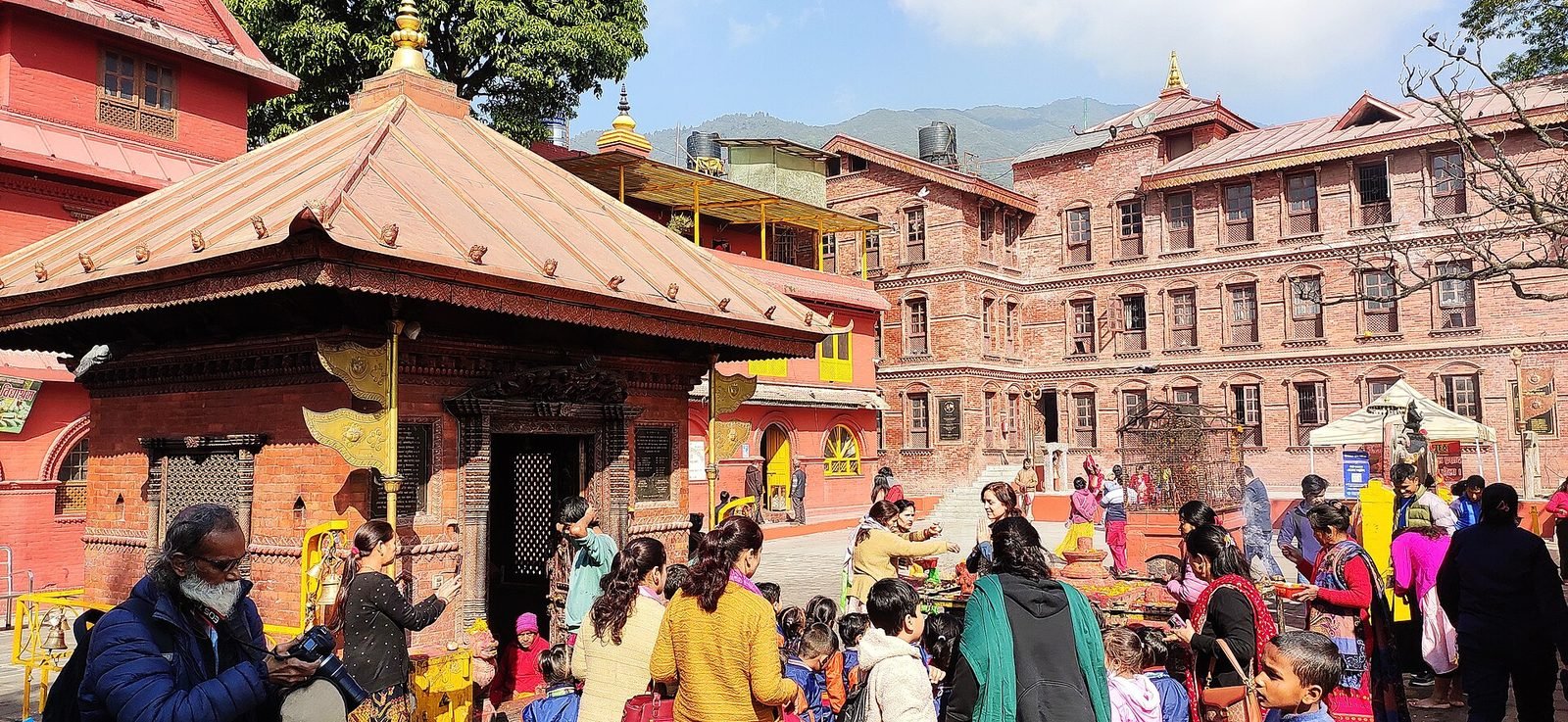
Budhanilkantha Temple, in Kathmandu in Nepal, honours Vishnu in reclining form (Jalashayan Narayan), resting on the serpent Shesha. It is also known as Narayanthan Temple, Jalashayan Narayan Mandir.
Budhanilkantha is regarded as one of the most important Vishnu shrines in the Kathmandu Valley and is venerated by both Hindus and Buddhists as a symbol of religious harmony. The statue is widely cited as the largest stone image of its kind in Nepal. The reclining image is one of the largest and oldest stone sculptures of its kind in the Kathmandu Valley.
Nepal carries a distinct temple identity of its own: Home to Pashupatinath, one of the holiest Shiva temples in the world and a UNESCO World Heritage Site.
Darshan hours and daily worship
Published sources do not give a single clean daily window for this temple; see the notes below for what is documented.
Open-air shrine with no fixed opening hours or entry ticket in the way an enclosed temple would have. Early morning visits are recommended to avoid Kathmandu traffic and crowds.
Festivals and special-day timings
Regular darshan hours are usually extended, or set aside entirely, on these dates.
| Festival | Period | What happens |
|---|---|---|
| Haribodhini Ekadashi Mela | Kartik month, typically October to November | The temple's largest annual gathering, marking the symbolic awakening of Vishnu from his four month cosmic sleep. Thousands of devotees, including many from India, attend. |
History and architecture
Architecture
Open-air shrine centered on a 5 meter long reclining stone image carved from a single block of black basalt, set within a 13 meter recessed water tank
History
The reclining image is one of the largest and oldest stone sculptures of its kind in the Kathmandu Valley. Local legend attributes its unearthing to a farmer named Haridatta Barma, who is said to have been instructed in a dream to dig up the buried deity and accidentally chipped its nose with his axe, a mark the statue still bears today. An alternative historical account credits a Licchavi era ruler, Vishnugupta, serving under King Bhimarjuna Dev, with commissioning or transporting the image to the site. Nepalese monarchs have traditionally avoided visiting the temple due to a longstanding prophecy linked to King Pratap Malla in the 17th century.
Planning your visit
How to reach
Located in Budhanilkantha municipality, roughly 8 to 10 km north of central Kathmandu; reachable by taxi or local bus from Thamel or the airport area.
Where this information comes from
high