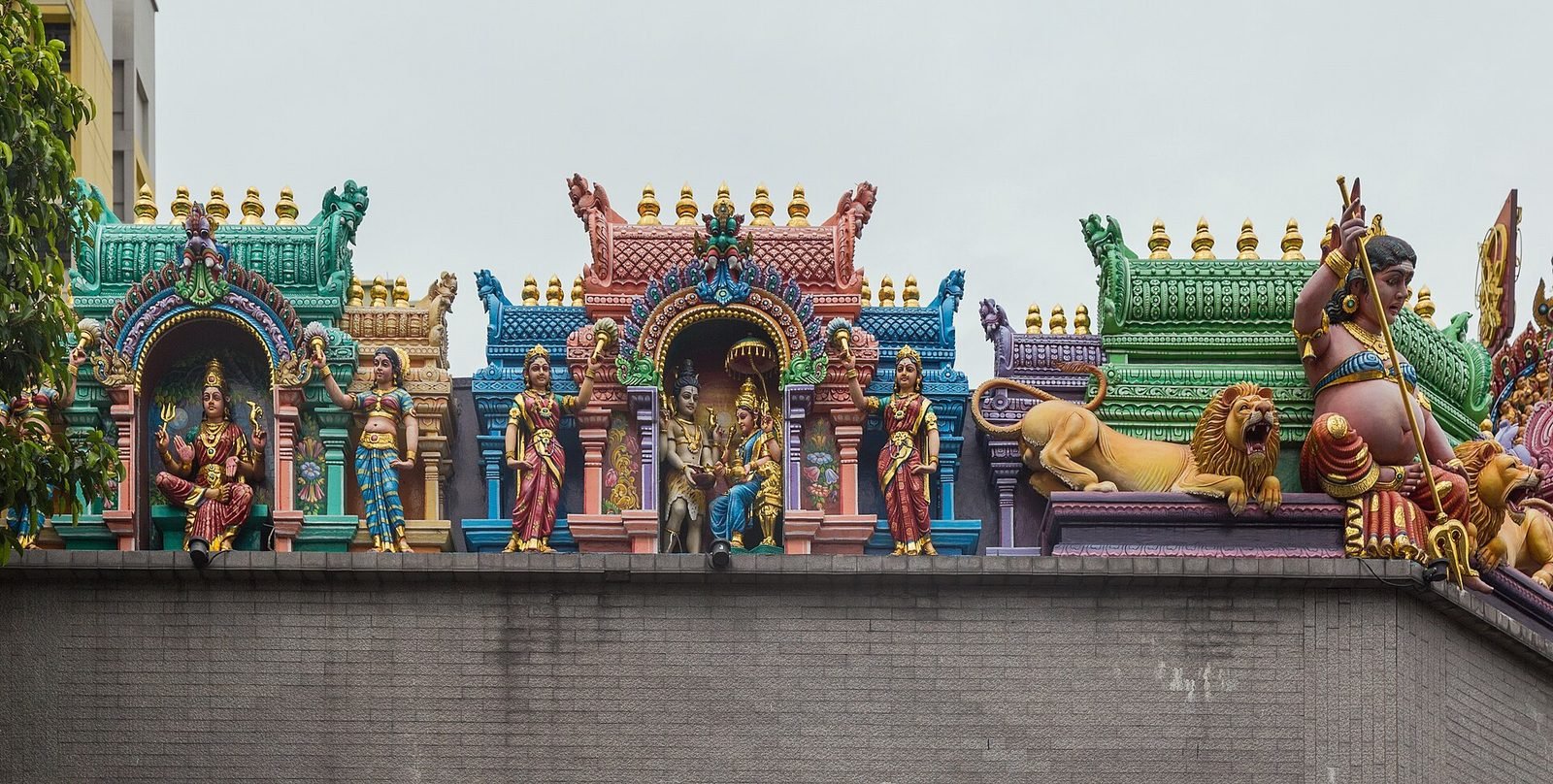
Sri Veeramakaliamman Temple stands in Little India, Singapore, Singapore, is a shrine to Kali, also worshipped as Veeramakaliamman, a fierce form of Parvati. It is also known as Soonambu Kambam Kovil, Kali Amman Temple.
Singapore's first temple dedicated to the goddess Kali. It is one of the most visited and photographed temples in Little India, historically sought out by early Indian settlers for protection, career blessings, healing and fertility. Tamil workers are said to have erected a shrine to Veeramakaliamman on the site as early as 1855.
Singapore carries a distinct temple identity of its own: Home to Sri Mariamman, Singapore's oldest Hindu temple and a national monument since 1973.
Darshan hours and daily worship
| Session | Timing (as published) |
|---|---|
| Morning | Daily puja begins at 5:30 AM with suprabhatam |
| Evening | Concludes at 9:00 PM with arthajama arti |
Poojas and daily rituals
Suprabhatam (morning invocation) and arthajama arti (closing rites)
Festivals and special-day timings
Regular darshan hours are usually extended, or set aside entirely, on these dates.
| Festival | Period | What happens |
|---|---|---|
| Navaratri | September or October | Nine night festival honouring the goddess, marked with a Navaratri Kolu display |
| Deepavali | October or November | Marked with the goddess's chariot procession |
| Aadi Thiruvizha | Tamil month of Aadi, July to August | Annual temple festival |
History and architecture
Architecture
Dravidian style Hindu temple with a decorated gopuram; a conserved heritage building
History
Tamil workers are said to have erected a shrine to Veeramakaliamman on the site as early as 1855. Bengali labourers built a temple there in 1881. The name Soonambu Kambam Kovil, meaning temple at the village of lime, referred to lime kilns once found in the surrounding area. The deteriorating structure was restored in 1908, when a statue of the goddess arrived from South India and the main hall and shrine were built; further statues were added in the 1930s. During the Japanese Occupation in World War II, the temple is recorded as having sheltered over 20 homeless people nightly and provided them food, and in October 1943 a temple trustee presented a ceremonial sword to the Indian National Army.
Planning your visit
How to reach
Short walk from Little India MRT station, 141 Serangoon Road
Where this information comes from
Confidence: Medium. Listed as a conserved heritage building; national monument status (unlike neighbouring Sri Srinivasa Perumal Temple) not confirmed