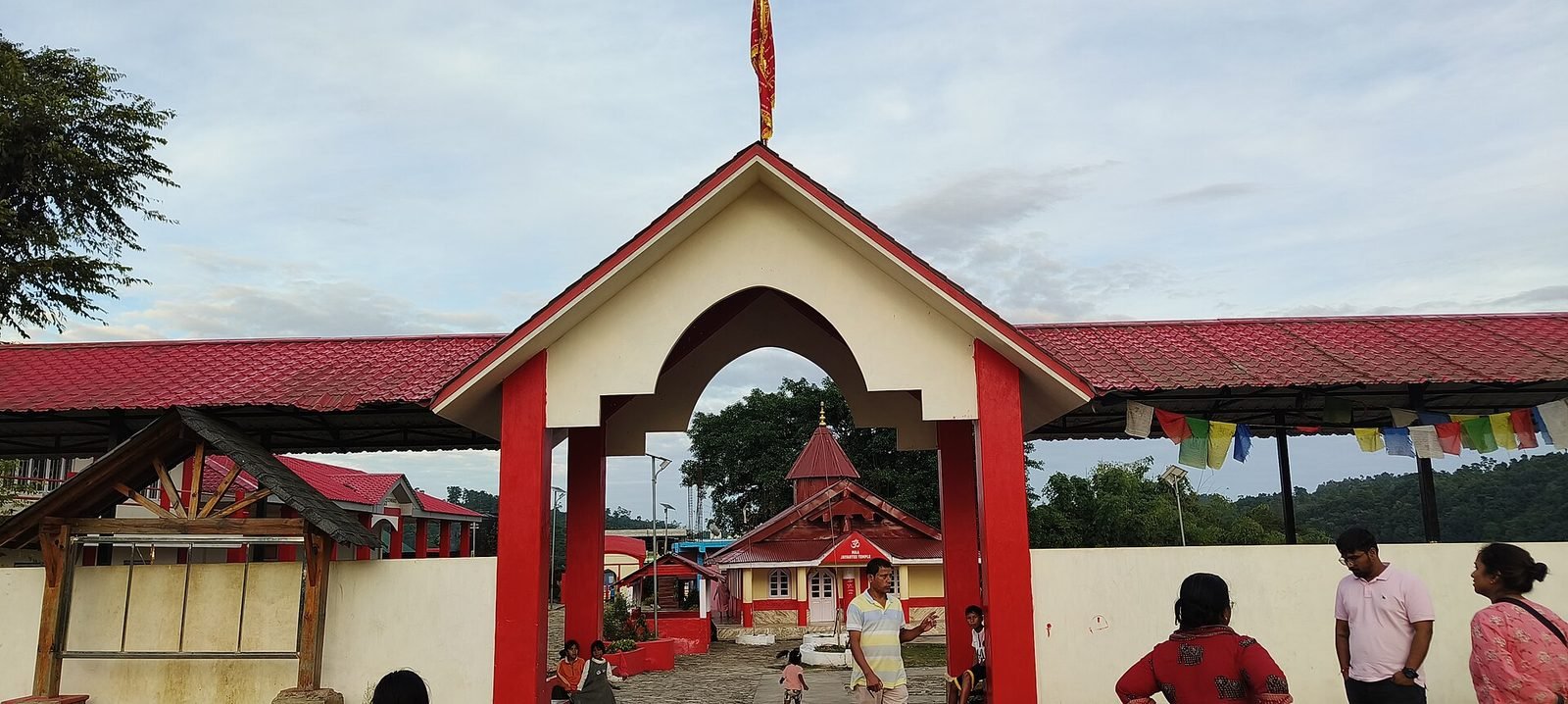
Nartiang Durga Temple, in Nartiang in Meghalaya, is dedicated to Durga as Jayanteshwari, with Kamadishwar as Bhairava. It is also known as Jayanteshwari Temple, Jainteshwari Temple, Jayanti Shakti Peeth.
Widely venerated by devotees as one of the 51 Shakti Peethas, marking the spot where the left thigh of Sati is said to have fallen. This claim should be read with some caution: the number and list of Shakti Peethas vary across different Puranic and Tantric traditions (lists of 18, 51 and 108 all circulate), and a separate temple, the Jayanti Shaktipeeth at Jaintiapur in Sylhet, Bangladesh, makes the same left-thigh claim under nearly identical deity names (Jayanti and Kramadeeshwar/Kamadishwar). This overlap likely reflects the fact that the historic Jaintia kingdom's territory once spanned both sides of the present India-Bangladesh border. Nartiang is also notable as a rare point where indigenous Khasi-Jaintia tradition and Puranic Hinduism visibly merge, including the worship of the goddess in the form of a dressed banana-plant trunk rather than an idol. Nartiang was made the summer capital of the Jaintia kingdom under King Dhan Manik (r.
Meghalaya carries a distinct temple identity of its own: A Christian-majority state whose Nartiang Durga Temple is a rare, centuries-old point where indigenous Khasi-Jaintia and Puranic Hindu tradition visibly merge.
Darshan hours and daily worship
Published sources do not give a single clean daily window for this temple; see the notes below for what is documented.
No reliably sourced daily darshan hours were found; the temple is most active during Durga Puja.
Poojas and daily rituals
During Durga Puja, a banana-plant trunk is dressed in cloth and marigold flowers and worshipped as the goddess for four days before immersion
Festivals and special-day timings
Regular darshan hours are usually extended, or set aside entirely, on these dates.
| Festival | Period | What happens |
|---|---|---|
| Durga Puja | Ashwin month (roughly September-October), per the Hindu lunisolar calendar | The principal annual festival. A dressed banana-plant trunk representing the goddess is worshipped for four days, accompanied by gun salutes and animal sacrifice, before ceremonial immersion in the Myntdu River. The local Khasi chieftain (Syiem) traditionally serves as chief patron of the rites. |
History and architecture
Architecture
Blend of Hindu temple form with local Khasi-Jaintia stone building traditions; renovated in 1987 by the Ramakrishna Mission, Cherrapunji
History
Nartiang was made the summer capital of the Jaintia kingdom under King Dhan Manik (r. circa 1596-1612). Temple tradition credits a later Jaintia king, Jaso Manik, with founding the shrine after the goddess appeared to him in a dream; his queen, a Koch princess, is also said to have encouraged the royal family toward Shakta worship. The temple is administered today by a Central Puja Committee as the official representative body of Meghalaya's Hindu community.
Planning your visit
How to reach
About 65 km from Shillong, in West Jaintia Hills district; reachable by road via Jowai
Where this information comes from
Confidence: Medium. History and Durga Puja rituals are well documented via Wikipedia and Indian news/travel sources, but the '51 Shakti Peethas' claim is a devotional tradition rather than a single agreed canonical list, and a near-identical Jayanti Shakti Peeth legend with the same deity names is also claimed by a temple in Jaintiapur, Sylhet, Bangladesh. Exact daily darshan timings, entry rules and dress code could not be verified.