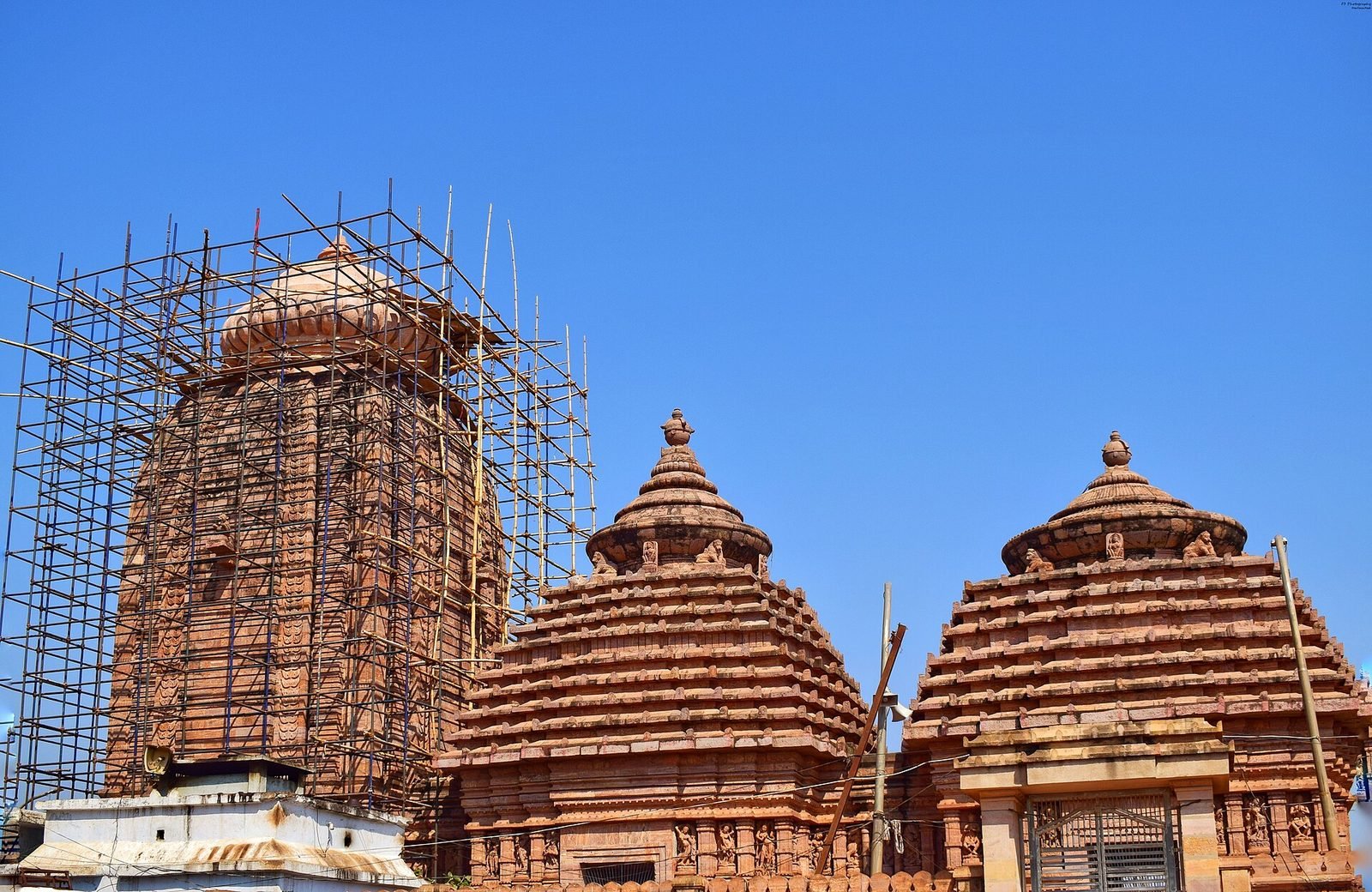
Set in Berhampur, Ganjam, Odisha, Tara Tarini Temple is dedicated to Tara and Tarini, twin forms of Adi Shakti. It is also known as Tara Tarini Mandir, Tara Tarini Pitha.
Tara Tarini is one of the 51 Shakti Peethas (also counted among four principal Adi Shakti Pithas), traditionally said to mark the spot where the breasts of Sati fell, which is reflected in the shape of the two stone-face idols worshipped here. The shrine atop the Purnagiri (Kumari) hills overlooking the Rushikulya river is considered one of four principal Adi Shakti Pithas in the region.
Odisha carries a distinct temple identity of its own: Land of Kalinga temple architecture, from Jagannath's Rath Yatra at Puri to the sculpted sun-chariot of Konark.
Darshan hours and daily worship
| Session | Timing (as published) |
|---|---|
| Morning | 6:00 AM to 12:30 PM |
| Evening | 2:00 PM to 8:30 PM |
Reported hours vary slightly by source (some list 6 AM to 7 PM continuous, others list a midday break); confirm locally before visiting.
Festivals and special-day timings
Regular darshan hours are usually extended, or set aside entirely, on these dates.
| Festival | Period | What happens |
|---|---|---|
| Chaitra Jatra | Tuesdays in the Hindu month of Chaitra | Major festival associated with child tonsuring (mundan) ceremonies; special khechudi bhoga served. |
| Sankranti Mela | First day of each Hindu month | Considered especially auspicious for Tantra practitioners. |
| Dussehra and Navaratri | September/October | Celebrated at the temple along with Dola Parba, Diwali, and Sankranti. |
History and architecture
Architecture
Kalinga style temple architecture, built across five structures on the hilltop
History
The shrine atop the Purnagiri (Kumari) hills overlooking the Rushikulya river is considered one of four principal Adi Shakti Pithas in the region. Popular legend credits a Brahmin, Basu Praharaj, with establishing worship here after the goddess appeared to him in a dream. The site's worship traditions are rooted in tribal practice, later shaped by Buddhist Tantra, and eventually absorbed into the Hindu Shakta tradition. Historical development involved Kalinga-era rulers and later, medieval patronage.
Planning your visit
How to reach
Around 28 km from Berhampur (Brahmapur) city. Devotees climb over 999 steps from the base of the hill to the temple, or a ropeway is available.
Where this information comes from
Confidence: Medium. Timings differ slightly between sources; entry fee, dress code, and poojas could not be confirmed.