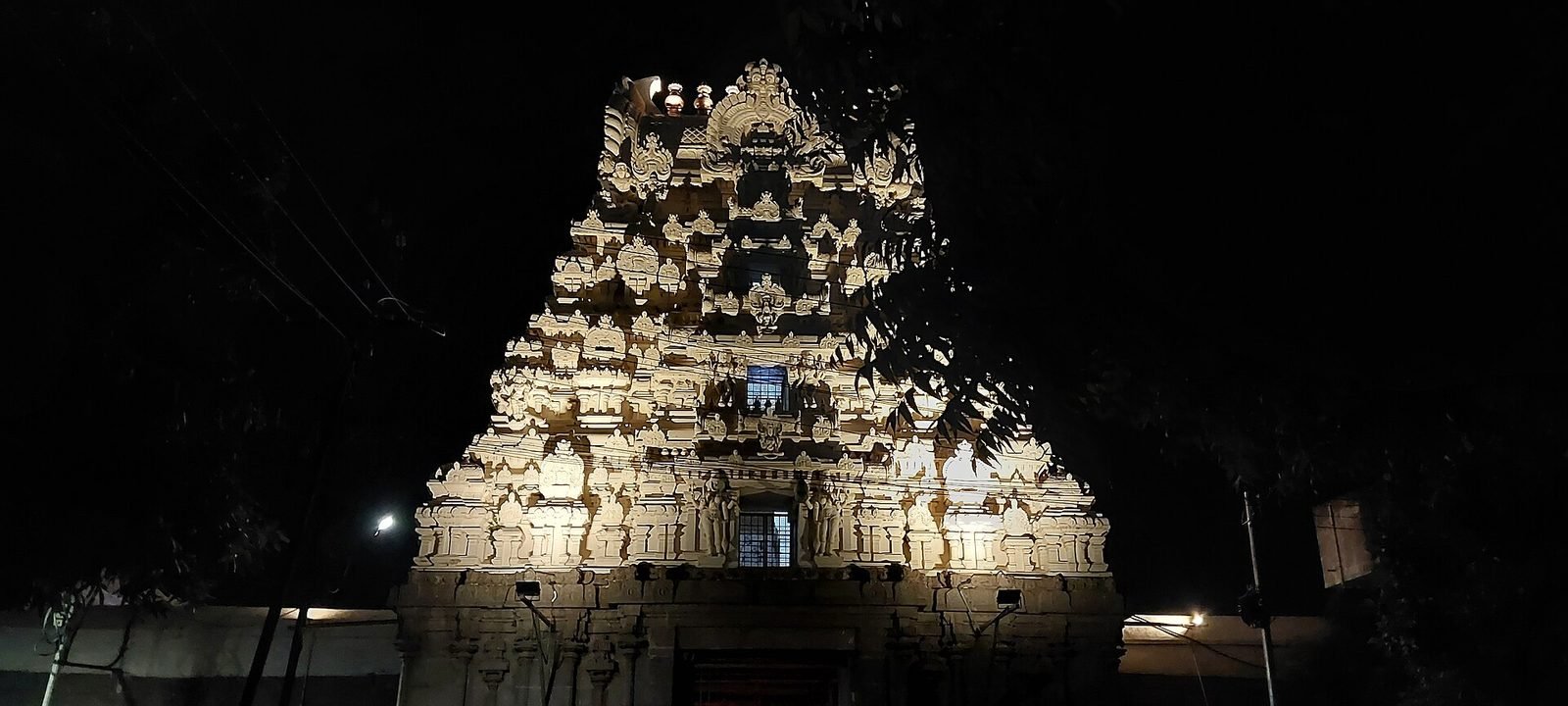
Kamakshi Amman Temple, Kanchipuram, Kanchipuram, Tamil Nadu
Photo: Pinakpani, CC BY 4.0, Wikimedia Commons

Kamakshi Amman Temple, Kanchipuram Timings

Kamakshi Amman Temple, Kanchipuram is open 5:30 AM to 12:00 PM and 3:30 PM to 8:30 PM, daily.

Kamakshi, a supreme form of Parvati / Adi Parashakti central to the Shaktism tradition · Kanchipuram, Tamil Nadu

Shakti PeethasFree entryHigh confidence
Darshan hours (as published)
5:30 AM - 12:00 PM · 3:30 PM - 8:30 PM
Open/closed status loads once the page finishes rendering.

Kamakshi Amman Temple, Kanchipuram stands in Kanchipuram, Tamil Nadu, honours Kamakshi, a supreme form of Parvati / Adi Parashakti central to the Shaktism tradition. It is also known as Kamakoti Nayaki Kovil, Kanchi Kamakshi Temple.

Kamakshi Amman Temple is one of India's foremost Shakti temples and, alongside the Meenakshi Temple in Madurai, one of the major centers of Shaktism in South India. It is administered in close association with the Kanchi Kamakoti Peetham, whose Shankaracharya serves as its hereditary trustee. It is one of the 51 Shakti Peethas, traditionally said to mark the spot where the navel of Sati fell. The temple's exact founding is uncertain; tradition attributes early construction to the Pallava dynasty, whose capital was Kanchipuram, with further renovations under the Chola and Vijayanagara rulers, and legend places a re-consecration of the goddess's golden idol in 1783.

Tamil Nadu carries a distinct temple identity of its own: Land of towering gopurams and living Dravidian temple traditions, from the Chola masterpieces to the great Pancha Bhoota Sthalas.

Darshan hours and daily worship

SessionTiming (as published)
Morning5:30 AM - 12:00 PM
Evening3:30 PM - 8:30 PM

The temple's own website's 'Pujas' page (kanchikamakshi.org/pujas/) - missed in the prior research pass - gives a full Daily Pooja Schedule confirming the temple opens at 5:30 AM (matching the previously listed morning start) and detailing named poojas/abhishekams through the day, ending with Palliarai Pooja at 8:30 PM. That page does not itself state an explicit single morning-closing or evening-reopening time, so the previously-listed 12:00 PM morning close and 3:30 PM evening reopen (from secondary travel sites, e.g. trawell.in) are retained but still not independently confirmed on the official site - treat the overall window as approximate outside of the specifically-timed poojas above. The official site's own festival notes corroborate the existing claims that Fridays (Golden Chariot pulled weekly on Fridays) and Pournami/full-moon nights (Nava Varna Pooja is specifically a Poornima-night event) are treated differently, supporting the previously-noted extended Friday/Pournami hours even though exact closing times for those days are still not stated.

Poojas and daily rituals

Daily worship includes Goh Pooja and Viswarupa Darshanam at temple opening, followed by three Abhishekams (Kala Sandhi, Utchikalam, Sayarksha) through the day, and closing with Arthajama (Night) Pooja and Palliarai Pooja; see the ritual schedule below for exact times, now confirmed on the temple's own website.

Daily aarti and pooja schedule

RitualTime
Temple opens / Goh Pooja & Viswarupa Darshanam5:30 AM
Kala Sandhi Abhishekam7:30 AM
Utchikalam Abhishekam11:00 AM - 11:30 AM
Sayarksha Abhishekam4:00 PM - 4:30 PM
Arthajama Pooja (Night Pooja)7:30 PM - 8:15 PM
Palliarai Pooja8:30 PM
Weekly or monthly auspicious daysAll Fridays are considered especially sacred for the goddess, with Fridays in the Tamil months of Aadi and Thai observed with special significance; Pournami (full moon) days also see extended temple hours.
Signature annual eventsMasi Mahotsavam, the annual festival featuring chariot and float processions, is the temple's signature yearly event.

Festivals and special-day timings

Regular darshan hours are usually extended, or set aside entirely, on these dates.

FestivalPeriodWhat happens
Masi Mahotsavam (Chariot and Float Festival)Tamil month of Masi (mid-February to mid-March)The temple's principal annual festival, including a chariot (Ther) procession and a Float Festival (Theppam); Maasi Pooram day is its most significant celebration.
NavaratriSeptember/OctoberNine nights of worship of the goddess in different forms.
Vasanta UtsavamTamil month of Vaikasi (May/June)A spring festival celebrated for the goddess.
Aadi and Aippasi PooramTamil months of Aadi (July/August) and Aippasi (October/November)Monthly star-day (Pooram nakshatra) observances of particular importance for the goddess.

History and architecture

Built or establishedOrigins attributed to the Pallava period (5th-8th century CE), with later modifications under the Chola dynasty (around the 14th century); a golden idol tradition associated with the current sanctum dates to 1783

Architecture

Dravidian style, spanning about 5 acres with a golden gopuram, a Gayatri Mandapa, a temple tank, and multiple subsidiary shrines (including Saraswati, Lakshmi, Vinayaka and others) within the complex

History

The temple's exact founding is uncertain; tradition attributes early construction to the Pallava dynasty, whose capital was Kanchipuram, with further renovations under the Chola and Vijayanagara rulers, and legend places a re-consecration of the goddess's golden idol in 1783. It is counted among the 18 principal Shakta Pithas (Shakti Peethas), believed to mark the spot where the navel of the goddess Sati fell, giving it the name Nabhi Peetham. Adi Shankaracharya is credited with consecrating the Sri Chakra Yantra installed before the main deity, and the temple remains linked to the Kanchi Kamakoti Peetham that he established.

Planning your visit

Entry feeGeneral darshan is free; some travel sites mention a special darshan ticket (reported around Rs 100), though this is not confirmed on the temple's official website. The official site does publish seva/abhishekam charges: Abhishekam Rs 1000, Sahasranama Archana Rs 150, Sandana Kappu Rs 6000, Navavarna Pooja Rs 2000, Golden Chariot seva Rs 2500, Kumkum Archana Re 1 (ticket) - these are individual seva fees, not general darshan-entry tiers, so they are not listed as darshanTiers.
Dress codeTraditional, modest attire is recommended; men are generally expected to remove upper-body clothing before entering the main sanctum, and sleeveless tops, mini-skirts and low-rise jeans are discouraged.
Best time to visitOctober to March for cooler weather; visiting during Masi Mahotsavam (February/March) coincides with the temple's major festival for those who want to see the celebrations, though it will be more crowded.
NearbyEkambareswarar Temple, Kailasanathar Temple, and Varadharaja Perumal Temple, all major Kanchipuram temples within a few kilometers.

How to reach

The temple is about 1 km from Kanchipuram Bus Stand and Kanchipuram Railway Station, reachable by auto-rickshaw or on foot. Kanchipuram is roughly 75 km from Chennai, whose airport is the nearest major air hub.

Where this information comes from

Confidence: High. The daily pooja/abhishekam schedule with clock times, and the temple's published seva charges, are now confirmed directly from the temple's own website's Pujas page (kanchikamakshi.org/pujas/), which had been missed in the prior research pass despite the site being checked. The overall closing/reopening hours outside the specifically-timed poojas remain approximate, sourced from secondary travel sites rather than the official site, so those should still be confirmed locally before visiting.

Frequently asked questions about Kamakshi Amman Temple, Kanchipuram

What is the timing of Kamakshi Amman Temple, Kanchipuram?

Kamakshi Amman Temple, Kanchipuram is open 5:30 AM to 12:00 PM and 3:30 PM to 8:30 PM, daily. The temple's own website's 'Pujas' page (kanchikamakshi.org/pujas/) - missed in the prior research pass - gives a full Daily Pooja Schedule confirming the temple opens at 5:30 AM (matching the previously listed morning start) and detailing named poojas/abhishekams through the day, ending with Palliarai Pooja at 8:30 PM. That page does not itself state an explicit single morning-closing or evening-reopening time, so the previously-listed 12:00 PM morning close and 3:30 PM evening reopen (from secondary travel sites, e.g. trawell.in) are retained but still not independently confirmed on the official site - treat the overall window as approximate outside of the specifically-timed poojas above. The official site's own festival notes corroborate the existing claims that Fridays (Golden Chariot pulled weekly on Fridays) and Pournami/full-moon nights (Nava Varna Pooja is specifically a Poornima-night event) are treated differently, supporting the previously-noted extended Friday/Pournami hours even though exact closing times for those days are still not stated.

What are the darshan (visiting) hours at Kamakshi Amman Temple, Kanchipuram?

As published, morning darshan runs 5:30 AM - 12:00 PM and evening darshan runs 3:30 PM - 8:30 PM. The temple's own website's 'Pujas' page (kanchikamakshi.org/pujas/) - missed in the prior research pass - gives a full Daily Pooja Schedule confirming the temple opens at 5:30 AM (matching the previously listed morning start) and detailing named poojas/abhishekams through the day, ending with Palliarai Pooja at 8:30 PM. That page does not itself state an explicit single morning-closing or evening-reopening time, so the previously-listed 12:00 PM morning close and 3:30 PM evening reopen (from secondary travel sites, e.g. trawell.in) are retained but still not independently confirmed on the official site - treat the overall window as approximate outside of the specifically-timed poojas above. The official site's own festival notes corroborate the existing claims that Fridays (Golden Chariot pulled weekly on Fridays) and Pournami/full-moon nights (Nava Varna Pooja is specifically a Poornima-night event) are treated differently, supporting the previously-noted extended Friday/Pournami hours even though exact closing times for those days are still not stated.

Is there an entry fee at Kamakshi Amman Temple, Kanchipuram?

General darshan is free; some travel sites mention a special darshan ticket (reported around Rs 100), though this is not confirmed on the temple's official website. The official site does publish seva/abhishekam charges: Abhishekam Rs 1000, Sahasranama Archana Rs 150, Sandana Kappu Rs 6000, Navavarna Pooja Rs 2000, Golden Chariot seva Rs 2500, Kumkum Archana Re 1 (ticket) - these are individual seva fees, not general darshan-entry tiers, so they are not listed as darshanTiers.

What is the dress code at Kamakshi Amman Temple, Kanchipuram?

Traditional, modest attire is recommended; men are generally expected to remove upper-body clothing before entering the main sanctum, and sleeveless tops, mini-skirts and low-rise jeans are discouraged.

What is the daily aarti and pooja schedule at Kamakshi Amman Temple, Kanchipuram?

Temple opens / Goh Pooja & Viswarupa Darshanam at 5:30 AM, Kala Sandhi Abhishekam at 7:30 AM, Utchikalam Abhishekam at 11:00 AM - 11:30 AM, Sayarksha Abhishekam at 4:00 PM - 4:30 PM, Arthajama Pooja (Night Pooja) at 7:30 PM - 8:15 PM, Palliarai Pooja at 8:30 PM.

Which festivals are celebrated at Kamakshi Amman Temple, Kanchipuram?

The main ones documented for this temple are Masi Mahotsavam (Chariot and Float Festival), Navaratri, Vasanta Utsavam. See the festival table above for dates and what each involves.

What is the best time to visit Kamakshi Amman Temple, Kanchipuram?

October to March for cooler weather; visiting during Masi Mahotsavam (February/March) coincides with the temple's major festival for those who want to see the celebrations, though it will be more crowded.

How do I reach Kamakshi Amman Temple, Kanchipuram?

The temple is about 1 km from Kanchipuram Bus Stand and Kanchipuram Railway Station, reachable by auto-rickshaw or on foot. Kanchipuram is roughly 75 km from Chennai, whose airport is the nearest major air hub.

Who is the presiding deity at Kamakshi Amman Temple, Kanchipuram?

Kamakshi, a supreme form of Parvati / Adi Parashakti central to the Shaktism tradition

How reliable is the information on this Kamakshi Amman Temple, Kanchipuram page?

This listing's confidence is rated high. The daily pooja/abhishekam schedule with clock times, and the temple's published seva charges, are now confirmed directly from the temple's own website's Pujas page (kanchikamakshi.org/pujas/), which had been missed in the prior research pass despite the site being checked. The overall closing/reopening hours outside the specifically-timed poojas remain approximate, sourced from secondary travel sites rather than the official site, so those should still be confirmed locally before visiting.