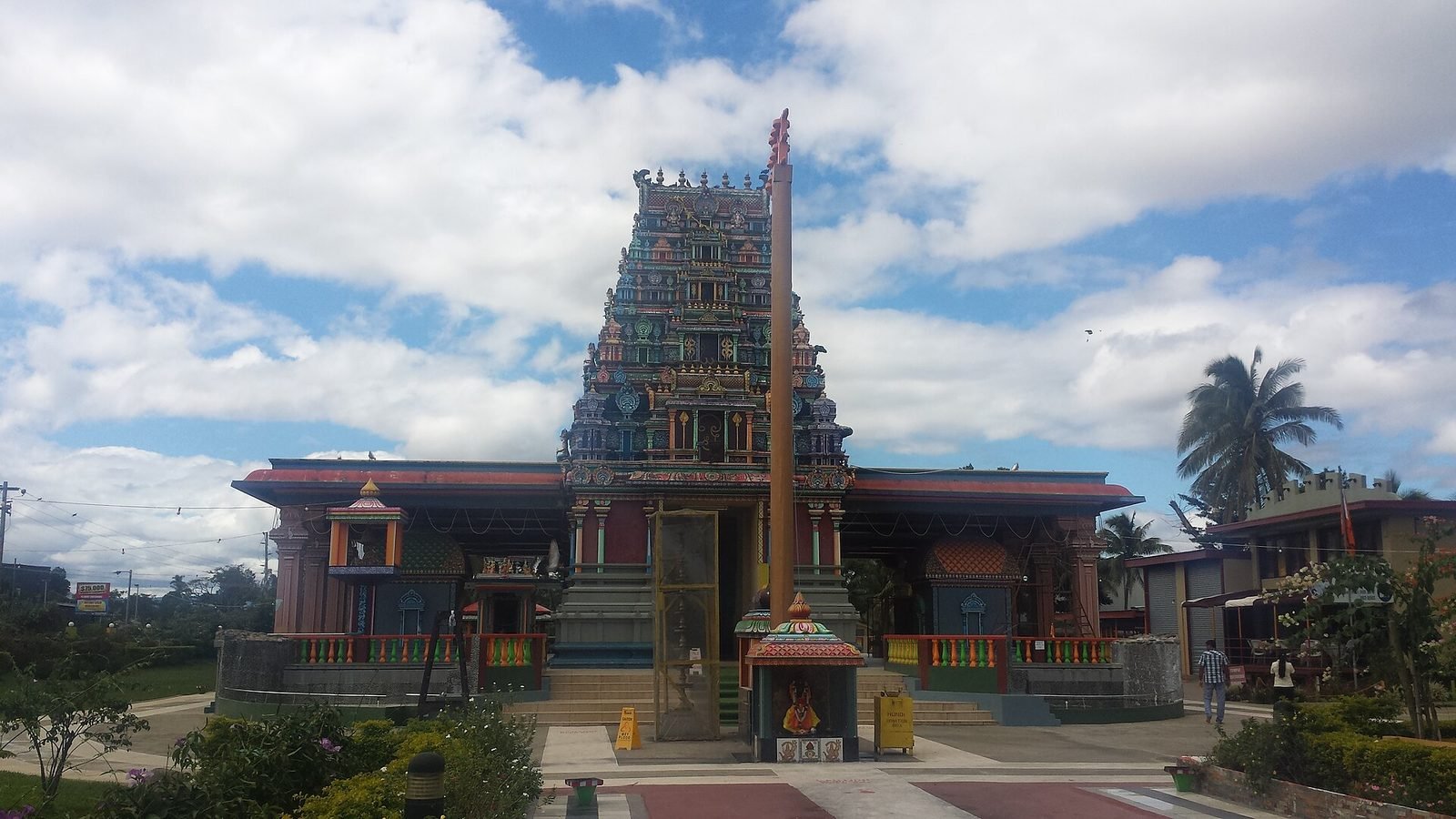
Set in Nadi, Fiji, Sri Siva Subramaniya Temple is dedicated to Lord Murugan (Subramaniya), with shrines to Shiva-Parvati and Ganesha. It is also known as Sri Siva Subramaniya Swami Temple.
Recognised as the largest Hindu temple in the Southern Hemisphere, it is a major religious and cultural centre for Fiji's Indo-Fijian community and one of the country's foremost tourism landmarks. The temple traces back to the Then India Sanmarga Ikya Sangam (TISI Sangam), formed in 1926 at an earlier temple building on the same site by descendants of Indian indentured labourers who arrived in Fiji from 1879 to work the sugar plantations.
Fiji carries a distinct temple identity of its own: Home to the Sri Siva Subramaniya Temple, the largest Hindu temple in the Southern Hemisphere, built by a Hindu community descended from Indian indentured labourers brought to the sugar plantations from 1879.
Darshan hours and daily worship
| Session | Timing (as published) |
|---|---|
| Morning | Opens 6:00 AM daily |
| Evening | Closes 8:00 PM Monday, Tuesday and Friday; closes 7:00 PM Wednesday, Thursday, Saturday and Sunday |
Guided tours run every half hour between 8:30 AM and 3:00 PM. Hours are subject to change on special pooja days. Inner sanctums are reserved for worshippers; visitors may view them from outside.
Poojas and daily rituals
Regular temple worship is held for devotees; the inner sanctum is reserved for worshippers, with guided tours offered to visitors in the outer areas.
Festivals and special-day timings
Regular darshan hours are usually extended, or set aside entirely, on these dates.
| Festival | Period | What happens |
|---|---|---|
| Thaipusam | January | One of the temple's largest annual festivals, honouring Lord Murugan and drawing devotees from across Fiji. |
| Panguni Uthiram Thirunaal | April | A major annual festival at the temple dedicated to Lord Murugan. |
History and architecture
Architecture
Dravidian South Indian style following Vastu Vedic principles, with pyramid-shaped gopuram towers and ornate carved statues of Hindu deities; built by artisans brought specially from Tamil Nadu, India
History
The temple traces back to the Then India Sanmarga Ikya Sangam (TISI Sangam), formed in 1926 at an earlier temple building on the same site by descendants of Indian indentured labourers who arrived in Fiji from 1879 to work the sugar plantations. Bhoomi Pooja for the current structure was held in January 1984 and construction was inaugurated that April, with pile driving completed by 1986 and the temple formally consecrated on 15 July 1994. A chief priest from Tamil Nadu arrived in 1984 to help revive temple activities.
Planning your visit
How to reach
The temple sits in the heart of Nadi town on the main road, an easy walk from Nadi's town centre and roughly 6 to 9 km (a 15 to 20 minute drive) from Nadi International Airport.
Where this information comes from
high