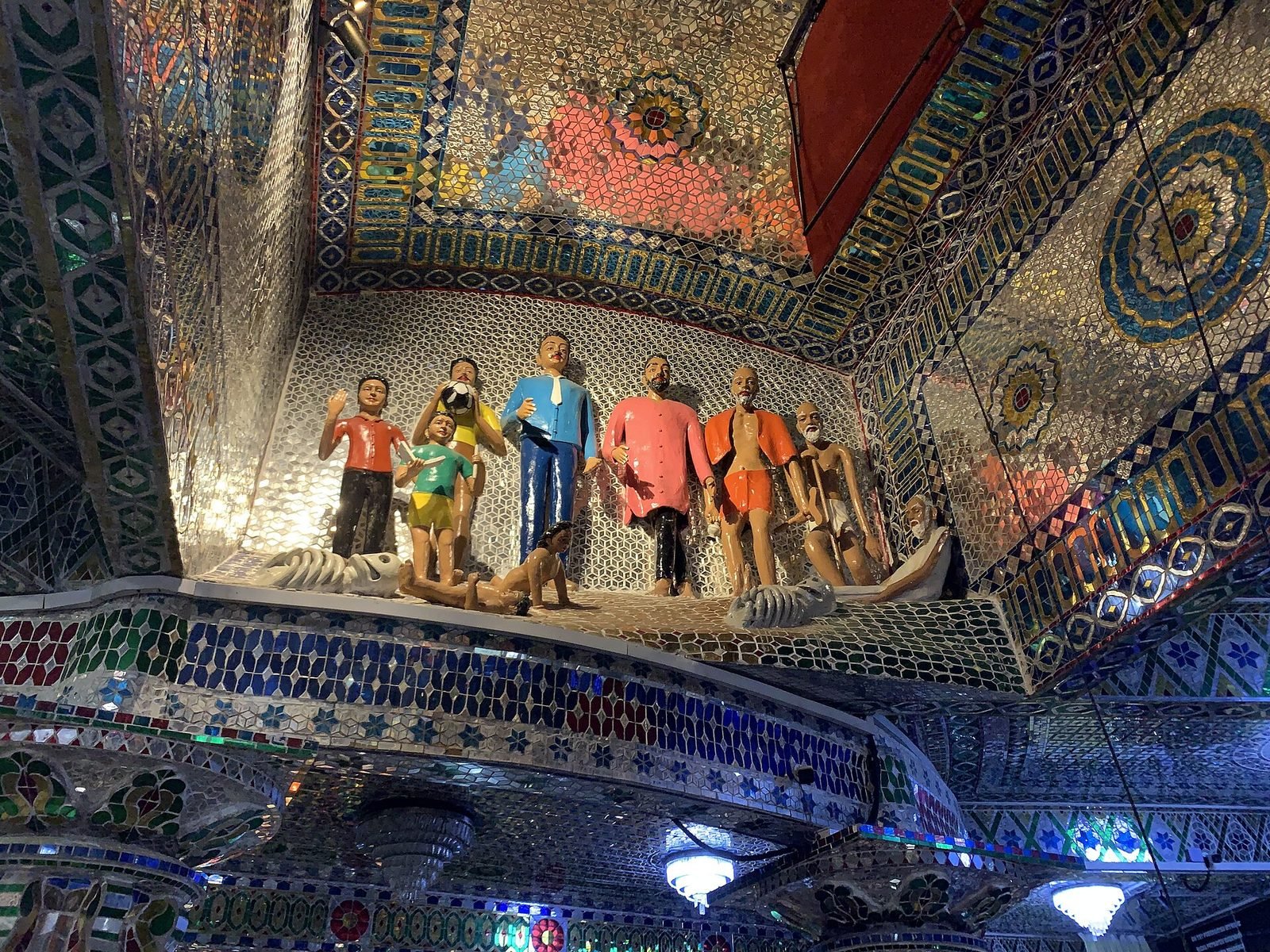
Arulmigu Sri Rajakaliamman Glass Temple stands in Johor Bahru, Malaysia, honours Rajakaliamman, a form of Shakti/Kali, with a central Athma Lingam shrine to Shiva. It is also known as Johor Bahru Glass Temple, Glass Temple.
Recognised as the world's first and only Hindu glass temple and listed in the Malaysia Book of Records, it is one of the most photographed and visited temples in Johor Bahru. The temple also displays statues of Buddha, Jesus Christ and Mother Teresa alongside its Hindu deities, reflecting a stated message of social and racial harmony. The temple began as a simple shelter gifted by the Sultan of Johor, later rebuilt as a temple by Guru Bhagawan Sittar in 1922.
Malaysia carries a distinct temple identity of its own: Home to Batu Caves, the focal point of Thaipusam and one of the most visited Hindu shrines outside India.
Darshan hours and daily worship
| Session | Timing (as published) |
|---|---|
| Morning | 7:00 AM to 12:00 PM |
| Evening | 7:00 PM to 10:00 PM |
These are devotee hours per Tourism Johor; some visitor guides instead list non-devotee (tourist) visiting hours as 1:00 PM to 5:00 PM daily, so sources disagree on the exact tourist visiting window. Hours may also have shifted during or after the temple's 2023-2025 restoration.
Festivals and special-day timings
Regular darshan hours are usually extended, or set aside entirely, on these dates.
| Festival | Period | What happens |
|---|---|---|
| Deepavali | October or November | A major crowd draw at the temple; its two year restoration was completed around October 2025 timed ahead of the Deepavali season. |
History and architecture
Architecture
Interior walls, ceiling and pillars covered with over 300,000 pieces of coloured stained glass and mosaic imported from Thailand, Japan and Belgium, with about 300,000 Rudraksha beads from Nepal embedded in the walls, crystal chandeliers, and gold finished sculptures depicting stages of life
History
The temple began as a simple shelter gifted by the Sultan of Johor, later rebuilt as a temple by Guru Bhagawan Sittar in 1922. Inspired by glass artwork he saw at a Buddhist temple in Bangkok, the guru transformed the temple's interior into its now famous glass covered design. The temple underwent a two year restoration and upgrade completed around October 2025, ahead of that year's Deepavali season.
Planning your visit
How to reach
Located at 22 Lorong 1, Jalan Tebrau, 80300 Johor Bahru, Johor; reachable by taxi, e-hailing or local bus from central Johor Bahru.
Where this information comes from
Confidence: Medium. History, architecture and entry fee are corroborated across sources, but opening hours for non-devotee visitors are inconsistent between sources, and no official temple website was found