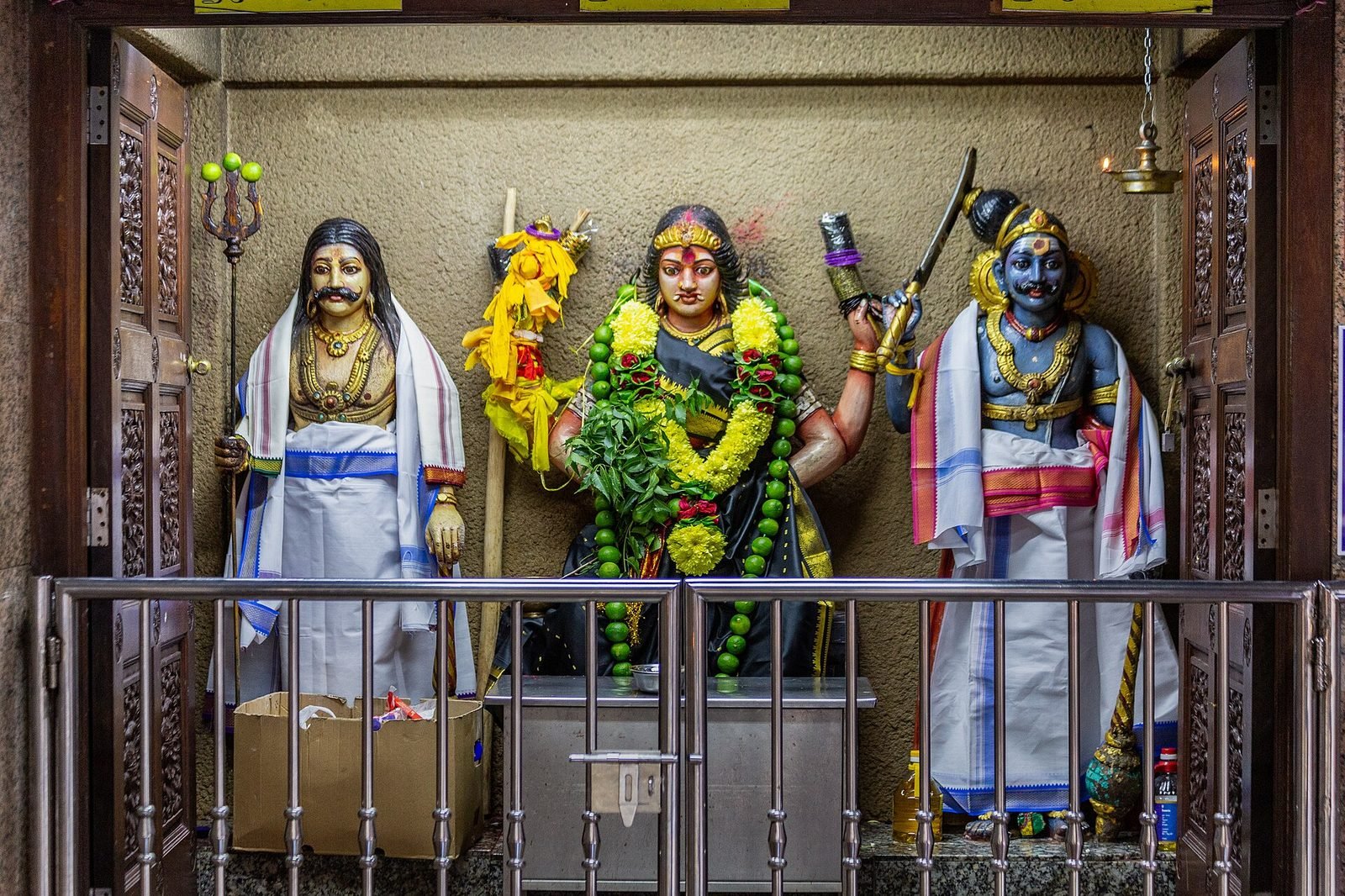
Sri Mahamariamman Temple stands in Kuala Lumpur, Malaysia, is dedicated to Mariamman, a form of Parvati. It is also known as Sri Maha Mariamman Kovil.
Widely described as the oldest functioning Hindu temple in Malaysia and reportedly the wealthiest. It is the starting point of the annual Thaipusam procession that carries the silver chariot and milk offerings to the Batu Caves temple. The managing board also serves as a Hindu religious consultant to the Malaysian government. Founded in 1873 by K.
Malaysia carries a distinct temple identity of its own: Home to Batu Caves, the focal point of Thaipusam and one of the most visited Hindu shrines outside India.
Darshan hours and daily worship
| Session | Timing (as published) |
|---|---|
| Morning | 6:00 AM to 1:00 PM (until 1:30 PM on Fridays) |
| Evening | 4:00 PM to 8:30 PM (until 9:30 PM on Fridays) |
Hours may be extended during major festivals such as Thaipusam and Deepavali; six kala puja (worship cycle) sessions are conducted daily
Poojas and daily rituals
Six daily kala puja cycles with Vadya melam ensembles, annadhanam (food offering), and daily tulasi archanai
Festivals and special-day timings
Regular darshan hours are usually extended, or set aside entirely, on these dates.
| Festival | Period | What happens |
|---|---|---|
| Thaipusam | January or February (Tamil month of Thai) | The temple is the starting point of the procession that carries the silver chariot bearing Lord Muruga to the Batu Caves temple, drawing large crowds from the early hours |
| Deepavali | October or November | One of the temple's most crowded festival days, with devotees offering special prayers |
History and architecture
Architecture
South Indian Dravidian style with a five tiered Raja Gopuram rising 22.9 metres and bearing 228 carved Hindu deity figures; interior includes a garbhagraham, onion domed shrines, and eight Ashta Lakshmi pillar idols
History
Founded in 1873 by K. Thamboosamy Pillai, originally as a private shrine for the Pillai family. It was relocated to its present site on what is now Jalan Tun H.S. Lee in 1885. The original attap structure was replaced with a brick building in 1887. The temple doors were opened to the public in the late 1920s, and management was later handed to a board of trustees. The current gopuram tower, carved by chief sculptor S.T. Muniappa of Tamil Nadu, was completed in 1972 and the rebuilt temple consecrated in 1973. A silver chariot built in 1983 from 350kg of silver is used to carry Lord Muruga during Thaipusam.
Planning your visit
How to reach
Opposite Pasar Seni LRT/MRT station; adjacent to the Klang Bus Station; at the edge of Kuala Lumpur's Chinatown on Jalan Tun H.S. Lee
Where this information comes from
high