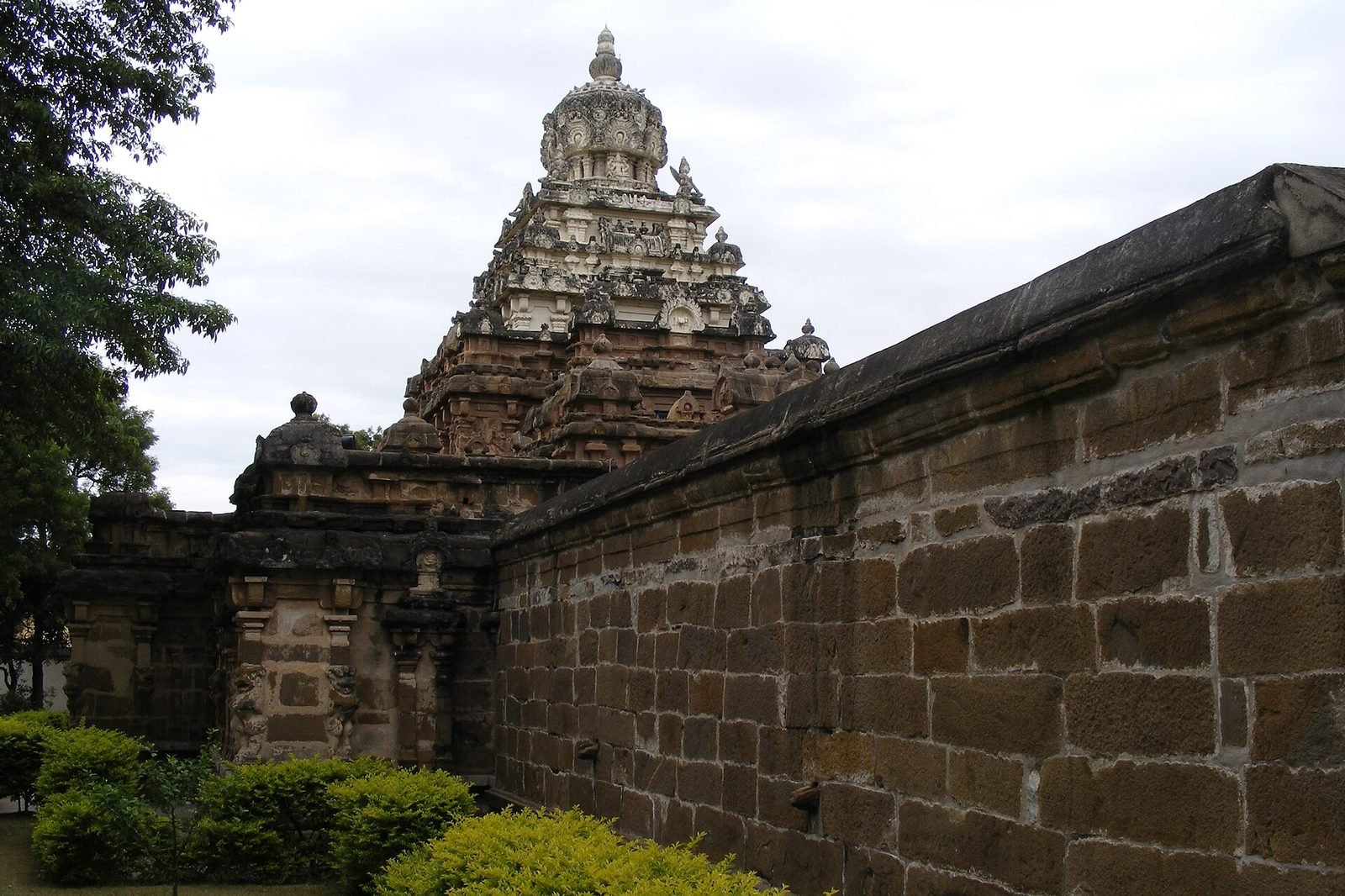
In Kanchipuram, Tamil Nadu, Sri Parameswara Vinnagaram (Vaikunta Perumal Temple) honours Vaikundanatha Perumal, also called Vaikunta Perumal (Vishnu), with consort Vaikundavalli Thayar. The sanctum is unusual for showing Vishnu in three postures on three levels: seated on the ground floor, reclining on the first floor, and standing on the second floor. It is also known as Vaikunta Perumal Temple, Paramechuravinnagaram, Vishnugriha.
This temple is one of the 108 Divya Desams, the Vishnu temples glorified in the Naalayira Divya Prabandham composed by the Alvar poet-saints, and is one of fourteen Divya Desams located in Kanchipuram. It is sung in ten hymns by Tirumangai Alvar and is notable for its Pallava era architecture and inscriptions. Temple tradition holds that Vishnu appeared before Pallava princes at this site, leading to its construction by the Pallava dynasty.
Tamil Nadu carries a distinct temple identity of its own: Land of towering gopurams and living Dravidian temple traditions, from the Chola masterpieces to the great Pancha Bhoota Sthalas.
Darshan hours and daily worship
| Session | Timing (as published) |
|---|---|
| Morning | 7:30 AM to 12:00 PM |
| Evening | 4:00 PM to 8:00 PM |
Timings are drawn from tourism sites rather than an official ASI or HR&CE listing, so treat as approximate. Access to the first floor sanctum is reported to be permitted only on Ekadashi days.
Festivals and special-day timings
Regular darshan hours are usually extended, or set aside entirely, on these dates.
| Festival | Period | What happens |
|---|---|---|
| Vaikasi Brahmotsavam | Vaikasi (May to June) | The temple's major annual Brahmotsavam festival. |
| Vaikunta Ekadashi | Margazhi (December to January) | A specially auspicious day on which access to the upper floor sanctums is reported to be opened to devotees. |
History and architecture
Architecture
Dravidian style Pallava temple built of granite mixed with sandstone, laid out on a three dimensional chakrabja mandala plan with a stepped, pyramidal vimana resembling a vihara. The outer cloister walls carry a sculpted narrative frieze depicting episodes from Pallava history and inscriptions. The temple is today maintained as a protected monument by the Archaeological Survey of India.
History
Temple tradition holds that Vishnu appeared before Pallava princes at this site, leading to its construction by the Pallava dynasty. Inscriptions on the temple walls record royal patronage, including a gift of a golden vessel from the Pallava king Dantivarman in 813 CE and gold images donated by a king named Abhimanasiddhi.
Planning your visit
How to reach
The temple is located in Kanchipuram town, Tamil Nadu, about 75 km from Chennai. Kanchipuram is well connected by road and rail, with local autos and buses linking the temple to the town's bus stand and railway station.
Where this information comes from
Confidence: Medium. Darshan timings, entry fee and dress code come from secondary tourism sites rather than an official ASI or HR&CE source and could not be independently confirmed; entry fee and dress code are left blank since no authoritative figure was found.