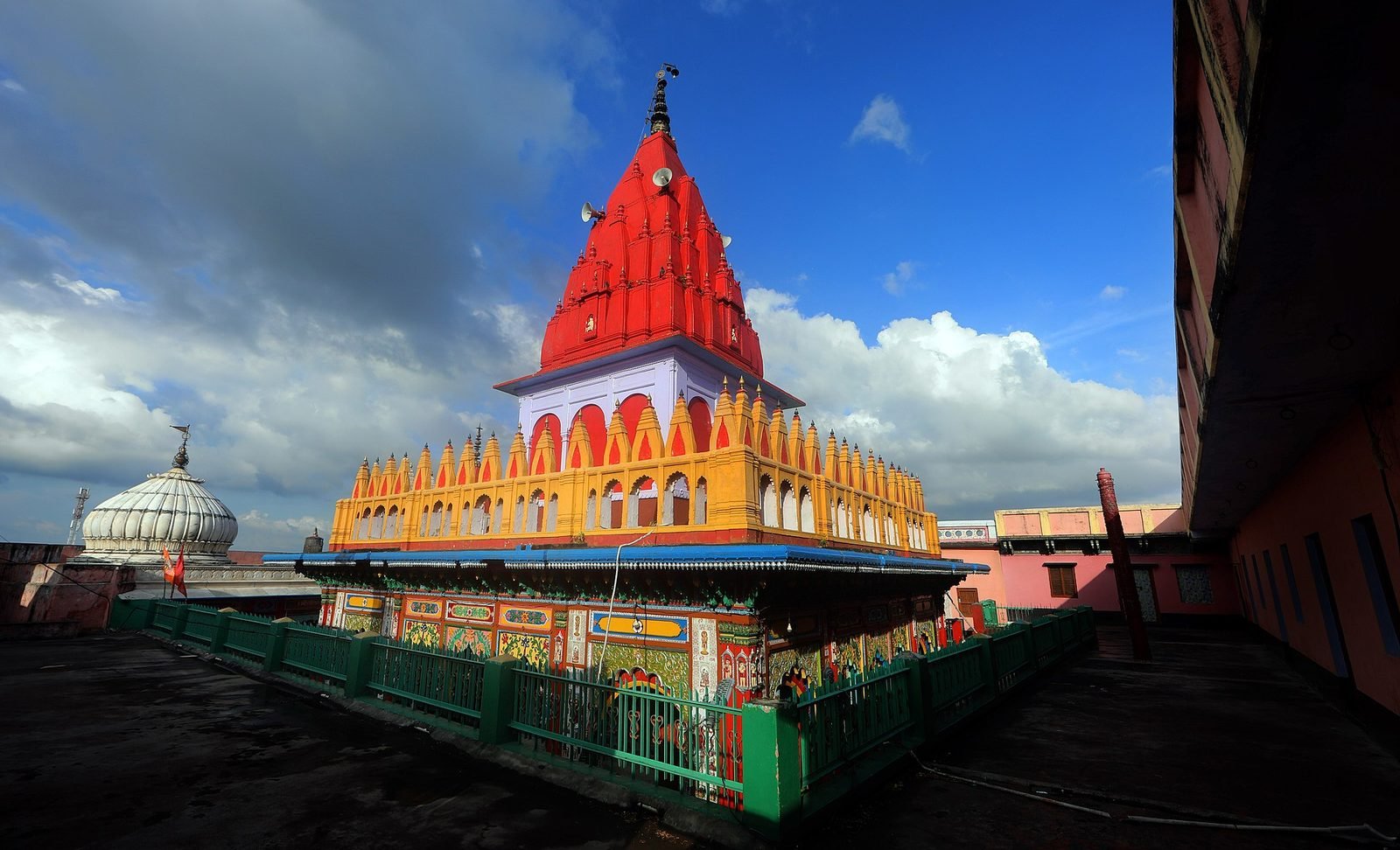
Set in Ayodhya, Uttar Pradesh, Hanuman Garhi is dedicated to Hanuman, depicted here in his child form, seated on the lap of his mother Anjani. It is also known as Hanuman Garhi Temple, Hanumangarhi.
Hanuman Garhi is considered one of the most important temples in Ayodhya, alongside the Ram Mandir and Nageshwarnath temple. It is customary for pilgrims to visit Hanuman Garhi before proceeding to Ram Janmabhoomi/Ram Mandir, and it is listed as a nearby attraction on the Ram Mandir's own visitor information. Legend holds that after Rama's return to Ayodhya, Hanuman took up residence in a cave here to watch over Ramkot.
Uttar Pradesh carries a distinct temple identity of its own: The spiritual heartland of India, home to Kashi, the birthplaces of Rama and Krishna, and revered Shakti and Vaishnava shrines along the Ganga and Yamuna.
Darshan hours and daily worship
| Session | Timing (as published) |
|---|---|
| Morning | 5:00 AM - 11:00 AM |
| Evening | 4:00 PM - 10:00 PM |
Sources give slightly varying sub-windows (for example 5:30 AM - 11:00 AM for morning darshan), but agree the temple is open roughly 5:00 AM to 10:00 PM with a midday gap. Extended hours apply during major festivals such as Ram Navami, Hanuman Jayanti, and Diwali.
Festivals and special-day timings
Regular darshan hours are usually extended, or set aside entirely, on these dates.
| Festival | Period | What happens |
|---|---|---|
| Hanuman Jayanti | Chaitra Purnima (March/April) | Major annual festival marking Hanuman's birth, observed with special prayers and celebrations. |
| Bada Mangal | Tuesdays in the Hindu month of Jyeshtha (May/June) | Special Tuesday observances dedicated to Hanuman. |
| Rama Navami | Chaitra (March/April) | Celebrated in connection with Rama's birth, given the temple's close ties to the Ram Mandir pilgrimage tradition. |
| Dussehra | Ashwin (September/October) | |
| Deepawali | Kartik (October/November) |
History and architecture
Architecture
Built as a fort-like structure (garhi) with circular ramparts at its four corners; 76 steps lead up to the main temple; the central chamber has three ornately carved doors and a silver-adorned inner sanctum (garbha griha); the complex also has a Vijay Stambh (victory pillar) and walls inscribed with verses of the Hanuman Chalisa.
History
Legend holds that after Rama's return to Ayodhya, Hanuman took up residence in a cave here to watch over Ramkot. The Skanda Purana associates the original shrine with King Vikramaditya, who is said to have built it along with numerous other temples. During the Mughal period the temple was destroyed and a mosque erected in its place; the Bairagi sect later defeated the local Nawab's forces, removed the mosque, and rebuilt the temple, with the Nawab of Awadh granting supporting land revenue in 1855. The temple is managed by Bairagi Mahants of the Ramanandi Sampradaya and the Nirvani Akhara.
Planning your visit
How to reach
About 1.5 km from Ayodhya Dham Junction railway station in the Sai Nagar area, reachable in 10-15 minutes by auto or e-rickshaw. Maharishi Valmiki International Airport, Ayodhya, is approximately 10-12 km away (20-30 minutes by road). Chaudhary Charan Singh International Airport in Lucknow is also connected, about 151 km away.
Where this information comes from
Confidence: Medium. History, architecture, and significance are well corroborated by Wikipedia; timings and distances are cross-checked across two independent tourism sources (trawell.in and captureatrip.com) that broadly agree, though minor variations exist and no official temple website was found to confirm them further.