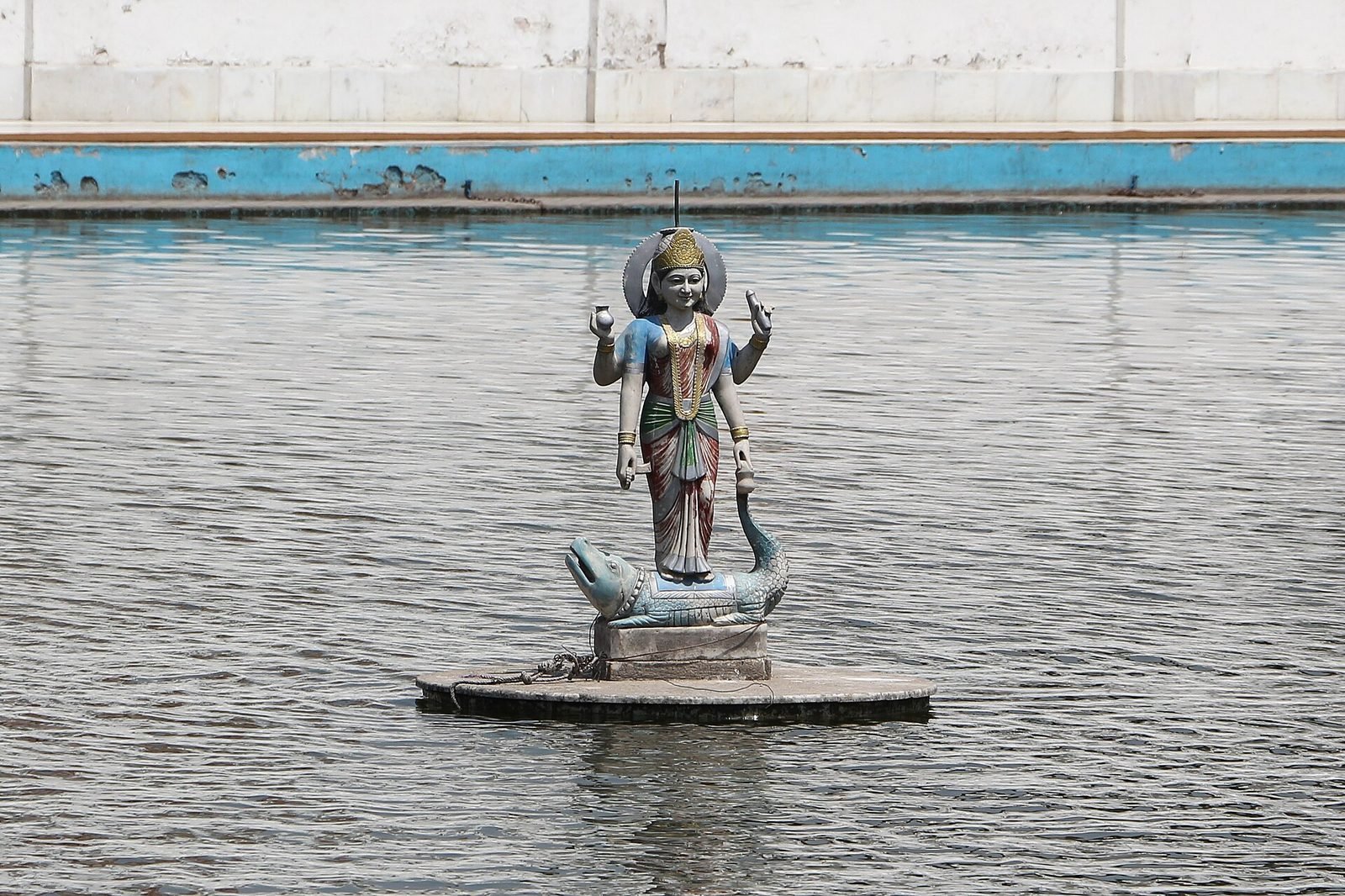
Durgiana Temple stands in Amritsar, Punjab, is a shrine to Goddess Durga, with the complex also housing shrines to Lakshmi-Narayan and Sheetla Mata. It is also known as Lakshmi Narayan Temple, Durga Tirath, Sitla Mandir, also popularly called the Silver Temple.
Durgiana Temple is one of the most important Hindu temples in Punjab and is notable for its architectural resemblance to the Sikh Golden Temple, standing about a kilometre away. It functions as a major pilgrimage and darshan site dedicated to Goddess Durga alongside subsidiary shrines. A shrine and sarovar at this site are documented from the 19th century, with the Amritsar District Gazetteer of 1893 and earlier municipal records from 1868 confirming the Durgiana Sarovar and an associated Devi dwara predating the current structure.
Punjab carries a distinct temple identity of its own: The heartland of Sikh devotion, centred on the Harmandir Sahib at Amritsar and its continuous kirtan.
Darshan hours and daily worship
| Session | Timing (as published) |
|---|---|
| Morning | 5:15 AM - 12:00 PM (phased opening: 5:15-6:00 AM, then 7:15 AM-12:00 PM) |
| Evening | 3:00 PM - 9:30 PM (phased: 3:00-3:45 PM, 4:00-5:45 PM, 6:00-8:00 PM, 8:15-8:30 PM, final viewing 9:00-9:30 PM) |
Per the temple's official timings page, the sanctum closes for a deity rest period from about 12:30-1:00 PM to 3:00 PM. Some third-party sites simplify this to a single 6:00 AM-10:00 PM window, and the sarovar and surrounding complex grounds are commonly described as accessible for longer than the sanctum darshan hours listed above. Aarti and gate timings shift slightly between summer and winter schedules.
Poojas and daily rituals
Per the official temple site: Mangla Aarti at approximately 5:15 AM (5:30 AM in winter), Shingar Aarti at approximately 7:15 AM (7:30 AM in winter), Sandhya Aarti at approximately 7:15 PM (7:30 PM in winter), and Shayan Aarti at approximately 9:15 PM (9:00 PM in winter).
Festivals and special-day timings
Regular darshan hours are usually extended, or set aside entirely, on these dates.
| Festival | Period | What happens |
|---|---|---|
| Langur Mela | During the 10-day Navratri period | A distinctive local festival in which children are dressed as langurs (monkey devotees of Hanuman) as an act of devotion. |
| Diwali | Hindu lunar calendar, October or November | The temple and sarovar are illuminated, echoing the Golden Temple's Diwali celebrations nearby. |
| Dussehra | Hindu lunar calendar, September or October | Celebrated at the temple as one of its major annual festivals. |
| Janmashtami | Hindu lunar calendar, August or September | Observed as one of the temple's major annual festivals. |
| Rama Navami | Hindu lunar calendar, March or April | Observed as one of the temple's major annual festivals. |
History and architecture
Architecture
Built in the middle of a sacred lake (the Durgiana Sarovar, about 160m by 130m), the temple is modeled architecturally on the Golden Temple, with a gilded dome, extensive marble work and silver-plated doors, connected to the surrounding complex by a causeway.
History
A shrine and sarovar at this site are documented from the 19th century, with the Amritsar District Gazetteer of 1893 and earlier municipal records from 1868 confirming the Durgiana Sarovar and an associated Devi dwara predating the current structure. The present temple was rebuilt in 1921 CE by Guru Harsai Mal Kapoor in deliberate architectural imitation of the nearby Golden Temple, and was inaugurated by Pandit Madan Mohan Malaviya. It has since become one of the most visited Hindu pilgrimage sites in Amritsar.
Planning your visit
How to reach
Located near Lohgarh/Hathi Gate in Amritsar, about 1.5 km from Amritsar Junction railway station and about 1 km from the Golden Temple, and easily reached by road within the city.
Where this information comes from
Confidence: High. History, architecture and detailed timings are confirmed directly from the temple's official website and corroborated by Wikipedia; exact festival dates for the current year and dress code specifics were not independently verified.