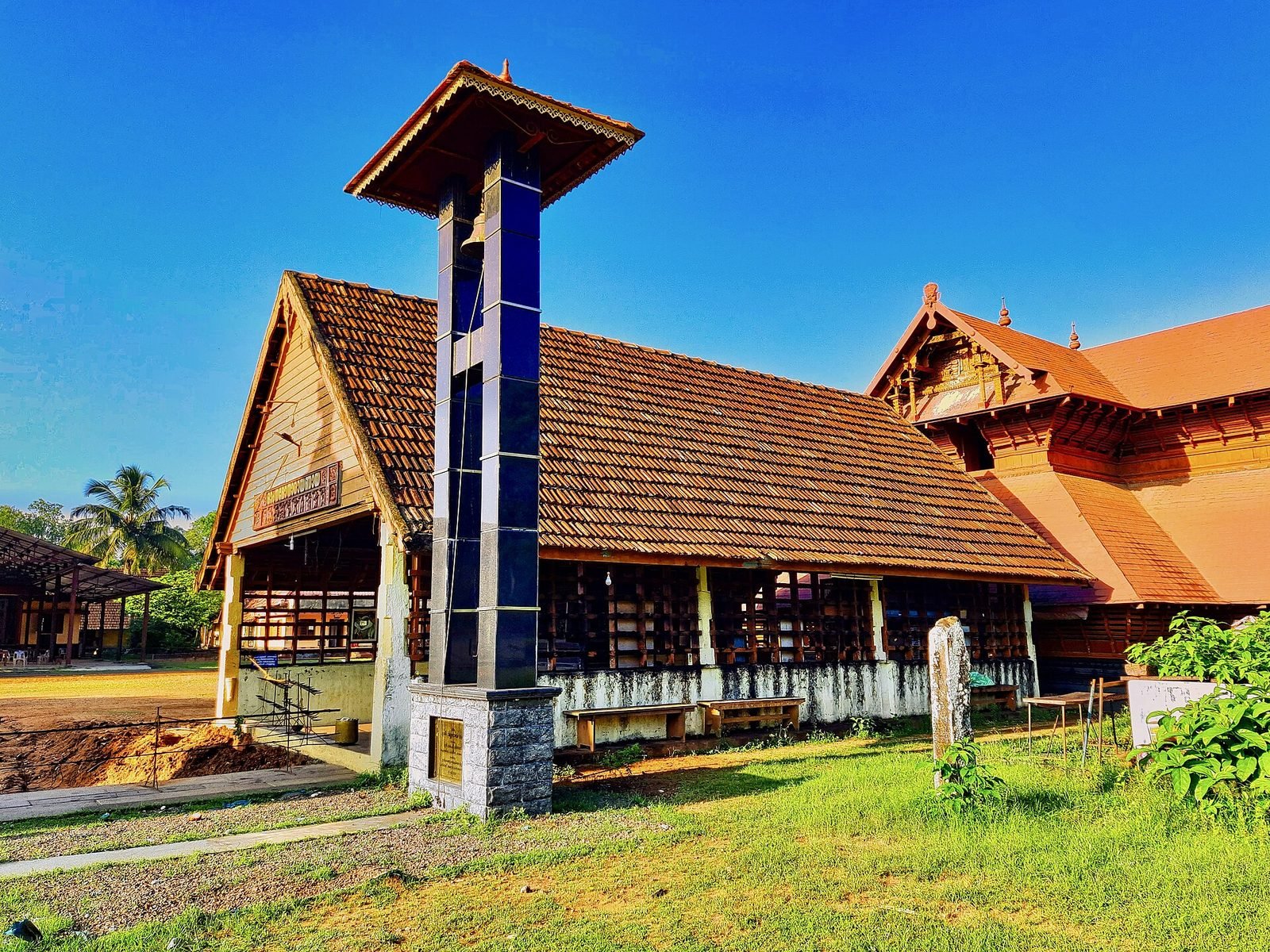
Sree Vallabha Temple, in Thiruvalla in Kerala, is a shrine to Vallabhaswami Perumal, form of Vishnu, with consort Vathsalyavalli. It is also known as Sreevallabha Temple, Thiruvalla Vallabha Temple.
The temple is one of the 108 Divya Desams, the Vishnu temples glorified in the Naalayira Divya Prabandham composed by the Alvar poet-saints, with hymns in its praise from both Nammalvar and Thirumangai Alvar. It is also referenced in the Garuda and Matsya Puranas, and is one of India's foremost centres for Kathakali, which is performed here nightly as a temple ritual, among the highest frequency of any temple in the country. According to temple tradition the deity was installed around 59 BCE at ancient Vallavai, present day Thiruvalla, then one of the region's oldest settlements.
Kerala carries a distinct temple identity of its own: God's Own Country, where copper-roofed shrines and centuries-old rituals draw pilgrims to Vishnu, Krishna and Ayyappa.
Darshan hours and daily worship
| Session | Timing (as published) |
|---|---|
| Morning | 4:00 AM to 12:00 PM |
| Evening | 5:00 PM to 8:00 PM |
The deity is ritually awoken (Palliyunarthal) at 4:00 AM and five poojas are performed daily, with the deity adorned in different forms through the day.
Poojas and daily rituals
Five daily poojas following Pancharatra Agama tradition, with the deity ceremonially adorned in Brahmachari, Grihastha and Sanyasi forms at different times of day
Festivals and special-day timings
Regular darshan hours are usually extended, or set aside entirely, on these dates.
| Festival | Period | What happens |
|---|---|---|
| Annual Temple Festival | Ten days in the Malayalam month of Kumbham (February/March) | The temple's major annual festival, which opens with an offering of about 12,000 bunches of padatti pazham, a special variety of banana, to the deity, and features Kathakali performances every night throughout the ten days. |
| Uthra Sreebali | Malayalam month of Meenam (March/April) | Considered one of the temple's largest festival observances, involving three goddesses honored with Ashtapadi hymns. |
History and architecture
Architecture
Built on the bank of the Manimala River on an 8.5 acre site; red granite outer walls about 12 ft tall, 566 ft long and 4.5 ft thick with two storeyed gopurams; a round, copper roofed sreekovil with a golden dome; a black granite Garuda flagstaff (Dwajasthambham) about 53.5 ft high attributed to the legendary architect Perunthachan; a 150 ft hall supported by 54 stone pillars
History
According to temple tradition the deity was installed around 59 BCE at ancient Vallavai, present day Thiruvalla, then one of the region's oldest settlements. The site grew into a spiritual and educational centre with around 1,500 students by about 1100 CE. In 1752-53 the temple came under the control of Marthanda Varma of Travancore. Legend also credits the sage Vilwamangalam Swamiyar with establishing the tradition of nightly Kathakali performed as a ritual offering after he witnessed a performance here and encountered Vishnu.
Planning your visit
How to reach
About 2.5 km from Thiruvalla railway station and 2 km from the Thiruvalla KSRTC bus stand, near Kavumbhagom junction in Thiruvalla, Pathanamthitta district; reachable by KSRTC and private buses and auto-taxis.
Where this information comes from
Confidence: Medium. Founding date of 59 BCE is temple tradition rather than independently verified history; entry fee, dress code and official website could not be confirmed