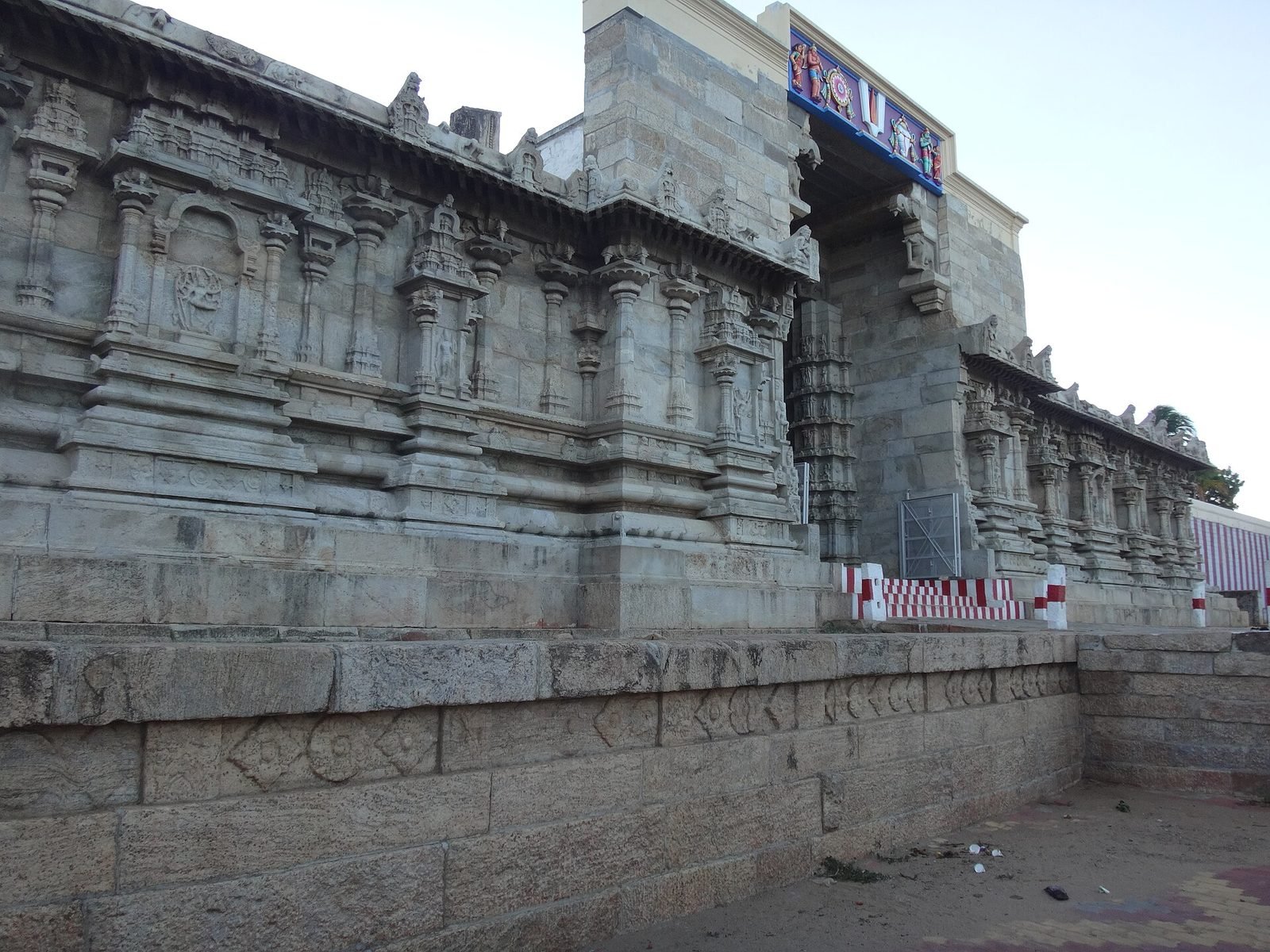
In Thirukkurungudi, Tamil Nadu, Vaishnava Nambi Temple (Thirukkurungudi Nambi Temple) honours Vishnu as Vaishnava Nambi, seen in five forms across the temple and nearby shrines (standing, seated and reclining), with consort Thirukkurungudivalli Nachiar. It is also known as Nindra Nambi Perumal Temple, Sri Sundara Paripoorana Perumal Temple, Vamana Kshethram.
One of the 108 Divya Desams, the Vishnu temples glorified in the Naalayira Divya Prabandham composed by the Alvar poet-saints. This particular shrine is sung by four Alvars: Thirumalisai Alvar, Nammalvar, Periyalvar and Thirumangai Alvar. It is regarded as a Dakshina Vaikuntam (southern Vaikuntam) and is closely linked to the annual Kaisika Ekadasi observance. The temple has inscriptions recording grants as far back as the 10th century Chola period, with continued patronage under the Pandya, Vijayanagara and Nayak dynasties.
Tamil Nadu carries a distinct temple identity of its own: Land of towering gopurams and living Dravidian temple traditions, from the Chola masterpieces to the great Pancha Bhoota Sthalas.
Darshan hours and daily worship
| Session | Timing (as published) |
|---|---|
| Morning | 6:30 AM to 12:00 PM |
| Evening | 5:00 PM to 9:00 PM |
Poojas and daily rituals
Four daily rituals are performed: Kalasanthi (around 8:00 AM), Uchikalam (around 12:00 PM), Sayarakshai (around 6:00 PM) and Ardha Jamam (around 8:00 PM), each including alangaram (decoration), neivedhanam (food offering) and deepa aradanai (lamp waving).
Festivals and special-day timings
Regular darshan hours are usually extended, or set aside entirely, on these dates.
| Festival | Period | What happens |
|---|---|---|
| Brahmotsavam (Chittirai Utsavam) | Tamil month Chittirai, approximately April to May | A ten-day annual festival and the temple's major celebration of the year. |
| Kaisika Ekadasi | Tamil month Karthigai, approximately November to December | An important Ekadasi observance linked to the Kaisika Puranam story, marked by a night-long Kaisika Natakam performance. |
| Theppotsavam (Float Festival) | Tamil month Thai, approximately January to February | The deity is taken out in procession on a floating mandapam on the temple tank. |
History and architecture
Architecture
Dravidian style, with a five-tiered Rajagopuram about 110 feet tall, five prakarams (enclosures) covering roughly 7.5 hectares, a surrounding granite wall enclosing two temple tanks, sculpted pillars from the Nayak period, and composite Virabhadra pillars added during early 16th century Vijayanagara rule.
History
The temple has inscriptions recording grants as far back as the 10th century Chola period, with continued patronage under the Pandya, Vijayanagara and Nayak dynasties. The site is traditionally known as Dakshina Vaikuntam (the southern abode of Vishnu). It follows the Tenkalai tradition of Sri Vaishnavism and Vaikhanasa agama rituals, and is associated with the Kaisika Puranam legend and the Kaisika Natakam dance drama said to have originated here. It is also said to be the place where Thirumangai Alvar attained moksha.
Planning your visit
How to reach
About 45 to 46 km from Tirunelveli and about 45 km from Nagercoil; reachable by bus or hired taxi. There is no direct railway station at Thirukkurungudi itself.
Where this information comes from
Confidence: Medium. Core history, architecture and festival list are corroborated across Wikipedia and a travel guide, but daily darshan hours are sourced only from a travel site (trawell.in) and were not independently confirmed with the temple or the Tamil Nadu HR&CE department, so exact hours may vary, especially on festival days.