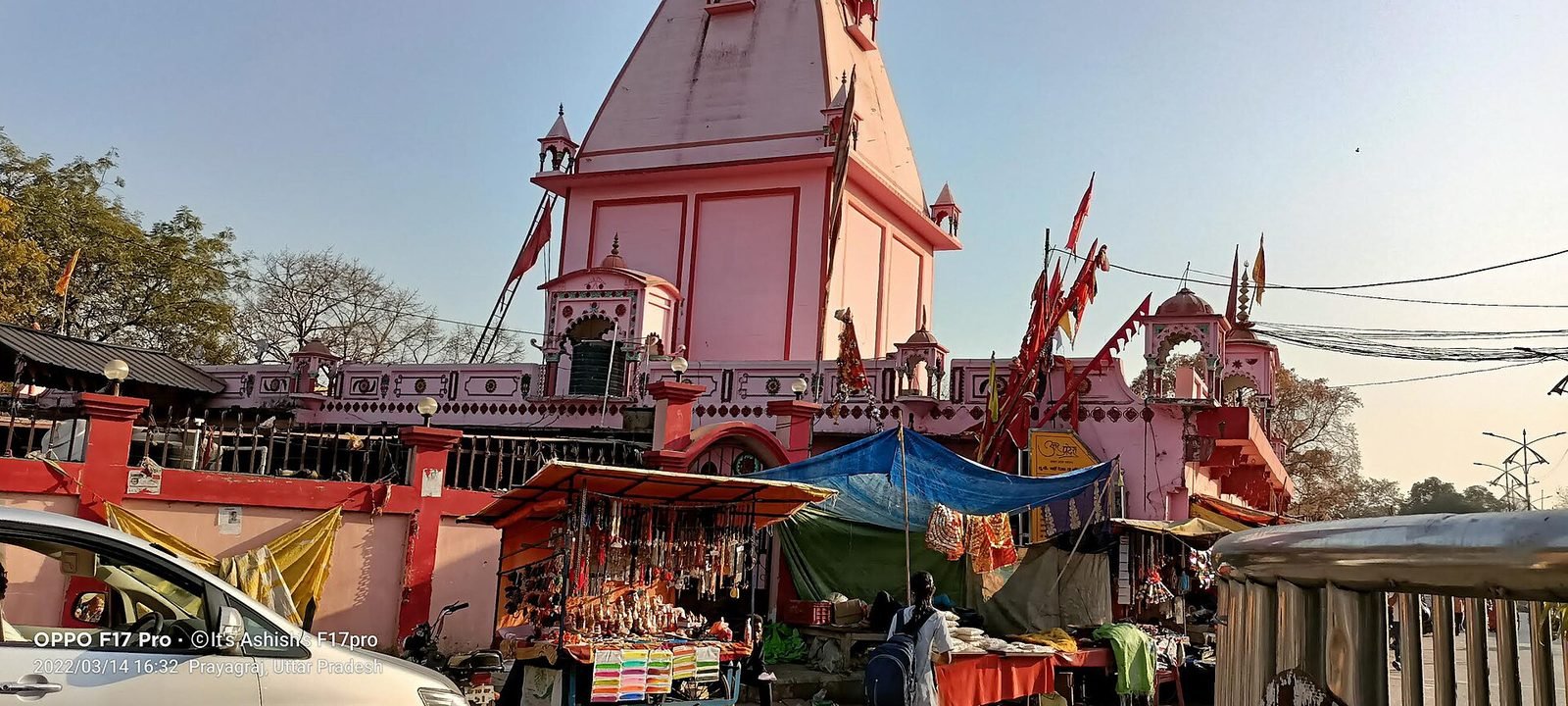
Alopi Devi Mandir, in Prayagraj in Uttar Pradesh, is dedicated to Alopi Devi (Madhaveshwari), a form of Sati worshipped as an aniconic swing rather than an idol. It is also known as Alopishankari Devi, Madhaveshwari, Alop Shankari Shakti Peeth.
Counted among the 51 Shakti Peethas, marking a spot linked to the fall of a part of Sati's body after her self immolation. Tradition most often holds that fingers, or the claw of the right hand, of Sati fell here, though some accounts describe the relic as an intangible or invisible fragment, consistent with the temple's aniconic swing-based worship and its name, which means the one who disappeared. It is among the few Shakti Peethas with no physical idol of the goddess. The temple was rebuilt in the late 1700s under Maratha ruler Mahadji Shinde and further supported in the 1800s by Maharani Baizabai Scindia.
Uttar Pradesh carries a distinct temple identity of its own: The spiritual heartland of India, home to Kashi, the birthplaces of Rama and Krishna, and revered Shakti and Vaishnava shrines along the Ganga and Yamuna.
Darshan hours and daily worship
| Session | Timing (as published) |
|---|---|
| Morning | 6:00 AM |
| Evening | 10:00 PM |
Sources vary slightly on exact opening hour (5:00 AM to 6:00 AM reported); some describe extended or continuous access during Navratri. Confirm current hours locally before visiting.
Poojas and daily rituals
Daily aarti, coconut and sindoor offerings at the swing, tying of a sacred thread (raksha sutra) while making a wish, ritual dip in the temple kund
Festivals and special-day timings
Regular darshan hours are usually extended, or set aside entirely, on these dates.
| Festival | Period | What happens |
|---|---|---|
| Chaitra Navratri | March or April (per Hindu lunar calendar) | Nine day festival with special puja, bhajans and heavy footfall |
| Sharad Navratri | September or October (per Hindu lunar calendar) | Nine day autumn Navratri observed with a fair and night vigils |
| Weekly Mata ka Mela | Every Monday and Friday | Recurring weekly fair drawing large numbers of devotees |
History and architecture
Architecture
Small shrine centered on a sacred kund (pond) over which a decorated wooden and silver swing (dola/jhula) is suspended and worshipped in place of an idol
History
The temple was rebuilt in the late 1700s under Maratha ruler Mahadji Shinde and further supported in the 1800s by Maharani Baizabai Scindia. It is now maintained by the Shri Panchayati Akhara Mahanirvani (Daraganj Akhara). The name Alopi means disappeared or invisible, reflecting the belief that the divine relic here vanished, leaving no physical idol to be installed.
Planning your visit
How to reach
About 3.5 to 5 km from Prayagraj Junction railway station (auto rickshaw or e rickshaw); Prayagraj (Bamrauli) Airport is a short drive away; the temple is well connected by city buses, autos and taxis from Civil Lines and the Sangam area.
Where this information comes from
Confidence: Medium. Most tourism and devotional sources treat Alopi Devi as one of the 51 Shakti Peethas, but several standard classical 51-peetha lists instead name a separate Lalita Devi at Prayag/Allahabad (also fingers) rather than Alopi Devi by name, and sources disagree on whether the relic was Sati's fingers/claw or an intangible fragment. Exact founding era and precise timings also vary by source.