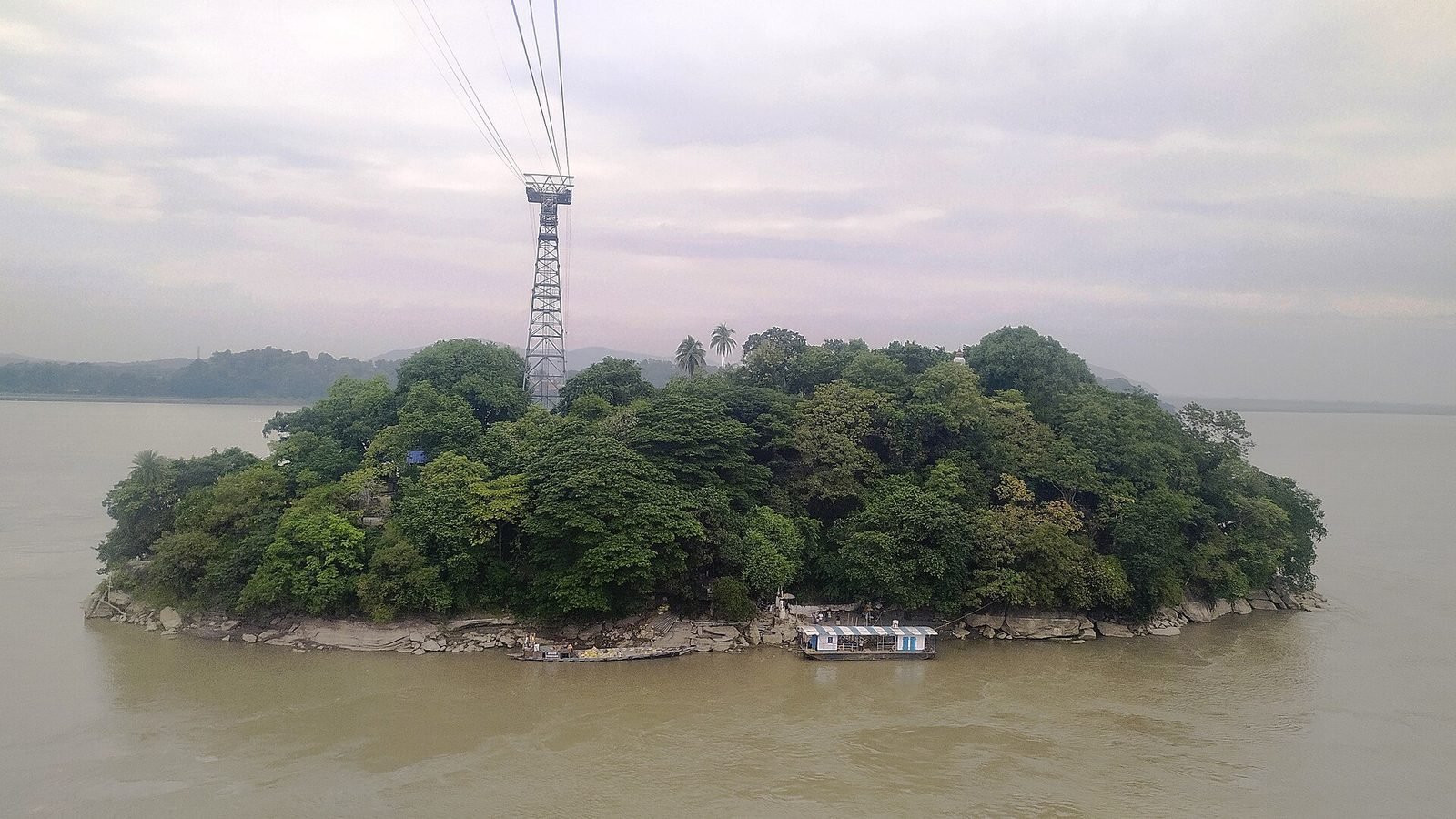
Umananda Temple stands in Guwahati, Assam, is dedicated to Lord Shiva, worshipped here as Umananda. It is also known as Peacock Island Temple, Bhasmachala Temple.
Umananda Temple stands on an island in the Brahmaputra said to be the world's smallest inhabited river island. Besides the presiding Shiva lingam, the temple houses idols of ten other Hindu deities, including Surya, Ganesha, Devi, and the ten incarnations of Vishnu, reflecting a long, layered history of worship at the site. The temple was built in 1694 CE by Ahom king Gadadhar Singha, with construction carried out under Bar Phukan Garhganya Handique, on Bhasmachala hill on what is now called Umananda or Peacock Island in the Brahmaputra river.
Assam carries a distinct temple identity of its own: Home of the tantric Shakti shrine of Kamakhya on the Nilachal Hill, one of the oldest and most powerful Shakti Peethas in India.
Darshan hours and daily worship
| Session | Timing (as published) |
|---|---|
| Morning | 5:30 AM - 6:00 PM (reported as the temple's general daily opening window; not clearly split into separate morning and evening sessions in available sources) |
The island is reachable only by boat from Kachari Ghat (also called Umananda Ghat) in Guwahati; the crossing takes about 8-10 minutes. Government ferries are the cheaper option, reported at roughly Rs 40 for a return trip, and run within a window that different sources place between about 9:00-9:30 AM and 4:00 PM (one source lists a narrower government schedule of 9:00 AM to 2:40 PM return). Private ferries generally run longer, from around 8:00-8:30 AM to 5:00-6:00 PM, at a higher fare. Ferry schedules, fares, and even the exact ghat access point vary somewhat between sources and can change seasonally (river levels rise in the monsoon), so timings and fares should be confirmed locally before visiting.
Festivals and special-day timings
Regular darshan hours are usually extended, or set aside entirely, on these dates.
| Festival | Period | What happens |
|---|---|---|
| Maha Shivaratri | February or March (Falgun month) | The temple's principal annual festival, marked by all-night prayers and special offerings, with ferry services reported to run longer hours on this day. |
| Monthly Shivaratri | Krishna Paksha Chaturdashi, every month | A smaller monthly observance of Shiva worship held at the temple. |
History and architecture
Architecture
A small hilltop shrine reached by a steep flight of steps on Bhasmachala hill; the original structure was heavily damaged in the 1897 Assam earthquake and later rebuilt, with Vaishnavite inscriptions added inside by the merchant who funded the rebuilding. The site also has rock-cut sculptures and carvings believed to date to the early medieval, post-Gupta period, predating the Ahom-era temple.
History
The temple was built in 1694 CE by Ahom king Gadadhar Singha, with construction carried out under Bar Phukan Garhganya Handique, on Bhasmachala hill on what is now called Umananda or Peacock Island in the Brahmaputra river. The 1897 Assam earthquake badly damaged the original structure, and it was subsequently rebuilt by a local merchant. Stone sculptures and carvings at the site, believed to belong to the early medieval and post-Gupta period, suggest the location was a place of worship well before the Ahom-era temple was built.
Planning your visit
How to reach
The temple is accessible only by ferry from Kachari Ghat (Umananda Ghat) on the Guwahati riverfront. Guwahati is served by Lokpriya Gopinath Bordoloi International Airport and Guwahati Railway Station, both a few kilometers from the ghat, with the city well connected by road.
Where this information comes from
Confidence: Medium. The temple's history and deity details are well corroborated by Wikipedia and a regional news source, but ferry timings and fares differ noticeably between sources and likely change seasonally, so those specifics should be treated as approximate and verified locally before a visit.