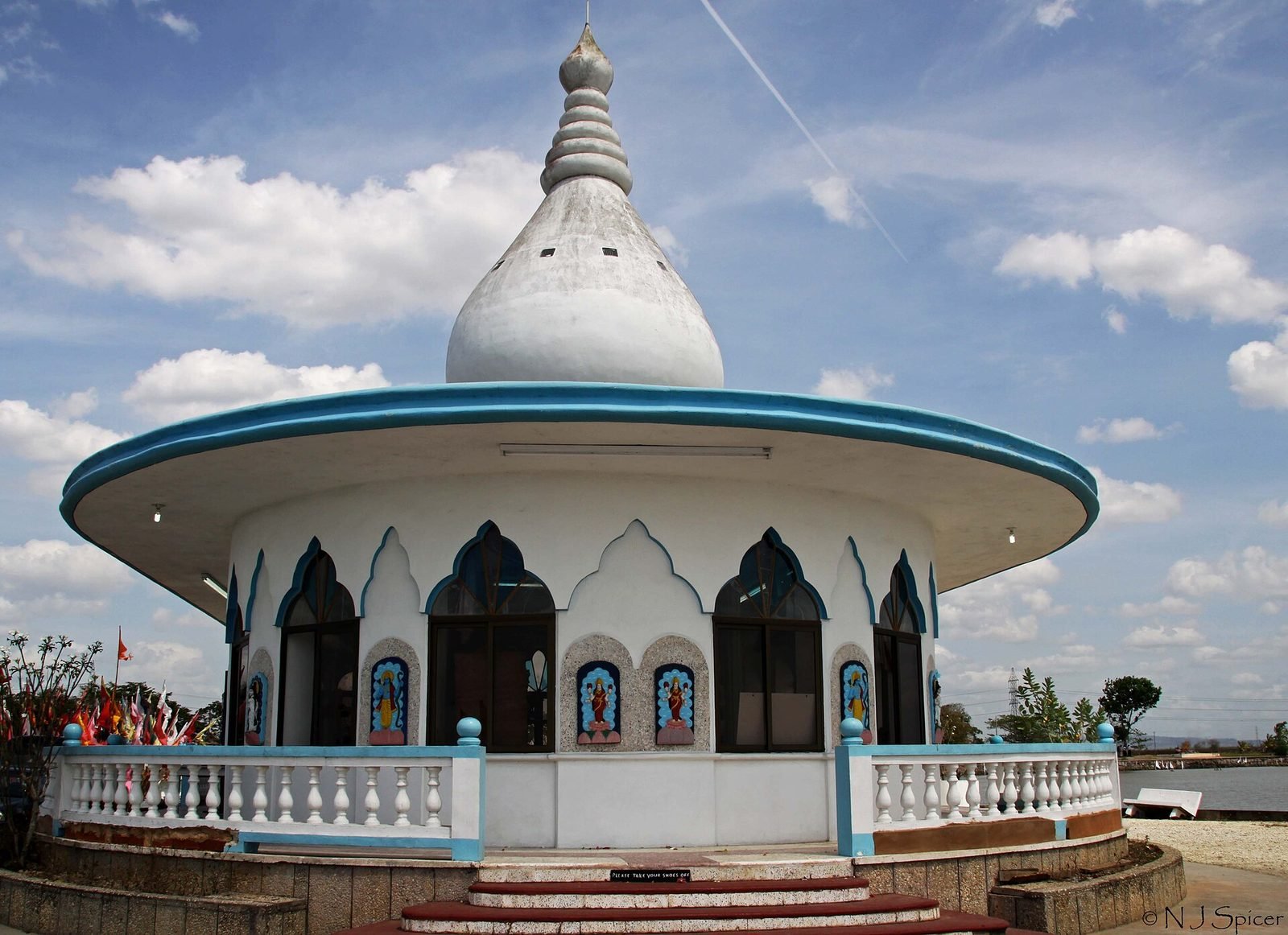
Temple in the Sea stands in Waterloo, Trinidad and Tobago, is a shrine to Lord Shiva, with murtis of Ganesh and other deities. It is also known as Siewdass Sadhu Shiv Mandir, Sewdass Sadhu Shiv Mandir.
A widely cited symbol of the perseverance of Trinidad's Indo-Caribbean indentured labour community, the temple is designated a National Treasure by the National Trust of Trinidad and Tobago and is one of the country's most distinctive religious landmarks. The temple was built by Siewdass Sadhu, an Indian indentured labourer born on 1 January 1903 who worked the Waterloo Estates.
Trinidad and Tobago carries a distinct temple identity of its own: Home to the Temple in the Sea and the 85 foot Hanuman Murti, two landmark shrines built by a Hindu community descended from Indian indentured labourers who arrived from 1845 onward.
Darshan hours and daily worship
Published sources do not give a single clean daily window for this temple; see the notes below for what is documented.
Public access is limited and no widely published visiting hours exist; the site is privately maintained.
Festivals and special-day timings
Regular darshan hours are usually extended, or set aside entirely, on these dates.
| Festival | Period | What happens |
|---|---|---|
| Indian Arrival Day | 30 May | The temple's 1995 rededication was tied to the 150th anniversary of Indian arrival in Trinidad, and the site remains closely associated with Indian Arrival Day commemorations. |
History and architecture
Architecture
A small Hindu temple standing on a man made island just off the Waterloo coastline, connected to the mainland by a pedestrian causeway
History
The temple was built by Siewdass Sadhu, an Indian indentured labourer born on 1 January 1903 who worked the Waterloo Estates. After completing his indentureship he vowed to build a place of worship near the water at Waterloo. His first structure, built on shoreline land, was demolished after a dispute with the landowning Tate and Lyle sugar company, and Sadhu was imprisoned. Undeterred, from 1947 he began reclaiming land from the Gulf of Paria by hand and by bicycle, ferrying stones, cement and sand to build an entirely new island temple. He worked at this for around 25 years and died before finishing it. In 1995, on the 150th anniversary of the arrival of Indians in Trinidad, the government funded a committee, led by Randal Rampersad, to complete and rededicate the temple in Sadhu's honour.
Planning your visit
How to reach
Located off the coast at Waterloo in the Couva-Tabaquite-Talparo region, reached via a pedestrian causeway from the Waterloo shoreline; accessible by road from central and south Trinidad.
Where this information comes from
Confidence: Medium. The builder's name (Siewdass/Sewdass Sadhu) and exact biographical dates vary slightly between sources, and current public visiting hours are not documented