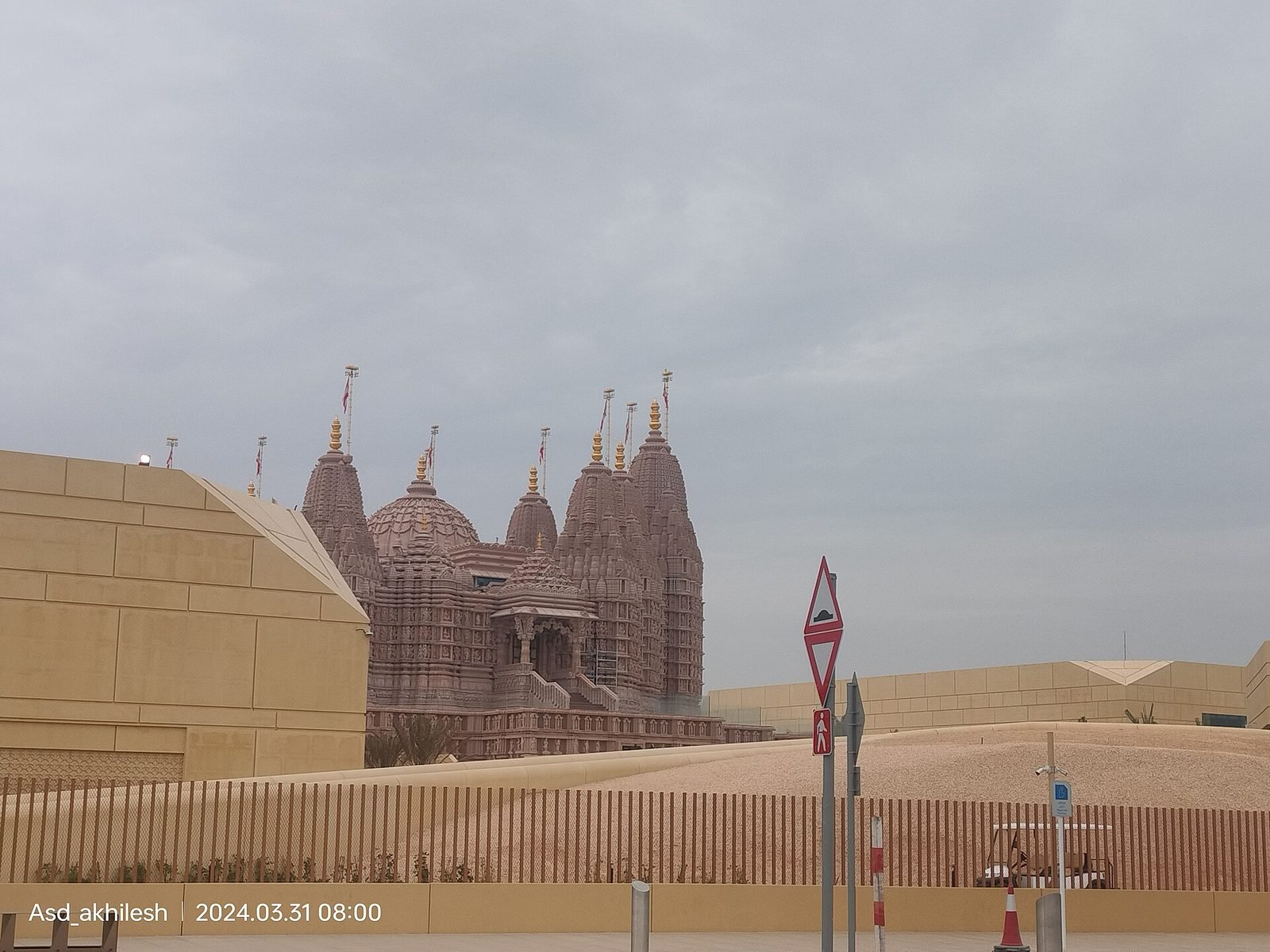
BAPS Hindu Mandir, Abu Dhabi, in Abu Dhabi in United Arab Emirates, is dedicated to Bhagwan Swaminarayan and Hindu deities enshrined under the temple's seven spires, each representing one of the UAE's seven emirates. It is also known as Abu Dhabi Hindu Temple, Swaminarayan Temple Abu Dhabi.
The first traditional stone Hindu temple in the Middle East and among the largest Hindu temples outside India, widely covered internationally as a landmark of India-UAE relations and interfaith coexistence in the Gulf The UAE government granted land for the temple in 2015 after an invitation extended during Prime Minister Narendra Modi's visit to the UAE.
United Arab Emirates carries a distinct temple identity of its own: Home to the BAPS Hindu Mandir, the first traditional stone Hindu temple in the Middle East, alongside a historic Bur Dubai shrine that has served the Gulf's Hindu trading community since 1958.
Darshan hours and daily worship
| Session | Timing (as published) |
|---|---|
| Morning | 9:00 AM to 8:00 PM, Tuesday to Sunday |
Closed Mondays. Ganga Aarti at 7:30 PM on weekdays; 6:45 PM and 7:30 PM on weekends and holidays. Advance online registration via mandir.ae is mandatory and a physical Emirates ID or passport is required at entry.
Festivals and special-day timings
Regular darshan hours are usually extended, or set aside entirely, on these dates.
| Festival | Period | What happens |
|---|---|---|
| Diwali and Annakut | October to November | Multi-day festival of lights culminating in Annakut, a grand offering of hundreds of vegetarian dishes, with cultural programs and a festival carnival |
| Holi | March | Celebration of colors observed with community events at the mandir |
| Janmashtami | August or September | Marks the birth of Lord Krishna |
| Maha Shivratri | February or March | Observance dedicated to Lord Shiva |
| Ganesh Chaturthi | August or September | Celebrated at the mandir with community gatherings |
History and architecture
Architecture
Traditional Hindu shikhara-style stone temple built without structural steel, hand-carved from pink sandstone sourced from Rajasthan and Italian marble by thousands of artisans, following centuries-old Shilpa Shastra temple-building methods; seven spires symbolise the UAE's seven emirates
History
The UAE government granted land for the temple in 2015 after an invitation extended during Prime Minister Narendra Modi's visit to the UAE. Construction used traditional stone-carving methods, with pieces carved in India and assembled on a 27-acre site in Abu Dhabi. The mandir was inaugurated on 14 February 2024 by BAPS spiritual head Mahant Swami Maharaj together with PM Modi and UAE Minister of Tolerance and Coexistence Sheikh Nahyan Mabarak Al Nahyan, becoming the first traditional stone Hindu temple in the Middle East. The temple marked its first and second anniversaries in 2025 and 2026, and underwent a temporary closure in early 2026, reportedly linked to regional tensions affecting multiple places of worship in the UAE, before reopening to visitors on 14 April 2026.
Planning your visit
How to reach
Located at P6 Al Rahba - Al Taf Road (E16), Abu Dhabi, off Sheikh Maktoum Bin Rashid Road (E11), reachable via Exit 366; no direct metro or rail access, best reached by car, taxi or organised tour transport from Abu Dhabi or Dubai
Where this information comes from
Confidence: High. Core facts (opening date, inauguration, architecture, site size) confirmed by multiple major outlets including CNN and BAPS' own records; the reason for the early-2026 temporary closure and exact deity list under each spire are less clearly documented