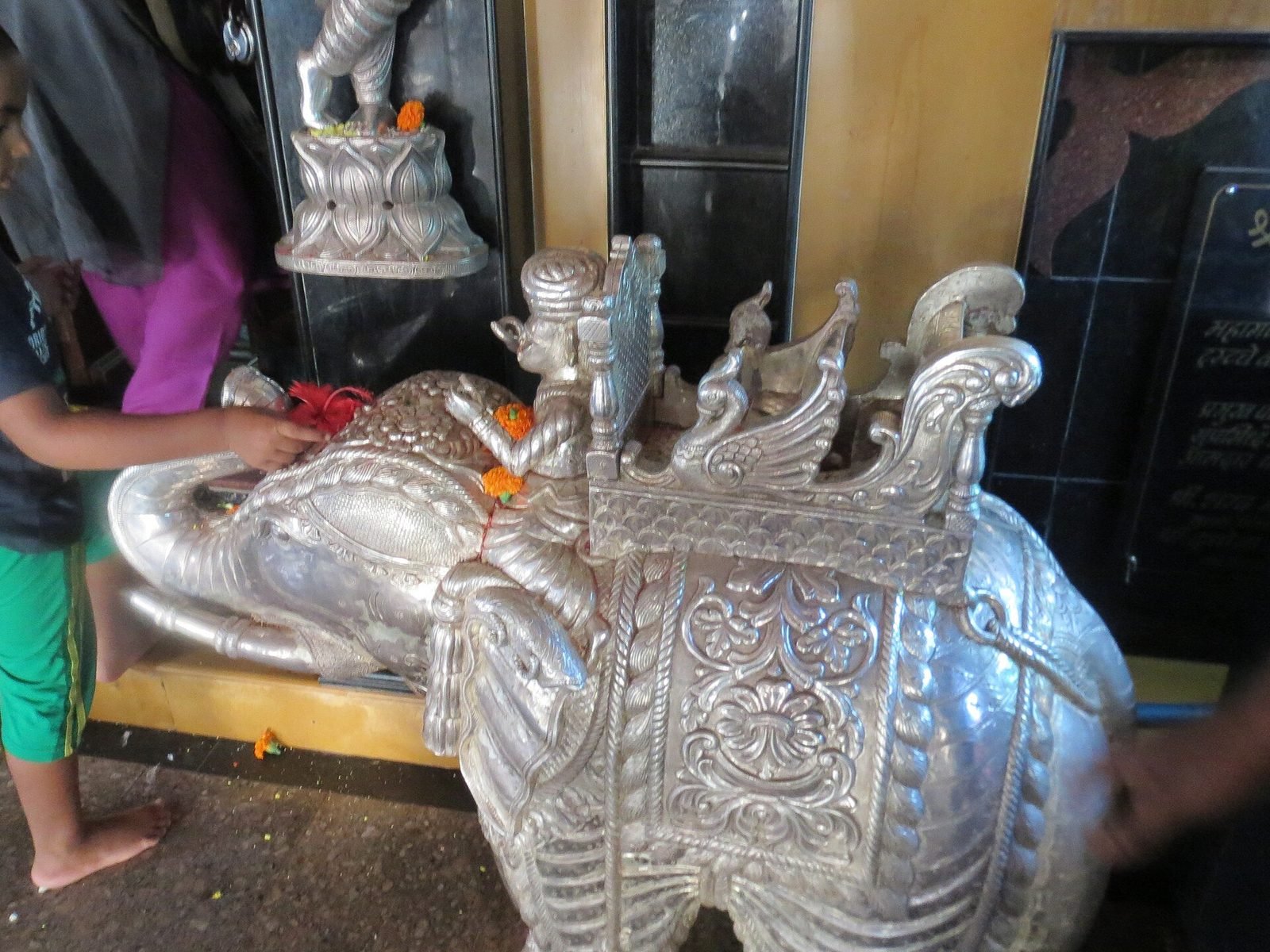
In Ranjangaon, Maharashtra, Mahaganapati Temple, Ranjangaon is a shrine to Ganesha, worshipped here as Mahaganapati. It is also known as Ranjangaon Ganpati Temple.
Ranjangaon's Mahaganapati is traditionally regarded as the eighth and final temple in the Ashtavinayak pilgrimage sequence, making it the concluding stop of the circuit. The main idol sits cross-legged facing east with its trunk turned left and a notably broad forehead, flanked by consorts Riddhi and Siddhi. Local tradition holds that a larger, ten-trunked and twenty-armed form of the deity lies hidden in a basement vault beneath the sanctum, though this is unverified and temple authorities have denied it. According to tradition, Shiva worshipped Ganesha at this site before his battle with the demon Tripurasura, and the town (originally called Manipur) came to be renamed Ranjangaon.
Maharashtra carries a distinct temple identity of its own: From Mumbai's beloved Siddhivinayak and Shirdi's Sai Baba to five of the twelve Jyotirlingas and the Varkari heart of Pandharpur, Maharashtra weaves together Shaiva, Vaishnava and Shakta devotion.
Darshan hours and daily worship
| Session | Timing (as published) |
|---|---|
| Morning | 5:00 AM - 12:30 PM |
| Evening | 12:30 PM - 10:00 PM |
Reported daily darshan hours are approximately 5:00 AM to 10:00 PM. One source lists a detailed schedule: Abhishek Puja around 5:30 AM, morning aarti around 7:30 AM, Mahapuja/Mahanaivedya around 11:30 AM-12:30 PM, evening aarti around 7:30 PM, and Shej Aarti (closing) around 10:00-10:30 PM. These finer details come from a single source and were not cross-verified, so confirm locally before visiting.
Poojas and daily rituals
Abhishek Puja (morning), Mahapuja/Mahanaivedya (late morning), morning and evening Aarti, and closing Shej Aarti; paid pooja options reported by one source include Abhishek, Sahastravartan, and Satyavinayak Puja, but fee amounts were not independently verified
Festivals and special-day timings
Regular darshan hours are usually extended, or set aside entirely, on these dates.
| Festival | Period | What happens |
|---|---|---|
| Ganesh Chaturthi (Bhadrapad) | August/September | Major multi-day festival with processions and celebrations marking Ganesha's birth. |
| Maghi Ganesh Jayanti | January/February | Observance marking Lord Ganesha's rebirth. |
| Sankashti Chaturthi | Monthly | Monthly Chaturthi observance that draws devotees for special darshan. |
History and architecture
Architecture
East-facing temple in a style reflecting 9th-10th century construction, with an imposing main gate flanked by statues of the guardians Jaya and Vijay. The temple is oriented so that during Dakshinayana (the sun's southward movement) sunlight falls directly on the idol.
History
According to tradition, Shiva worshipped Ganesha at this site before his battle with the demon Tripurasura, and the town (originally called Manipur) came to be renamed Ranjangaon. The core shrine is dated to roughly the 9th-10th century. Peshwa Madhavrao later funded construction of the inner sanctum housing the idol, and in 1790 CE Anyaba Dev was authorized to conduct the temple's worship rituals.
Planning your visit
How to reach
Located on the Pune-Ahmednagar highway, about 50 km from Pune and roughly 21 km before Shirur. The nearest railway station is Uruli, about 16 km away, though rail connectivity is limited; Pune Junction and Pune International Airport (both roughly 50 km away) are the more practical rail/air gateways. Regular state buses and taxis run from Pune.
Where this information comes from
Confidence: Medium. Core history, district/location, and Ashtavinayak sequence position (8th and final temple) are corroborated by Wikipedia. Detailed aarti schedule and fee figures come mainly from a single travel-guide source (myoksha.com) and were not verified against an official temple website, so treat exact times and any fee amounts as approximate.