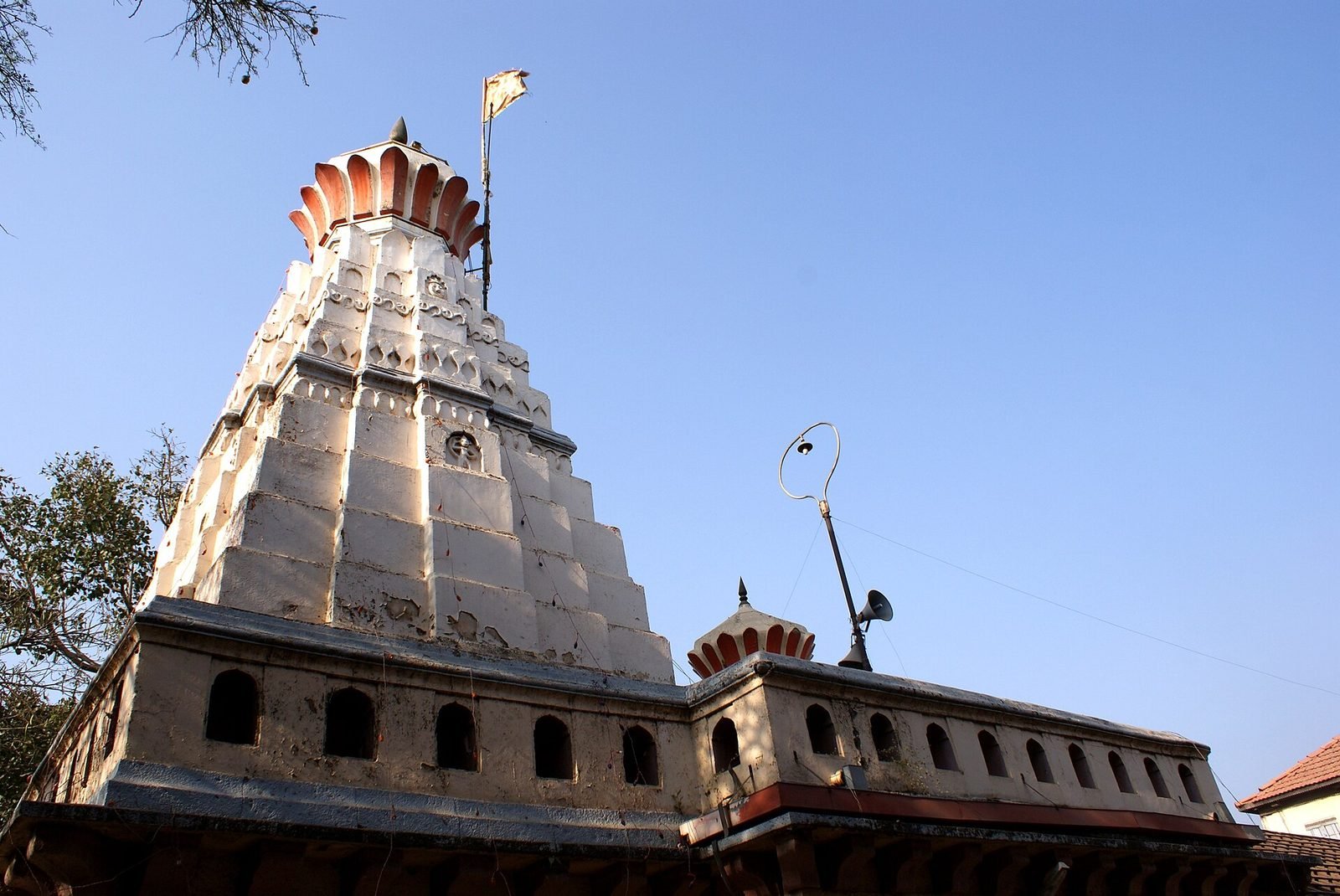
In Theur, Maharashtra, Chintamani Temple, Theur is a shrine to Ganesha worshipped as Chintamani (remover of anxieties/worries), a self-manifested icon in the sanctum showing only the head, jewel-studded eyes and trunk (turned to the left). It is also known as Shree Chintamani Vinayaka Temple, Chintamani Ganpati Mandir.
Chintamani Ganpati at Theur is the 5th temple in the traditional Ashtavinayak pilgrimage sequence (after Morgaon, Siddhatek, Pali and Mahad, and before Lenyadri, Ozar and Ranjangaon). According to legend, Ganesha recovered a wish-granting gem (Chintamani) for the sage Kapila from a greedy king, then chose to remain at Theur as Chintamani Vinayaka, the remover of worries. Though believed to be an ancient site, there is no firm record of when the temple was first built.
Maharashtra carries a distinct temple identity of its own: From Mumbai's beloved Siddhivinayak and Shirdi's Sai Baba to five of the twelve Jyotirlingas and the Varkari heart of Pandharpur, Maharashtra weaves together Shaiva, Vaishnava and Shakta devotion.
Darshan hours and daily worship
| Session | Timing (as published) |
|---|---|
| Morning | 6:00 AM - 1:00 PM |
| Evening | 2:00 PM - 10:00 PM |
One travel source (trawell.in) reports a midday closure between 1 PM and 2 PM daily, while another aggregator source describes a continuous 5:00 AM - 10:00 PM window. Given this conflict, confirm current hours locally before visiting.
Festivals and special-day timings
Regular darshan hours are usually extended, or set aside entirely, on these dates.
| Festival | Period | What happens |
|---|---|---|
| Ganesha Prakatostav (Ganesh Chaturthi) | Bhadrapada month, days 1-7 (August/September) | Major annual festival marking Ganesha's manifestation. |
| Maghotsav (Ganesh Jayanti) | Magha month, days 1-8 (January/February) | Annual festival celebrating Ganesha's birth. |
| Rama-Madhav Punyotsav | Kartik month, 8th day | Commemorates Peshwa Madhavrao I and his wife Ramabai, who are closely associated with the temple's history. |
History and architecture
Architecture
The complex includes a wooden assembly hall (sabha-mandapa) built under Peshwa Madhavrao I, containing a black-stone water fountain. The garbhagriha holds the self-manifested Ganesha icon; subsidiary shrines within the complex are dedicated to Shiva, Vishnu-Lakshmi and Hanuman. The former Peshwa palace (Peshwa Wada) stands behind the temple. Chimaji Appa is said to have donated a large European bell, seized from the Portuguese at Vasai Fort, to the temple.
History
Though believed to be an ancient site, there is no firm record of when the temple was first built. The present structure is associated with the era of saint Morya Gosavi and his descendant Dharmadhar. The Peshwa rulers of the Maratha Empire, especially Madhavrao I, gave the temple substantial patronage and renovation in the 18th century, and it remains one of the larger and more prominent of the Ashtavinayak shrines.
Planning your visit
How to reach
Nearest railway station: Pune Junction, roughly 22-25 km away. Nearest airport: Pune International Airport. By road, Theur is about 25 km from Pune city (about 176 km from Mumbai), reachable by state buses or hired cabs.
Where this information comes from
Confidence: Medium. History, architecture and festivals are well corroborated by Wikipedia, but sources disagree on whether the temple has a midday closure, so the exact daily timing window is uncertain.