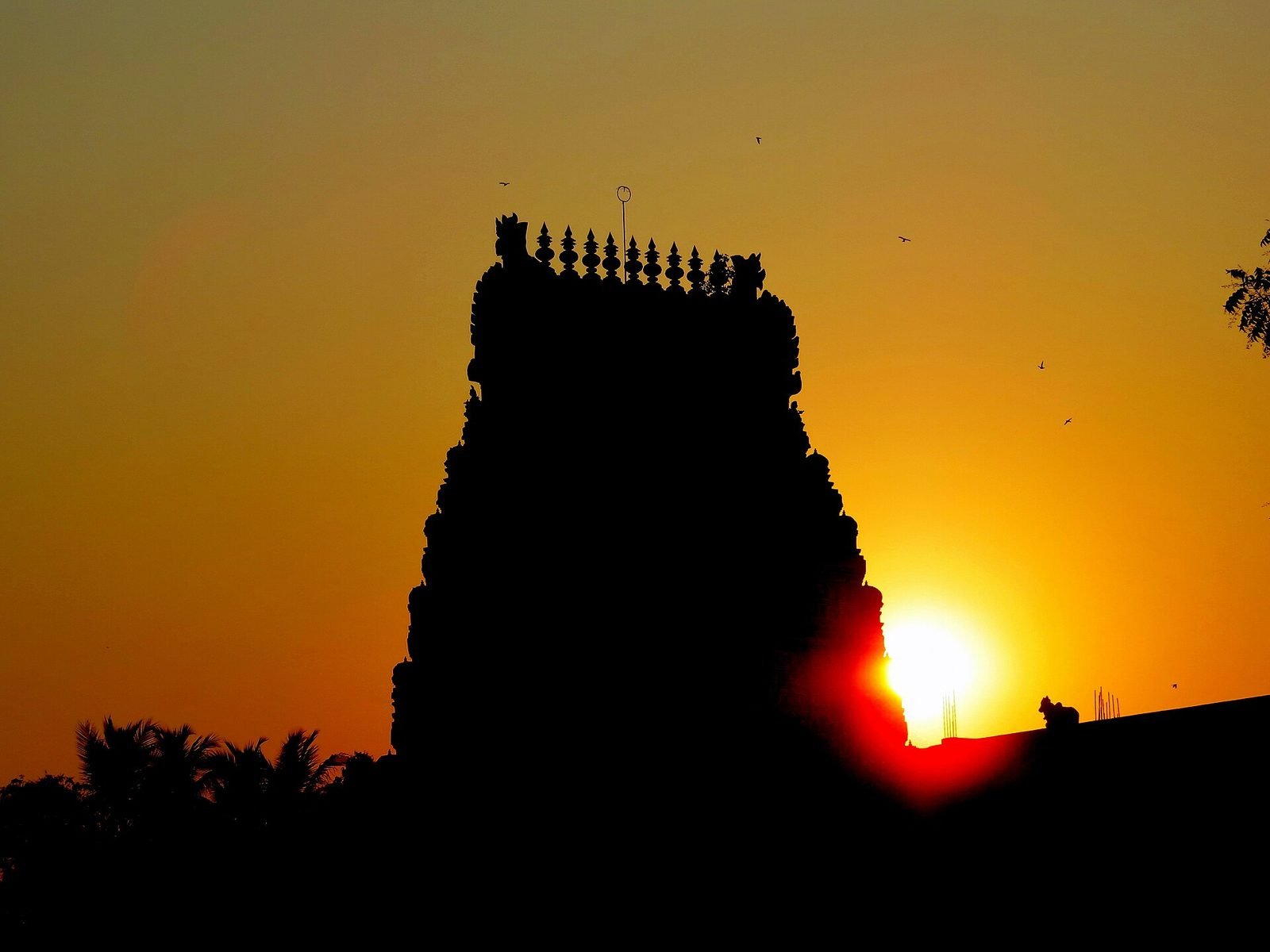
Set in Thirunageswaram, Tamil Nadu, Naganathaswamy Temple, Thirunageswaram is dedicated to Lord Shiva as Naganathar (presiding deity, lingam form), with a dedicated shrine for Rahu, the Navagraha this temple represents. It is also known as Thirunageswaram Rahu Temple, Sri Naganathar Temple.
This is the Rahu shrine of the Navagraha Sthalam circuit. The milk abhishekam performed on the Rahu idol during Rahu Kalam is said to turn the milk blue, which devotees regard as a miracle. Many pilgrims combine worship here with three other temples (Kumbakonam, Thirupamburam and Nagoor) in a single day to address combined Rahu-Ketu doshas. The presiding deity is celebrated in the 7th-century Tevaram hymns of Tirugnana Sambandar and Appar, making this a Paadal Petra Sthalam.
Tamil Nadu carries a distinct temple identity of its own: Land of towering gopurams and living Dravidian temple traditions, from the Chola masterpieces to the great Pancha Bhoota Sthalas.
Darshan hours and daily worship
| Session | Timing (as published) |
|---|---|
| Morning | 6:00 AM - 1:00 PM |
| Evening | 4:00 PM - 8:30 PM |
Some sources list the evening closing time as 8:00 PM rather than 8:30 PM; confirm locally if visiting near closing time.
Poojas and daily rituals
Six daily poojas: Ushathkalam (6:00 AM), Kalasanthi (9:00 AM), Uchikalam (1:00 PM), Sayarakshai (5:00 PM), Irandamkalam (7:00 PM) and Ardha Jamam (9:00 PM). A special Rahu abhishekam is performed at 11:30 AM and 5:30 PM, with additional ablutions through the day.
Festivals and special-day timings
Regular darshan hours are usually extended, or set aside entirely, on these dates.
| Festival | Period | What happens |
|---|---|---|
| Brahmotsavam | 10 days in the Tamil month of Karthigai (November-December) | The temple's major annual festival, with processions of the temple deities. |
| Kandasashti | 6 days, October-November | Festival commemorating Lord Muruga's victory over the demon Surapadman. |
| Rahu Peyarchi | Roughly every 1.5 years, when Rahu transits into a new zodiac sign | A special observance for the presiding Navagraha of this temple, marking Rahu's change of zodiac position. |
History and architecture
Architecture
Dravidian (Chola) style temple complex spanning about 630 ft north-south by 800 ft east-west, with four gopurams, concentric prakarams, and a hundred-pillared hall beside the temple tank (Sula Theertham). It is known locally as 'Soorya Kottam' because sunlight is said to reach the inner sanctum only during the Tamil month of Chithirai (April-May).
History
The presiding deity is celebrated in the 7th-century Tevaram hymns of Tirugnana Sambandar and Appar, making this a Paadal Petra Sthalam. The temple was expanded over centuries by Chola-era rulers and later by Nayak-period officials, giving it its current large multi-gopuram layout.
Planning your visit
How to reach
Nearest railway station: Kumbakonam, about 5 km away, with connections to Chennai, Thanjavur, Trichy, Bangalore, Mysore, Pondicherry, Rameshwaram and Kanyakumari. Nearest airport: Tiruchirapalli (Trichy), about 95 km away. The temple sits on the Kumbakonam-Karaikal highway and is reachable by bus, cab or auto-rickshaw from Kumbakonam.
Where this information comes from
Confidence: Medium. History and architecture are well corroborated by Wikipedia, but evening closing time and special-darshan fees vary slightly between secondary travel sources and no official temple website could be confirmed.