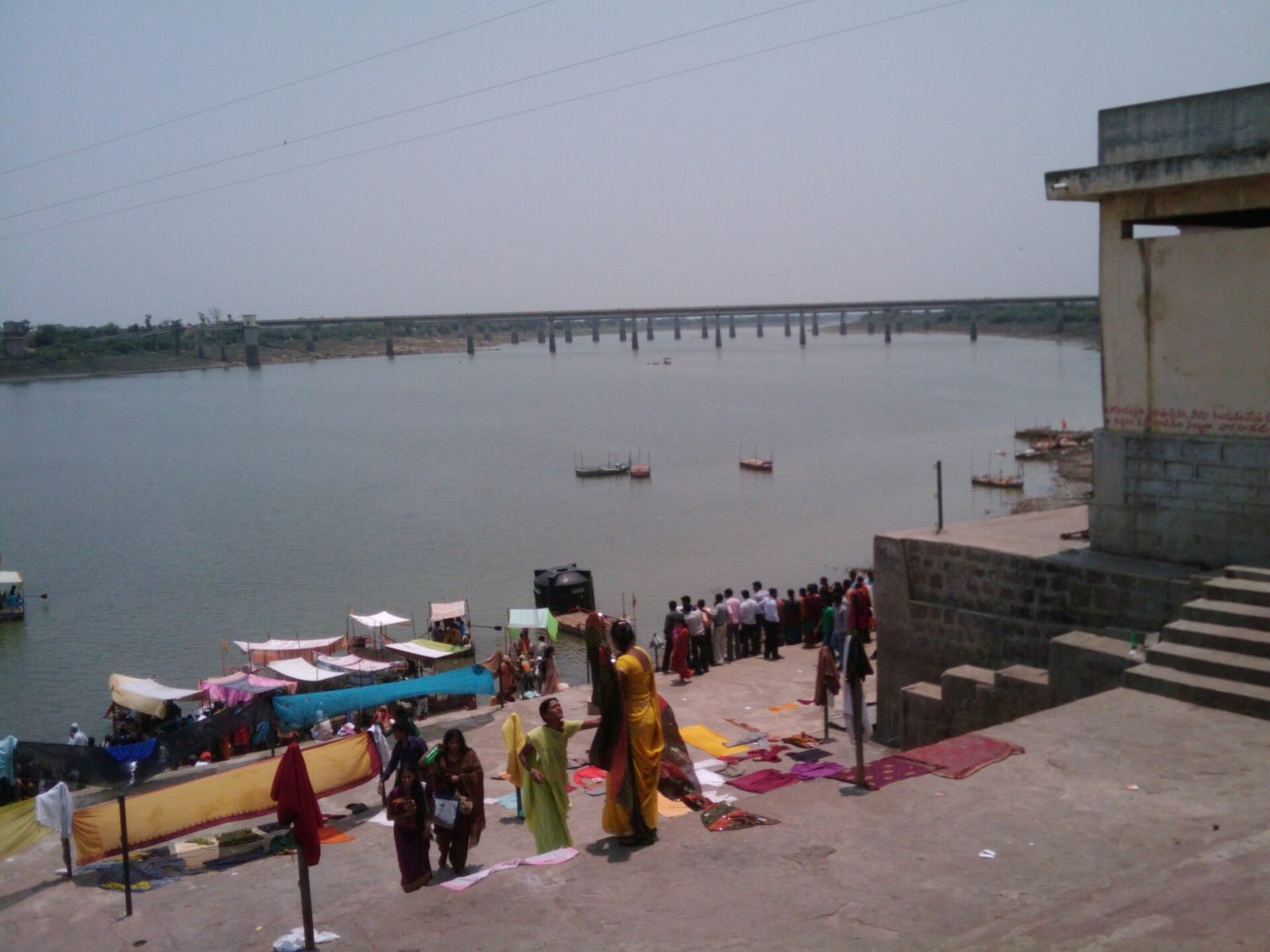
Basara Saraswati Temple, Basar, Telangana
Photo: Unknown, Public domain, Wikimedia Commons

Basara Saraswati Temple Timings

Basara Saraswati Temple is open 4:00 AM to 12:30 PM and 2:00 PM to 8:30 PM, daily.

Saraswati, Goddess of Knowledge and Learning (idols of Lakshmi and Kali are also enshrined alongside her) · Basar, Telangana

ShivaDeviFree entryMedium confidence
Darshan hours (as published)
4:00 AM - 12:30 PM · 2:00 PM - 8:30 PM
Open/closed status loads once the page finishes rendering.

In Basar, Telangana, Basara Saraswati Temple is dedicated to Saraswati, Goddess of Knowledge and Learning (idols of Lakshmi and Kali are also enshrined alongside her). It is also known as Sri Gnana Saraswathi Devasthanam, Gnana Saraswati Temple, Basar Saraswati Temple.

It is regarded as one of only two major Saraswati temples in the Indian subcontinent, the other being Sharada Peeth in Kashmir, and is described as the most prominent Saraswati shrine in South India. It is especially known for the Aksharabhyasam (Vidyarambham) ceremony, in which children are formally initiated into learning, drawing very large crowds on Vasantha Panchami. According to temple tradition, sage Veda Vyasa meditated at this site in the Dandaka forest after the Kurukshetra war, and the town's name Basara is said to derive from his prayers ('Vasara').

Telangana carries a distinct temple identity of its own: From Rama's forest shrine on the Godavari to a Narasimha cave hill and a UNESCO-listed Kakatiya masterpiece, Telangana's temples span devotion and engineering genius.

Darshan hours and daily worship

SessionTiming (as published)
Morning4:00 AM - 12:30 PM
Evening2:00 PM - 8:30 PM

Temple closes for a midday break from 1:00 PM to 2:00 PM. Reported sub-schedules include Sarva Darshan roughly 7:30 AM-12:30 PM and 2:00-6:00 PM, and a separate early Nijaroopa Darshan around 4:30-5:30 AM. Timings extend and darshan can take 3+ hours during Vasantha Panchami and other peak festival days. Confirm same-day timings with the temple before visiting.

Poojas and daily rituals

Abhishekam (approx. 4:00-5:00 AM), Alankaram (approx. 5:00-6:00 AM) and Maha Aarti (approx. 6:00-6:30 AM), followed by Aksharabhyasam ceremonies through the morning

Signature annual eventsAksharabhyasam (Vidyarambham), the ceremonial initiation of children into learning, is performed year-round but sees mass participation on Vasantha Panchami.

Festivals and special-day timings

Regular darshan hours are usually extended, or set aside entirely, on these dates.

FestivalPeriodWhat happens
Vasantha PanchamiJanuary/FebruaryThe temple's biggest annual day, marking the start of a 15-day lead-up period; tens of thousands of devotees attend and Aksharabhyasam ceremonies for children are performed on a mass scale.
Vyasa PurnimaAshada Purnima (full moon in the Hindu month of Ashada)Honors sage Veda Vyasa, the temple's legendary founder.
Maha ShivaratriFebruary/MarchMajor festival period observed at the temple, following the Vasantha Panchami season.
Dasara / Devi NavarathruluSeptember/OctoberNine-night worship of the goddess during Navratri/Dasara.

History and architecture

Built or establishedHistorically dated to the 6th century CE, built under Bijjala (Bijialudu), a Nandagiri king of Karnataka; the idols were reinstated in the 17th century by a Nandagiri chieftain after earlier damage

Architecture

South Indian temple style; the complex includes eight sacred water tanks (pushkarnis) and an Akhanda Deepam (continuously burning lamp)

History

According to temple tradition, sage Veda Vyasa meditated at this site in the Dandaka forest after the Kurukshetra war, and the town's name Basara is said to derive from his prayers ('Vasara'). The goddess is believed to have instructed him to place handfuls of river sand at three spots, which became the idols of Saraswati, Lakshmi and Kali. The present temple structure is historically dated to the 6th century CE under the Nandagiri king Bijjala, with the idols reinstated in the 17th century after being damaged in invasions.

Planning your visit

Entry feeGeneral darshan is free. Travel/pilgrimage sites report paid options such as a Sarva/Seegra darshan ticket (around Rs 100), an Abhishekam ticket (around Rs 200) and a special Aksharabhyasam pooja (around Rs 1000), but these are not confirmed on the temple's official government site, so treat as approximate.
Dress codeTraditional, modest attire is recommended; men are commonly advised to wear a dhoti with a traditional upper garment for special sevas.
Best time to visitOctober to March for cooler weather; avoid or specifically plan around Vasantha Panchami, when the temple is extremely crowded and darshan can take several hours.
NearbyDattatreya Temple, a Mahakali Temple and a Shiva temple near the Saraswati temple complex; Narahari Maluka's cave, a meditation site associated with the Vyasa legend.

How to reach

Nearest railway station: Basar, about 2.4 km from the temple, on the Secunderabad-Manmad line. Nearest airport: Rajiv Gandhi International Airport, Hyderabad, roughly 205-210 km away. Basar is about 205 km from Hyderabad and 34 km from Nizamabad, and is well connected by TSRTC and MSRTC bus services.

Where this information comes from

Confidence: Medium. History, deity, and architecture are corroborated by Wikipedia and the official Telangana government temple site. Exact darshan timings, entry fees, and seva prices vary somewhat across travel/pilgrimage sites and are not listed on the official government site, so those specifics should be treated as approximate and confirmed before visiting.

Frequently asked questions about Basara Saraswati Temple

What is the timing of Basara Saraswati Temple?

Basara Saraswati Temple is open 4:00 AM to 12:30 PM and 2:00 PM to 8:30 PM, daily. Temple closes for a midday break from 1:00 PM to 2:00 PM. Reported sub-schedules include Sarva Darshan roughly 7:30 AM-12:30 PM and 2:00-6:00 PM, and a separate early Nijaroopa Darshan around 4:30-5:30 AM. Timings extend and darshan can take 3+ hours during Vasantha Panchami and other peak festival days. Confirm same-day timings with the temple before visiting.

What are the darshan (visiting) hours at Basara Saraswati Temple?

As published, morning darshan runs 4:00 AM - 12:30 PM and evening darshan runs 2:00 PM - 8:30 PM. Temple closes for a midday break from 1:00 PM to 2:00 PM. Reported sub-schedules include Sarva Darshan roughly 7:30 AM-12:30 PM and 2:00-6:00 PM, and a separate early Nijaroopa Darshan around 4:30-5:30 AM. Timings extend and darshan can take 3+ hours during Vasantha Panchami and other peak festival days. Confirm same-day timings with the temple before visiting.

Is there an entry fee at Basara Saraswati Temple?

General darshan is free. Travel/pilgrimage sites report paid options such as a Sarva/Seegra darshan ticket (around Rs 100), an Abhishekam ticket (around Rs 200) and a special Aksharabhyasam pooja (around Rs 1000), but these are not confirmed on the temple's official government site, so treat as approximate.

What is the dress code at Basara Saraswati Temple?

Traditional, modest attire is recommended; men are commonly advised to wear a dhoti with a traditional upper garment for special sevas.

Which festivals are celebrated at Basara Saraswati Temple?

The main ones documented for this temple are Vasantha Panchami, Vyasa Purnima, Maha Shivaratri. See the festival table above for dates and what each involves.

What is the best time to visit Basara Saraswati Temple?

October to March for cooler weather; avoid or specifically plan around Vasantha Panchami, when the temple is extremely crowded and darshan can take several hours.

How do I reach Basara Saraswati Temple?

Nearest railway station: Basar, about 2.4 km from the temple, on the Secunderabad-Manmad line. Nearest airport: Rajiv Gandhi International Airport, Hyderabad, roughly 205-210 km away. Basar is about 205 km from Hyderabad and 34 km from Nizamabad, and is well connected by TSRTC and MSRTC bus services.

Who is the presiding deity at Basara Saraswati Temple?

Saraswati, Goddess of Knowledge and Learning (idols of Lakshmi and Kali are also enshrined alongside her)

What is the history of Basara Saraswati Temple?

According to temple tradition, sage Veda Vyasa meditated at this site in the Dandaka forest after the Kurukshetra war, and the town's name Basara is said to derive from his prayers ('Vasara').

How reliable is the information on this Basara Saraswati Temple page?

This listing's confidence is rated medium. History, deity, and architecture are corroborated by Wikipedia and the official Telangana government temple site. Exact darshan timings, entry fees, and seva prices vary somewhat across travel/pilgrimage sites and are not listed on the official government site, so those specifics should be treated as approximate and confirmed before visiting.