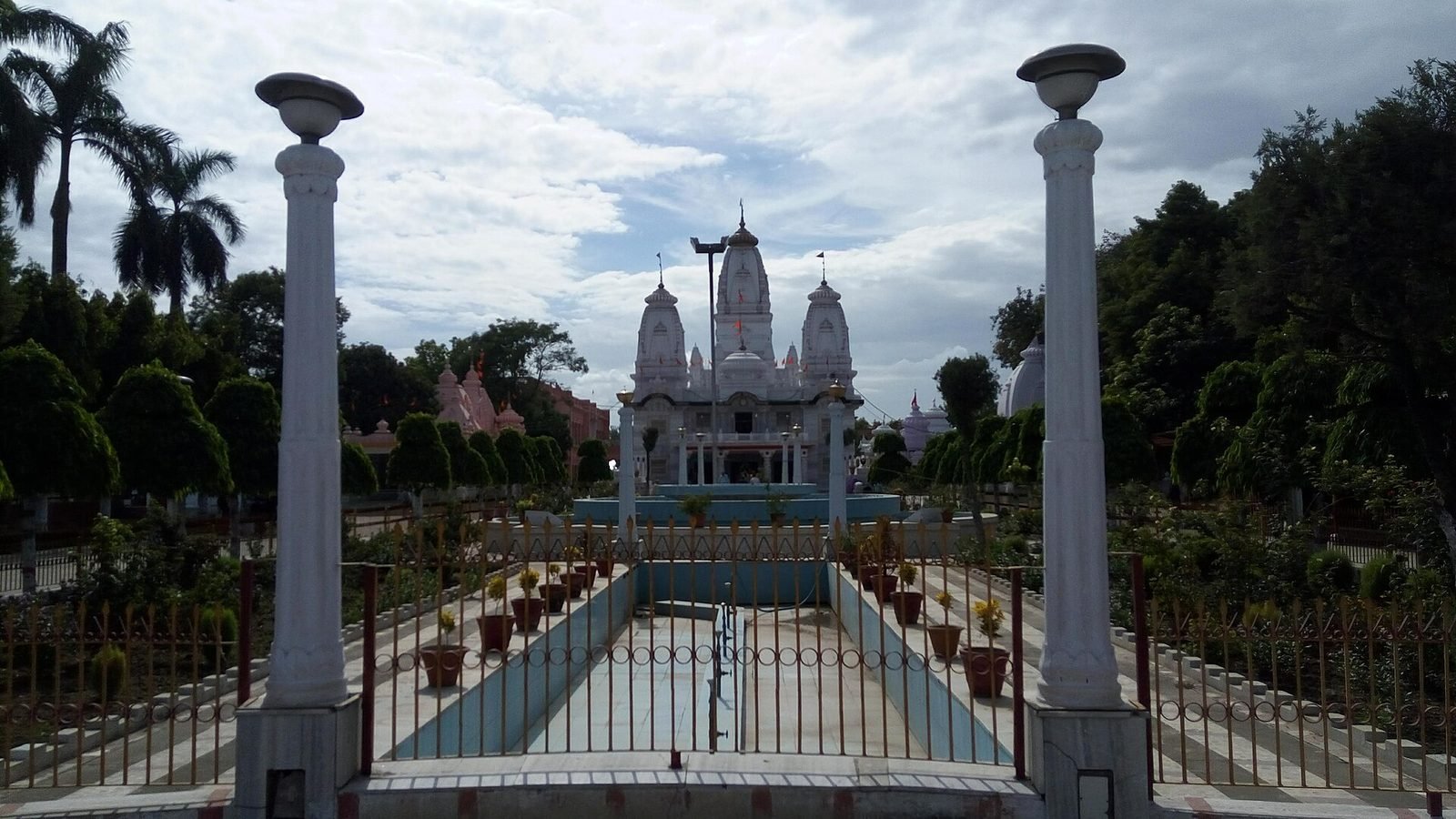
In Gorakhpur, Uttar Pradesh, Gorakhnath Temple is a shrine to Shiva and Guru Gorakhnath (Gorakshanath); the site houses Gorakhnath's samadhi (tomb) and gaddi (prayer seat). It is also known as Gorakhnath Math, Gorakhnath Mandir.
Gorakhnath Math is considered the central Peeth (seat) of the Nath monastic order and one of the most important religious and cultural institutions in eastern Uttar Pradesh, drawing pilgrims from across the region, particularly for its Makar Sankranti Khichdi Mela. The temple takes its name from the medieval yogi Gorakshanath, a central figure of the Nath monastic tradition founded by Guru Matsyendranath; the town of Gorakhpur itself is named after him.
Uttar Pradesh carries a distinct temple identity of its own: The spiritual heartland of India, home to Kashi, the birthplaces of Rama and Krishna, and revered Shakti and Vaishnava shrines along the Ganga and Yamuna.
Darshan hours and daily worship
| Session | Timing (as published) |
|---|---|
| Morning | 5:00 AM - 10:00 PM |
The temple is generally described as open continuously through the day, roughly 5:00 AM to 10:00 PM, per multiple tourism sources. The temple's own site lists specific ritual windows within this span: Mangala Aarti 3:00-4:00 AM, Bhog Aarti 11:00 AM, and Sandhya Aarti 6:00-8:00 PM; the earlier 3:00 AM start appears to mark the beginning of ritual activity rather than general public entry.
Poojas and daily rituals
Mangala Aarti 3:00-4:00 AM, Bhog Aarti at 11:00 AM, Sandhya Aarti 6:00-8:00 PM (per the temple's official website); the Math also runs a continuous free community food service (Akhand Annakshetra) at midday and evening.
Festivals and special-day timings
Regular darshan hours are usually extended, or set aside entirely, on these dates.
| Festival | Period | What happens |
|---|---|---|
| Makar Sankranti (Khichdi Mela) | Mid-January (around January 14), with an associated mela lasting about a month | The temple's largest annual festival; thousands of devotees offer khichdi to Gorakhnath Baba, a tradition historically attended even by Nepal's royal family. |
History and architecture
Architecture
Spread across roughly 52 acres, the complex includes Gorakhnath's personal chamber with his footprints, a gallery of deity statues (Shiva, Ganesh, Kali, Bhairava), statues representing the Nine Naths, an eternal flame (Akhand Jyoti) said to have burned continuously since Gorakhnath's time, a goshala (cow shelter), and residential quarters for ascetics.
History
The temple takes its name from the medieval yogi Gorakshanath, a central figure of the Nath monastic tradition founded by Guru Matsyendranath; the town of Gorakhpur itself is named after him. The original shrine was destroyed by Alauddin Khilji in the 14th century and later by Aurangzeb, and the temple seen today largely took shape in the second half of the 19th century under Mahants Digvijaynath and Avaidyanath. The Math has since remained a major center of the Nath sect and a significant religious and cultural institution in the region; its current Mahant is Yogi Adityanath, who has also served as Chief Minister of Uttar Pradesh since 2017.
Planning your visit
How to reach
About 4.5 km from Gorakhpur Junction railway station; Gorakhpur Airport is about 8 km away with flights to Delhi, Kolkata, and Mumbai; the temple is well connected by road via NH27 and NH28.
Where this information comes from
Confidence: Medium. History and festival details are corroborated across Wikipedia and the temple's official website; general open/close hours are confirmed by multiple tourism sources but differ slightly on the exact opening hour (3 AM ritual start versus 5 AM general darshan), and no source could confirm a formal dress code.