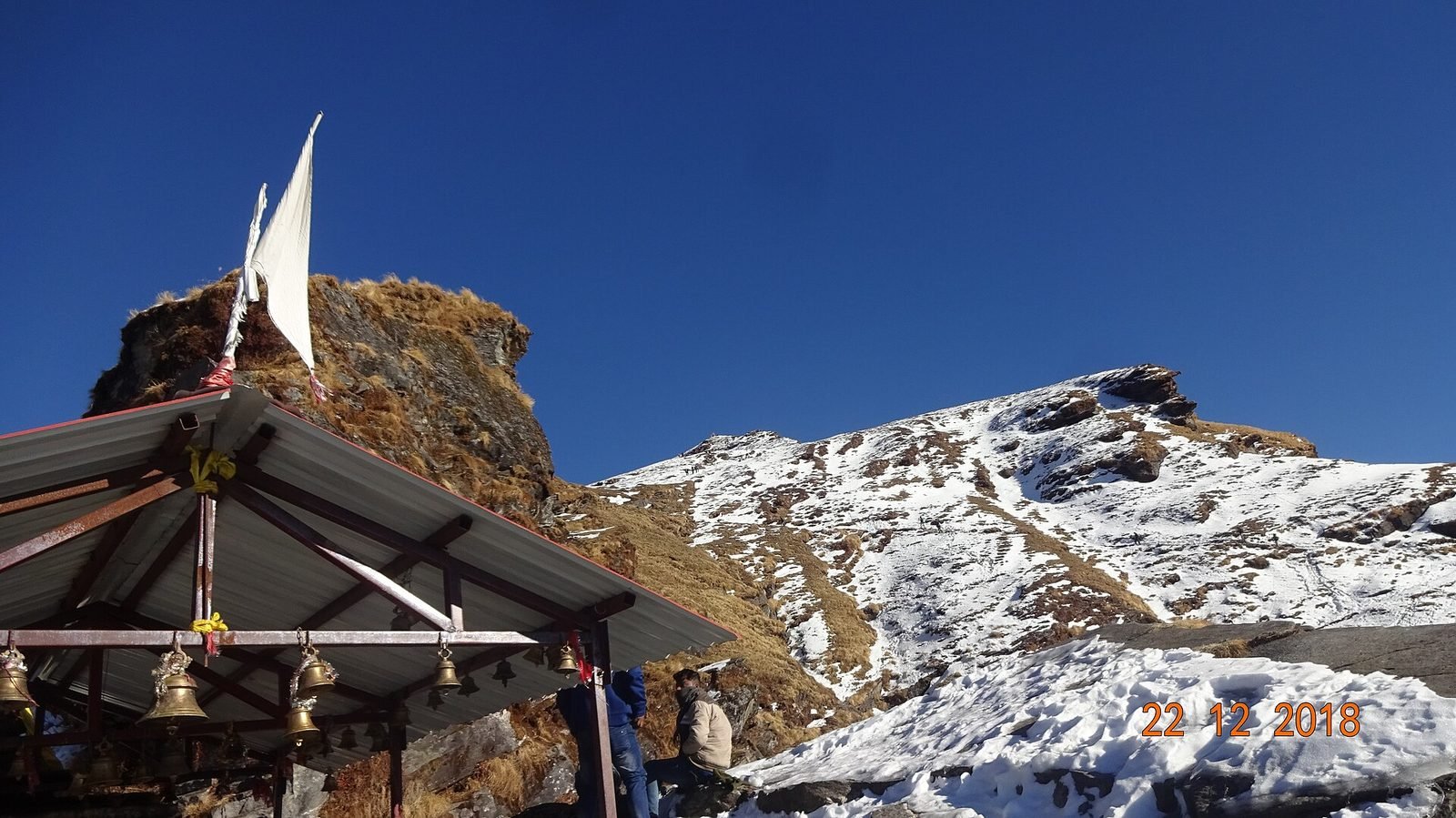
Tungnath Temple, Tungnath, Uttarakhand
Photo: Navdeep Gusain, CC BY-SA 4.0, Wikimedia Commons

Tungnath Temple Timings

Tungnath Temple is open 6:00 AM to 12:00 PM and 3:00 PM to 7:00 PM, daily.

Shiva, worshipped here in the form representing his arms per the Panch Kedar legend · Tungnath, Uttarakhand

ShivaFree entryMedium confidence
Darshan hours (as published)
6:00 AM - 12:00 PM · 3:00 PM - 7:00 PM
Open/closed status loads once the page finishes rendering.

Tungnath Temple stands in Tungnath, Uttarakhand, is a shrine to Shiva, worshipped here in the form representing his arms per the Panch Kedar legend.

Tungnath is the highest of the five Panch Kedar temples and, at 3,680 m, is commonly cited as the highest Shiva temple in the world. It is visited third in the traditional Panch Kedar pilgrimage sequence, after Kedarnath and Madhyamaheshwar. According to Hindu legend, after the Pandavas sought Shiva's forgiveness following the Kurukshetra war, Shiva evaded them by taking the form of a bull and diving into the ground; his body is said to have reappeared in five different forms at five sites, at Tungnath.

Uttarakhand carries a distinct temple identity of its own: Dev Bhoomi, the Land of the Gods, home to the Char Dham Himalayan shrines of Badrinath, Kedarnath, Gangotri and Yamunotri and the Shakti temples of Haridwar.

Darshan hours and daily worship

SessionTiming (as published)
Morning6:00 AM - 12:00 PM
Evening3:00 PM - 7:00 PM

Open only seasonally: gates typically open in late April or May and close by early November, with exact opening and closing dates fixed annually by the temple committee based on the Hindu calendar and announced closer to the date each year. The temple is closed to visitors through the winter months due to heavy snow, when the deity is ceremonially relocated. Some sources report a midday closure of the sanctum from around 12:00 PM to 3:00 PM; this could not be confirmed against a single authoritative source, so it is noted with medium confidence.

Signature annual eventsThe annual Kapat (gate) opening ceremony in spring and closing ceremony in autumn, both timed by the local temple committee and priests according to the Hindu calendar, mark the temple's ritual calendar.

Festivals and special-day timings

Regular darshan hours are usually extended, or set aside entirely, on these dates.

FestivalPeriodWhat happens
Maha ShivaratriHindu lunar calendar, typically February or MarchThe principal Shiva-focused observance associated with the temple.

History and architecture

Built or establishedBelieved to be roughly 1,000 years old, built in the North Indian Himalayan Katyuri style; the exact construction date is not established in historical records, and tradition attributes its founding to the Pandavas.

Architecture

A stone temple in the North Indian Himalayan Katyuri architectural style, set just below the summit of Chandrashila peak.

History

According to Hindu legend, after the Pandavas sought Shiva's forgiveness following the Kurukshetra war, Shiva evaded them by taking the form of a bull and diving into the ground; his body is said to have reappeared in five different forms at five sites, at Tungnath in the form of his arms. These five sites form the Panch Kedar pilgrim circuit. The present temple structure is generally dated to the Katyuri dynasty period of Garhwal, though its precise founding date is unknown.

Planning your visit

Entry feeFree, per multiple sources; no official fee schedule was found.
Best time to visitApril/May through September is the main accessible season; May-June and September offer clearer trekking weather, while the monsoon months (July-August) bring slippery trails. The temple itself is closed in winter, though the trek to the area draws snow trekkers even when the shrine is shut.
NearbyChandrashila peak (a further trek of about 1.5 km beyond the temple), Chopta alpine meadows, Deoriatal lake, and the other Panch Kedar temples (Kedarnath, Madhyamaheshwar, Rudranath and Kalpeshwar).

How to reach

The roadhead and base for the trek is Chopta, on National Highway 58/107, reachable by road from Rishikesh and Rudraprayag. Nearest railway station: Rishikesh, about 241 km away. Nearest airport: Jolly Grant Airport, Dehradun, about 258 km away. From Chopta, Tungnath is reached only on foot; the trek distance is reported inconsistently across sources as roughly 3.5 to 5 km, taking approximately 3 to 5 hours depending on pace and route, with no road or ropeway access to the temple itself.

Where this information comes from

Confidence: Medium. Altitude, Panch Kedar significance, and general history are well corroborated on Wikipedia, but exact seasonal opening/closing dates change annually and are reported inconsistently across sources, the trek distance from Chopta varies between sources (3.5 km vs 5 km), and no official temple or trust website could be located to confirm daily timings.

Frequently asked questions about Tungnath Temple

What is the timing of Tungnath Temple?

Tungnath Temple is open 6:00 AM to 12:00 PM and 3:00 PM to 7:00 PM, daily. Open only seasonally: gates typically open in late April or May and close by early November, with exact opening and closing dates fixed annually by the temple committee based on the Hindu calendar and announced closer to the date each year. The temple is closed to visitors through the winter months due to heavy snow, when the deity is ceremonially relocated. Some sources report a midday closure of the sanctum from around 12:00 PM to 3:00 PM; this could not be confirmed against a single authoritative source, so it is noted with medium confidence.

What are the darshan (visiting) hours at Tungnath Temple?

As published, morning darshan runs 6:00 AM - 12:00 PM and evening darshan runs 3:00 PM - 7:00 PM. Open only seasonally: gates typically open in late April or May and close by early November, with exact opening and closing dates fixed annually by the temple committee based on the Hindu calendar and announced closer to the date each year. The temple is closed to visitors through the winter months due to heavy snow, when the deity is ceremonially relocated. Some sources report a midday closure of the sanctum from around 12:00 PM to 3:00 PM; this could not be confirmed against a single authoritative source, so it is noted with medium confidence.

Is there an entry fee at Tungnath Temple?

Free, per multiple sources; no official fee schedule was found.

Which festivals are celebrated at Tungnath Temple?

The main ones documented for this temple are Maha Shivaratri. See the festival table above for dates and what each involves.

What is the best time to visit Tungnath Temple?

April/May through September is the main accessible season; May-June and September offer clearer trekking weather, while the monsoon months (July-August) bring slippery trails. The temple itself is closed in winter, though the trek to the area draws snow trekkers even when the shrine is shut.

How do I reach Tungnath Temple?

The roadhead and base for the trek is Chopta, on National Highway 58/107, reachable by road from Rishikesh and Rudraprayag. Nearest railway station: Rishikesh, about 241 km away. Nearest airport: Jolly Grant Airport, Dehradun, about 258 km away. From Chopta, Tungnath is reached only on foot; the trek distance is reported inconsistently across sources as roughly 3.5 to 5 km, taking approximately 3 to 5 hours depending on pace and route, with no road or ropeway access to the temple itself.

Who is the presiding deity at Tungnath Temple?

Shiva, worshipped here in the form representing his arms per the Panch Kedar legend

What is the history of Tungnath Temple?

According to Hindu legend, after the Pandavas sought Shiva's forgiveness following the Kurukshetra war, Shiva evaded them by taking the form of a bull and diving into the ground; his body is said to have reappeared in five different forms at five sites, at Tungnath in the form of his arms.

What else is worth seeing near Tungnath Temple?

Chandrashila peak (a further trek of about 1.5 km beyond the temple), Chopta alpine meadows, Deoriatal lake, and the other Panch Kedar temples (Kedarnath, Madhyamaheshwar, Rudranath and Kalpeshwar).

How reliable is the information on this Tungnath Temple page?

This listing's confidence is rated medium. Altitude, Panch Kedar significance, and general history are well corroborated on Wikipedia, but exact seasonal opening/closing dates change annually and are reported inconsistently across sources, the trek distance from Chopta varies between sources (3.5 km vs 5 km), and no official temple or trust website could be located to confirm daily timings.