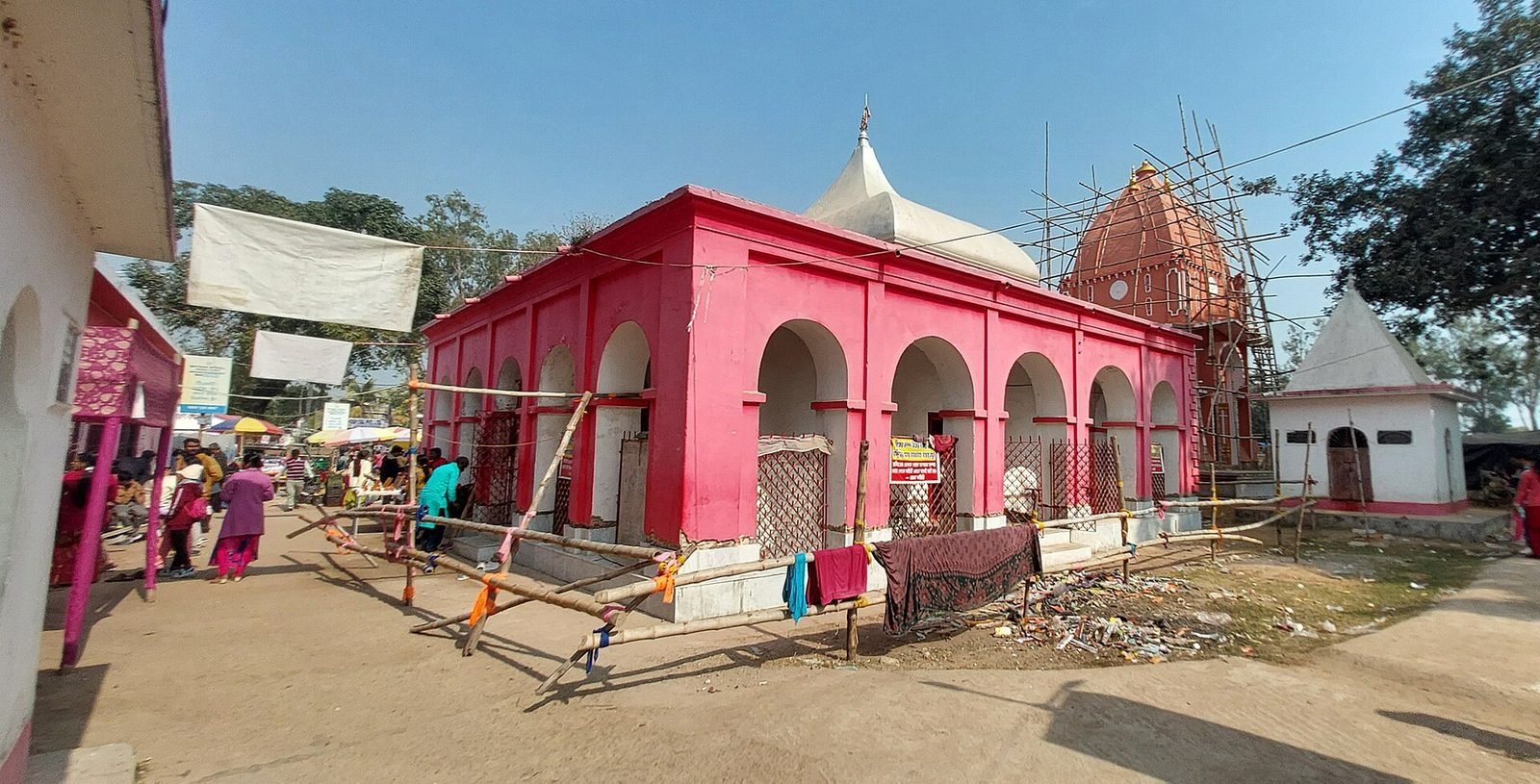
Kiriteshwari Temple stands in Murshidabad, West Bengal, is a shrine to Kiriteshwari (Vimala), Shiva as Sangbarta. It is also known as Kiriteswari Temple, Mukuteshwari Temple, Kirit Shakti Peeth.
Kiriteshwari Temple is one of the 51 Shakti Peethas (Shakta Pithas) of Devi Sati. Tradition holds that the crown (kirit) of Sati fell here after Shiva carried her body following her self-immolation at Daksha's yajna, making this an Upapeetha where an ornament, rather than a body part, is said to have landed. The original shrine is said to be over 1,000 years old and was traditionally regarded as a resting place of Mahamaya in the Sati legend.
West Bengal carries a distinct temple identity of its own: Land of the Divine Mother, where Kali is worshipped with fervour at Shakti Peethas along the Ganga and the tantric shrines of Birbhum.
Darshan hours and daily worship
| Session | Timing (as published) |
|---|---|
| Morning | 6:00 AM |
| Evening | 10:00 PM |
Closes briefly during aarti. An anna bhog (cooked food offering) is made to the goddess around noon daily. Timings can vary on festival days and are best confirmed locally.
Poojas and daily rituals
Daily puja and aarti, with an anna bhog (cooked food offering) around noon
Festivals and special-day timings
Regular darshan hours are usually extended, or set aside entirely, on these dates.
| Festival | Period | What happens |
|---|---|---|
| Durga Puja and Vijayadashami | Ashwin month (September or October) | Major annual worship of the goddess drawing large numbers of devotees |
| Navratri | March-April and September-October | Nine nights of worship of the goddess |
| Kali Puja | Kartik Amavasya (October or November) | Special worship of the goddess as Kali |
| Mahashivratri | February or March | Festival honoring Shiva, observed at the temple |
History and architecture
Architecture
Small char-chala (four-sloped roof) Bengal-style shrine with repeated decorative cornice patterns. The goddess is worshipped as an auspicious black stone rather than a conventional idol, one of only a handful of such shrines in Bengal
History
The original shrine is said to be over 1,000 years old and was traditionally regarded as a resting place of Mahamaya in the Sati legend. It was destroyed around 1405 and the present temple was reconstructed in the 19th century by Raja Darpanarayan Roy of Lalgola. Nawab Mir Jafar of Bengal is said to have sought the temple's charanamrita (holy water). In September 2023 the associated village was named among India's Best Tourism Villages.
Planning your visit
How to reach
Nearest railway stations are Dahapara and Lalbagh Court Road, both a few kilometers away on the Sealdah to Lalgola line. Nearest airport is Kolkata's Netaji Subhash Chandra Bose International Airport, roughly 200 km away. Local taxis, autos and toto rickshaws connect Lalbagh town to Kiritkona village.
Where this information comes from
Confidence: High. Confidence level as originally recorded for this entry; no further explanatory note was written at the time