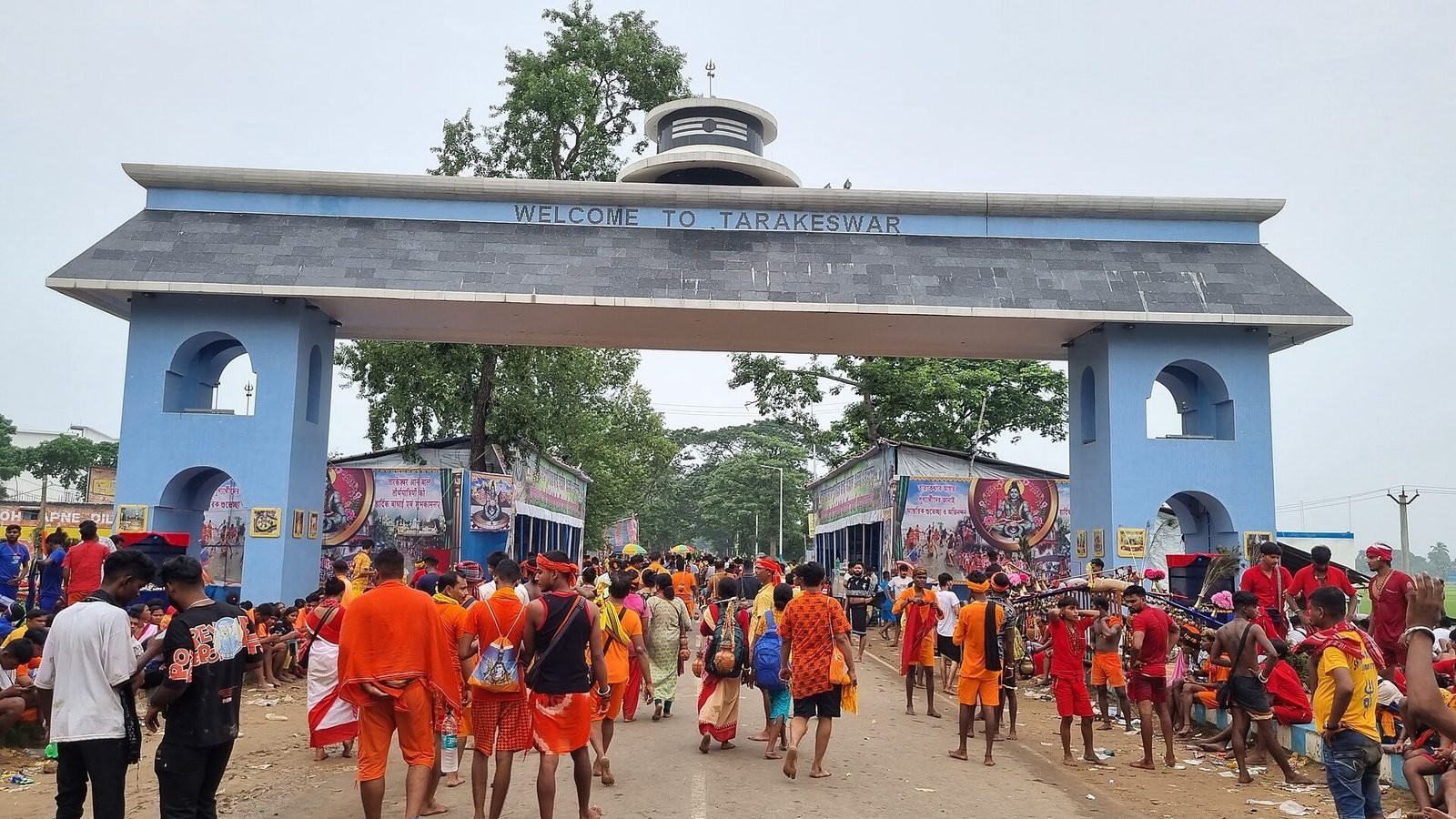
Tarakeswar Temple, Tarakeswar, West Bengal
Photo: Billjones94, CC BY-SA 4.0, Wikimedia Commons

Tarakeswar Temple Timings

Tarakeswar Temple is open 6:00 AM to 1:00 PM and 4:00 PM to 7:00 PM, daily.

Lord Shiva, worshipped here as Taraknath (Tarakeswar), represented by a swayambhu (self-manifested) lingam · Tarakeswar, West Bengal

12 JyotirlingasShivaFree entryMedium confidence
Darshan hours (as published)
6:00 AM - 1:00 PM · 4:00 PM - 7:00 PM
Open/closed status loads once the page finishes rendering.

Set in Tarakeswar, West Bengal, Tarakeswar Temple is a shrine to Lord Shiva, worshipped here as Taraknath (Tarakeswar), represented by a swayambhu (self-manifested) lingam. It is also known as Taraknath Temple, Baba Taraknath Mandir, Tarakeswarnath Temple.

Tarakeswar is one of the most important Shiva pilgrimage centres in West Bengal, popularly known as Baba Dham. It is described in some regional and devotional sources as one of the 64 Jyotirlingas of the Shiva Purana, though this identification is a local/popular tradition rather than part of the widely recognised list of twelve principal Jyotirlingas, so it should be read as devotional belief rather than settled scholarly fact. The temple was built in 1729 CE, traditionally associated with a Raja who is said to have discovered a self-manifested (swayambhu) lingam in the forests near Tarakeswar and established the shrine over it.

West Bengal carries a distinct temple identity of its own: Land of the Divine Mother, where Kali is worshipped with fervour at Shakti Peethas along the Ganga and the tantric shrines of Birbhum.

Darshan hours and daily worship

SessionTiming (as published)
Morning6:00 AM - 1:00 PM
Evening4:00 PM - 7:00 PM

Sources are not fully consistent on exact hours, some cite 5:00 AM to 1:00 PM and 4:30 PM to 7:30 PM, and one describes a near-continuous 6:00 AM to 9:30 PM window. Timings are known to extend on Mondays and through the Shravan month for special rituals. Visitors should confirm current hours locally, especially during Shravan and festival periods.

Poojas and daily rituals

An aarti is commonly cited around 10:00 AM, with a Sandhya Aarti and Bhog (evening offering) around 6:00-6:30 PM, though exact times vary by source.

Weekly or monthly auspicious daysMondays are considered especially significant for Shiva worship here and see a large surge in local footfall.
Signature annual eventsThe Shravan Mela during the Hindu month of Shravan is the temple's largest annual gathering; the Gajan festival in Chaitra also draws significant crowds.

Festivals and special-day timings

Regular darshan hours are usually extended, or set aside entirely, on these dates.

FestivalPeriodWhat happens
Shivaratri (Maha Shivaratri)Phalgun month, typically February-MarchMarked by night-long ceremonies and large gatherings of devotees.
GajanFive-day festival ending on the last day of Chaitra, mid-AprilA traditional Shaiva festival with rituals performed by devotees (Sannyasis), drawing large crowds around the Bengali new year.
Shravan Mela (Shravani Mela)Shravan month, roughly mid-July to mid-August, especially on MondaysHundreds of thousands of pilgrims, many walking barefoot, gather to offer water at the temple during this month, one of the temple's busiest periods.

History and architecture

Built or established1729 CE

Architecture

Atchala (eight-roofed) Bengal temple architecture, with a natmandir (congregation hall) in front of the main shrine

History

The temple was built in 1729 CE, traditionally associated with a Raja who is said to have discovered a self-manifested (swayambhu) lingam in the forests near Tarakeswar and established the shrine over it. Adjacent to the main temple are smaller shrines to Kali and Lakshmi Narayan, and Dudhpukur, a tank just north of the temple, is regarded by devotees as a place where prayers made after bathing in it are fulfilled.

Planning your visit

Entry feeFree entry.
Dress codeMen are required to remove their shirts and vests (enter bare-chested) before approaching the sanctum sanctorum; women typically wear a saree, salwar suit, or long skirt with a modest top.
Best time to visitOctober to March offers cooler weather and comparatively smaller crowds; Mondays and the Shravan month see the heaviest pilgrim traffic.
NearbyThe adjoining Kali and Lakshmi Narayan shrines, the Dudhpukur sacred tank, and the pilgrimage towns of Kamarpukur (birthplace of Sri Ramakrishna) and Jairambati (birthplace of Sarada Devi), both located in the same district.

How to reach

Tarakeswar has its own railway station, served by local EMU trains from Howrah, located about 500 metres from the temple. The nearest airport is Netaji Subhash Chandra Bose International Airport in Kolkata, roughly 60-65 km away. By road, Tarakeswar is about 58 km from Kolkata via the Delhi Road/Durgapur Expressway route.

Where this information comes from

Confidence: Medium. Core history (1729 construction, atchala architecture), deity, and festival calendar (Shivaratri, Gajan, Shravan Mela) are corroborated by Wikipedia and the Hooghly district government site. Exact daily darshan hours vary noticeably across sources (roughly 5-6 AM to 1 PM, and 4 PM to 7 or 7:30 PM, versus one source citing a continuous 6 AM to 9:30 PM), so the timings given should be treated as approximate and verified locally. No distinct official temple/trust website was found, so officialWebsite is left blank.

Frequently asked questions about Tarakeswar Temple

What is the timing of Tarakeswar Temple?

Tarakeswar Temple is open 6:00 AM to 1:00 PM and 4:00 PM to 7:00 PM, daily. Sources are not fully consistent on exact hours, some cite 5:00 AM to 1:00 PM and 4:30 PM to 7:30 PM, and one describes a near-continuous 6:00 AM to 9:30 PM window. Timings are known to extend on Mondays and through the Shravan month for special rituals. Visitors should confirm current hours locally, especially during Shravan and festival periods.

What are the darshan (visiting) hours at Tarakeswar Temple?

As published, morning darshan runs 6:00 AM - 1:00 PM and evening darshan runs 4:00 PM - 7:00 PM. Sources are not fully consistent on exact hours, some cite 5:00 AM to 1:00 PM and 4:30 PM to 7:30 PM, and one describes a near-continuous 6:00 AM to 9:30 PM window. Timings are known to extend on Mondays and through the Shravan month for special rituals. Visitors should confirm current hours locally, especially during Shravan and festival periods.

Is there an entry fee at Tarakeswar Temple?

Free entry.

What is the dress code at Tarakeswar Temple?

Men are required to remove their shirts and vests (enter bare-chested) before approaching the sanctum sanctorum; women typically wear a saree, salwar suit, or long skirt with a modest top.

Which festivals are celebrated at Tarakeswar Temple?

The main ones documented for this temple are Shivaratri (Maha Shivaratri), Gajan, Shravan Mela (Shravani Mela). See the festival table above for dates and what each involves.

What is the best time to visit Tarakeswar Temple?

October to March offers cooler weather and comparatively smaller crowds; Mondays and the Shravan month see the heaviest pilgrim traffic.

How do I reach Tarakeswar Temple?

Tarakeswar has its own railway station, served by local EMU trains from Howrah, located about 500 metres from the temple. The nearest airport is Netaji Subhash Chandra Bose International Airport in Kolkata, roughly 60-65 km away. By road, Tarakeswar is about 58 km from Kolkata via the Delhi Road/Durgapur Expressway route.

Who is the presiding deity at Tarakeswar Temple?

Lord Shiva, worshipped here as Taraknath (Tarakeswar), represented by a swayambhu (self-manifested) lingam

What is the history of Tarakeswar Temple?

The temple was built in 1729 CE, traditionally associated with a Raja who is said to have discovered a self-manifested (swayambhu) lingam in the forests near Tarakeswar and established the shrine over it.

How reliable is the information on this Tarakeswar Temple page?

This listing's confidence is rated medium. Core history (1729 construction, atchala architecture), deity, and festival calendar (Shivaratri, Gajan, Shravan Mela) are corroborated by Wikipedia and the Hooghly district government site. Exact daily darshan hours vary noticeably across sources (roughly 5-6 AM to 1 PM, and 4 PM to 7 or 7:30 PM, versus one source citing a continuous 6 AM to 9:30 PM), so the timings given should be treated as approximate and verified locally. No distinct official temple/trust website was found, so officialWebsite is left blank.