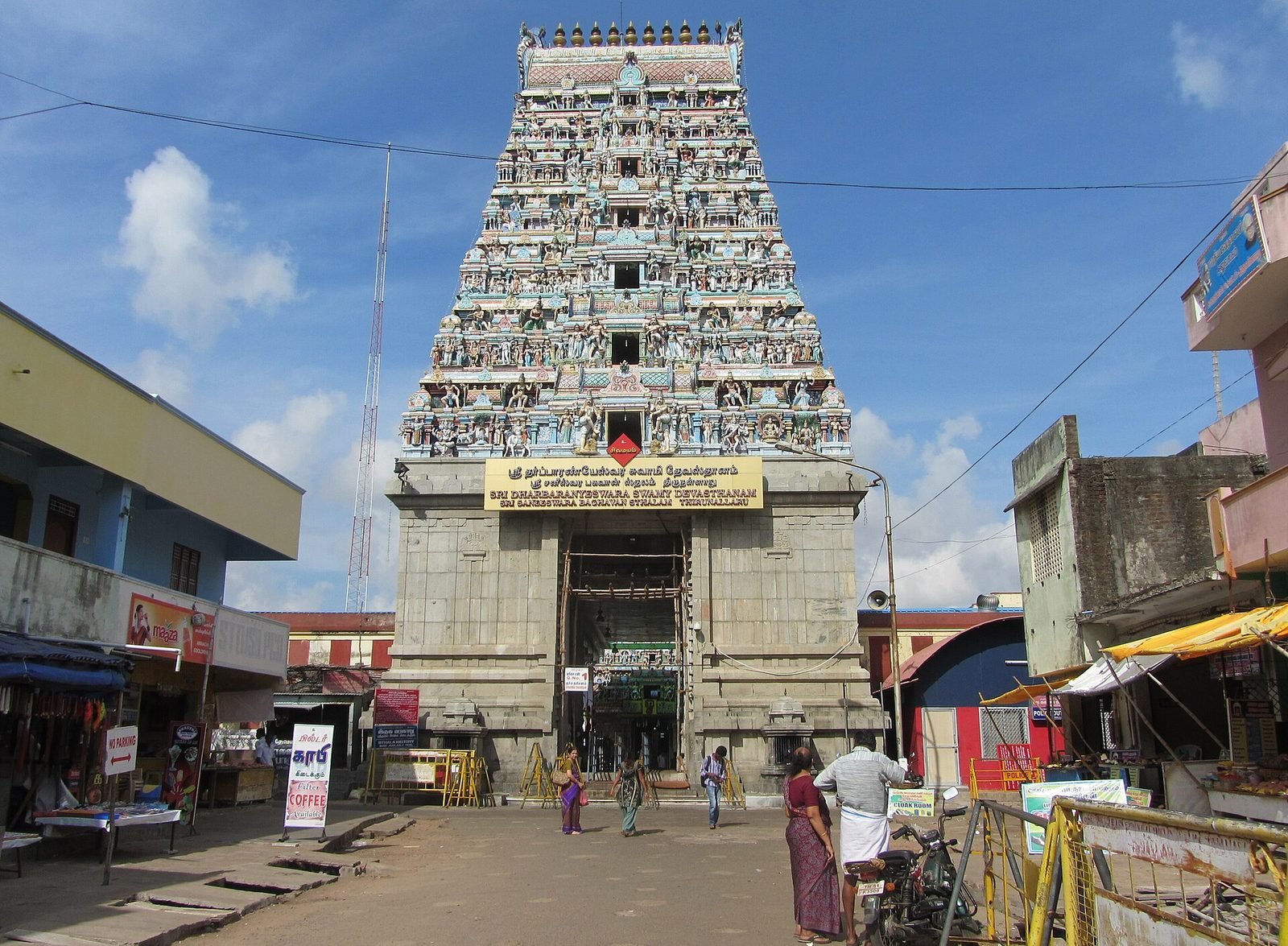
Dharbaranyeswarar Temple, Thirunallar, Thirunallar, Tamil Nadu
Photo: Rsmn, CC BY-SA 3.0, Wikimedia Commons

Dharbaranyeswarar Temple, Thirunallar Timings

Dharbaranyeswarar Temple, Thirunallar is open 6:00 AM to 1:00 PM and 4:00 PM to 9:00 PM, daily.

Lord Shiva as Dharbaranyeswarar (presiding deity, lingam form), with a separate shrine for Shani, the Navagraha (Saturn) this temple represents · Thirunallar, Tamil Nadu

Navagraha SthalamShivaFree entryHigh confidence
Darshan hours (as published)
6:00 AM - 1:00 PM · 4:00 PM - 9:00 PM
Open/closed status loads once the page finishes rendering.

Dharbaranyeswarar Temple, Thirunallar stands in Thirunallar, Tamil Nadu, is a shrine to Lord Shiva as Dharbaranyeswarar (presiding deity, lingam form), with a separate shrine for Shani, the Navagraha (Saturn) this temple represents. It is also known as Thirunallar Saneeswaran Temple, Thirunallar Shani Temple, Sri Dharbaranyeswarar Swamy Temple.

This is the Shani (Saturn) shrine of the Navagraha Sthalam circuit and is widely regarded, per temple and tourism sources, as the foremost and most important Parihara Sthalam (remedial site) in the whole circuit, since it addresses Sani dosha and Sade Sati specifically. Thousands of devotees visit on Saturdays and especially during Sanipeyarchi, when Saturn changes zodiac sign. The temple is one of the 275 Paadal Petra Sthalams praised in the 7th-century Tevaram hymns of Sambandar and Appar, and was later venerated by the 15th-century poet Arunagirinathar.

Tamil Nadu carries a distinct temple identity of its own: Land of towering gopurams and living Dravidian temple traditions, from the Chola masterpieces to the great Pancha Bhoota Sthalas.

Darshan hours and daily worship

SessionTiming (as published)
Morning6:00 AM - 1:00 PM
Evening4:00 PM - 9:00 PM

Timings can extend and crowd management measures apply on Saturdays and during the Sanipeyarchi festival.

Poojas and daily rituals

Six daily poojas are performed: Ushatkalam (5:30 AM), Kalashanti (8:00 AM), Uchikalam (12:00 PM), Sayarakshai (6:00 PM), Irandamkalam (8:00 PM) and Arddha Jamam (9:00 PM), each with abhishekam, alankaram, naivedyam and deepa aradhanai. A separate abhishekam for the rare Marakata (Emerald) Shani Linga is performed around 6:30 AM and 5:30 PM.

Weekly or monthly auspicious daysSaturdays (Shani's day) are especially significant; fortnightly Pradosham and monthly Amavasai, Purnima and Chaturthi are also observed.
Signature annual eventsSanipeyarchi (Saturn's zodiac transit, roughly every 2.5 years) is the temple's signature event and its biggest pilgrim draw.

Festivals and special-day timings

Regular darshan hours are usually extended, or set aside entirely, on these dates.

FestivalPeriodWhat happens
SanipeyarchiRoughly every 2.5 years, when Saturn transits into a new zodiac signThe temple's most significant festival, marking Shani's rasi transition; it draws the largest crowds of the entire Navagraha circuit and is considered highly auspicious for relief from Shani dosha.
MahasivarathriPhalguna month (February-March)The principal annual festival for the presiding deity, Dharbaranyeswarar (Shiva).
BrahmotsavamVaikasi month (May-June)Annual festival with processions of the temple deities through the streets of Thirunallar.

History and architecture

Built or establishedOriginal structure from the Chola period (9th century CE), with later expansions during the Vijayanagar period

Architecture

Dravidian style with a rectangular layout, a five-tiered rajagopuram entrance, and multiple concentric granite walls enclosing the shrines. The complex covers roughly 2 acres.

History

The temple is one of the 275 Paadal Petra Sthalams praised in the 7th-century Tevaram hymns of Sambandar and Appar, and was later venerated by the 15th-century poet Arunagirinathar. According to legend, King Nala, afflicted by Saturn's malefic influence, was freed after bathing in the temple tank and worshipping Dharbaranyeswarar here, which is why devotees still take a ritual oil bath in the tank (Nala Theertham), traditionally wearing black or dark clothing.

Planning your visit

Entry feeFree general darshan. Paid special darshan, archana, abhisheka and homam services can be booked at temple counters or via the official website; specific current rates were not independently verified.
Dress codeTraditional Indian attire is expected: men in dhoti/vesti or formal trousers, women in saree, half-saree or churidar with dupatta. Devotees performing Shani parihara rituals commonly wear black or dark blue clothing for the oil bath in the Nala Theertham tank.
Best time to visitSaturdays and the Sanipeyarchi period are the most crowded and auspicious times; cooler months (November-February) are more comfortable for travel; early morning darshan avoids the heaviest queues.
NearbyBhadrakali (Kali Amman) Temple at Ambagarathur, about 10 km away, is commonly visited together with this temple.

How to reach

Nearest railway station: Karaikal, about 6 km away, connected to Chennai, Trichy, Thanjavur, Nagapattinam and Puducherry. Nearest airports: Puducherry and Tiruchirapalli (Trichy), both roughly 130+ km away. The temple is about 96 km from Thanjavur and 135 km from Puducherry city by road, with bus and taxi service available from Karaikal.

Where this information comes from

Confidence: High. Core history, architecture and daily pooja schedule are corroborated by Wikipedia and the official temple site; darshan timings are corroborated by two independent travel sources; exact special-darshan fees could not be verified.

Frequently asked questions about Dharbaranyeswarar Temple, Thirunallar

What is the timing of Dharbaranyeswarar Temple, Thirunallar?

Dharbaranyeswarar Temple, Thirunallar is open 6:00 AM to 1:00 PM and 4:00 PM to 9:00 PM, daily. Timings can extend and crowd management measures apply on Saturdays and during the Sanipeyarchi festival.

What are the darshan (visiting) hours at Dharbaranyeswarar Temple, Thirunallar?

As published, morning darshan runs 6:00 AM - 1:00 PM and evening darshan runs 4:00 PM - 9:00 PM. Timings can extend and crowd management measures apply on Saturdays and during the Sanipeyarchi festival.

Is there an entry fee at Dharbaranyeswarar Temple, Thirunallar?

Free general darshan. Paid special darshan, archana, abhisheka and homam services can be booked at temple counters or via the official website; specific current rates were not independently verified.

What is the dress code at Dharbaranyeswarar Temple, Thirunallar?

Traditional Indian attire is expected: men in dhoti/vesti or formal trousers, women in saree, half-saree or churidar with dupatta. Devotees performing Shani parihara rituals commonly wear black or dark blue clothing for the oil bath in the Nala Theertham tank.

Which festivals are celebrated at Dharbaranyeswarar Temple, Thirunallar?

The main ones documented for this temple are Sanipeyarchi, Mahasivarathri, Brahmotsavam. See the festival table above for dates and what each involves.

What is the best time to visit Dharbaranyeswarar Temple, Thirunallar?

Saturdays and the Sanipeyarchi period are the most crowded and auspicious times; cooler months (November-February) are more comfortable for travel; early morning darshan avoids the heaviest queues.

How do I reach Dharbaranyeswarar Temple, Thirunallar?

Nearest railway station: Karaikal, about 6 km away, connected to Chennai, Trichy, Thanjavur, Nagapattinam and Puducherry. Nearest airports: Puducherry and Tiruchirapalli (Trichy), both roughly 130+ km away. The temple is about 96 km from Thanjavur and 135 km from Puducherry city by road, with bus and taxi service available from Karaikal.

Who is the presiding deity at Dharbaranyeswarar Temple, Thirunallar?

Lord Shiva as Dharbaranyeswarar (presiding deity, lingam form), with a separate shrine for Shani, the Navagraha (Saturn) this temple represents

What is the history of Dharbaranyeswarar Temple, Thirunallar?

The temple is one of the 275 Paadal Petra Sthalams praised in the 7th-century Tevaram hymns of Sambandar and Appar, and was later venerated by the 15th-century poet Arunagirinathar.

How reliable is the information on this Dharbaranyeswarar Temple, Thirunallar page?

This listing's confidence is rated high. Core history, architecture and daily pooja schedule are corroborated by Wikipedia and the official temple site; darshan timings are corroborated by two independent travel sources; exact special-darshan fees could not be verified.